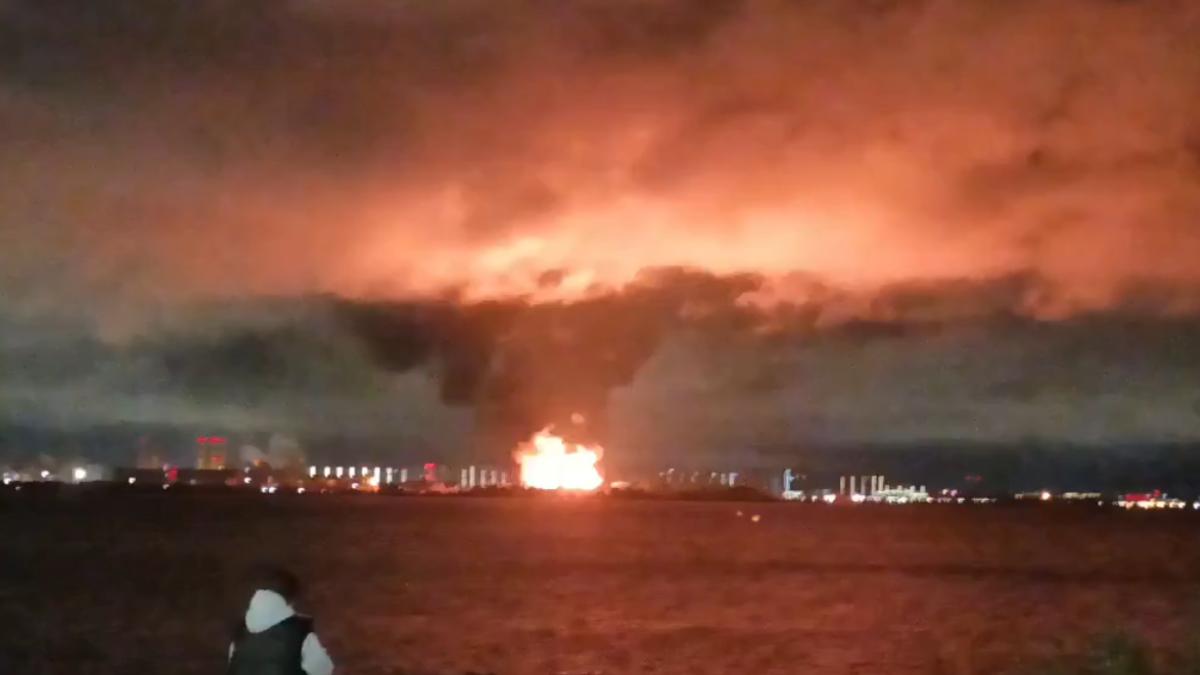
Moscow: Russia said its air defense systems had intercepted 126 Ukrainian drones in the Leningrad region surrounding St Petersburg, as a large-scale attack disrupted transport and triggered a fire at an oil terminal.
Alexander Drozdenko, governor of the Leningrad region, said the drone attack was continuing to be repelled. He reported that debris had fallen on homes, cars and power lines, causing brief power outages. He did not report any injuries.
St Petersburg Governor Alexander Beglov said the attack had caused a fire at the St Petersburg Oil Terminal. The facility had previously been targeted by Ukraine in June, according to the report.
The city’s Pulkovo Airport restricted operations for safety reasons, while Russia’s state-run TASS news agency reported disruptions to departing flights.
Russia’s social networking platform VK also said the attack had targeted a data center in the region, but that the facility remained operational.
The reported strikes came amid renewed Ukrainian threats to target Russian energy infrastructure in response to Moscow’s continuing attacks on Ukraine.
Zelensky signals renewed strikes on Russian refineries
Ukrainian President Volodymyr Zelensky said this week that Kyiv would resume attacks on Russian refineries. In comments to the Financial Times, he said Ukraine would retaliate against Russian strikes.
Ukraine has repeatedly targeted Russian oil facilities during the war, seeking to disrupt fuel supplies and revenue that help sustain Moscow’s military campaign.
The latest reported drone attack also comes as Ukraine faces uncertainty over continued US support and Washington’s approach to Russia’s energy sector.
US President Donald Trump signed an executive order on Friday waiving sanctions and tariffs targeting Moscow’s energy revenues, according to the report.
The move drew criticism in Europe and the United States, particularly as Russia continued attacks on Ukraine in the fifth year of the conflict.
Trump has previously criticized Ukrainian strikes on Russian oil refineries and depots. The latest policy move adds to tensions over how Western governments should balance pressure on Moscow with their wider economic and diplomatic interests.
Rubio denies White House role in Starlink disruption
Separately, US Secretary of State Marco Rubio denied that the White House had ordered a slowdown of Starlink connectivity in Ukraine.
Rubio said Starlink was a commercial service operated by SpaceX, while Starshield was a separate defense and military communications product controlled by the US government.
He said Ukraine did not currently have access to Starshield and that discussions were ongoing about its potential use. Rubio rejected reports that Washington had ordered internet restrictions to prevent Ukrainian drones from operating inside Russia.
Ukraine has relied on Starlink connectivity for military communications, intelligence gathering and drone operations. Ukrainian officials have raised concerns about disruptions to satellite connectivity, which they say can affect military activity.
Zelensky had accused SpaceX of restricting Ukrainian access to Starlink during the conflict. Connectivity was later reported to be returning, while Ukrainian officials called for restrictions affecting Starshield to be removed.
The reported dispute highlights Ukraine’s dependence on privately operated satellite communications and US-controlled defense technology as it continues to fight Russian forces.
Drone warfare and energy infrastructure
The reported attack near St Petersburg illustrates how drone warfare has extended the conflict beyond front-line areas to major transport hubs and energy facilities inside Russia.
Oil terminals and refineries are strategically significant because they support fuel distribution and generate revenue. Attacks on these sites can also disrupt logistics and increase pressure on Russia’s energy sector. However, the full extent of the damage from Sunday’s reported strike was not immediately clear.
The episode also reflects the wider international dimension of the war. Ukraine’s ability to conduct long-range drone operations is linked not only to its domestic weapons production but also to access to communications technology, intelligence and other external support.
The dispute over Starlink and Starshield underscores the distinction between commercial satellite services and military systems controlled by governments. Decisions about access to these technologies can have direct consequences for battlefield operations.