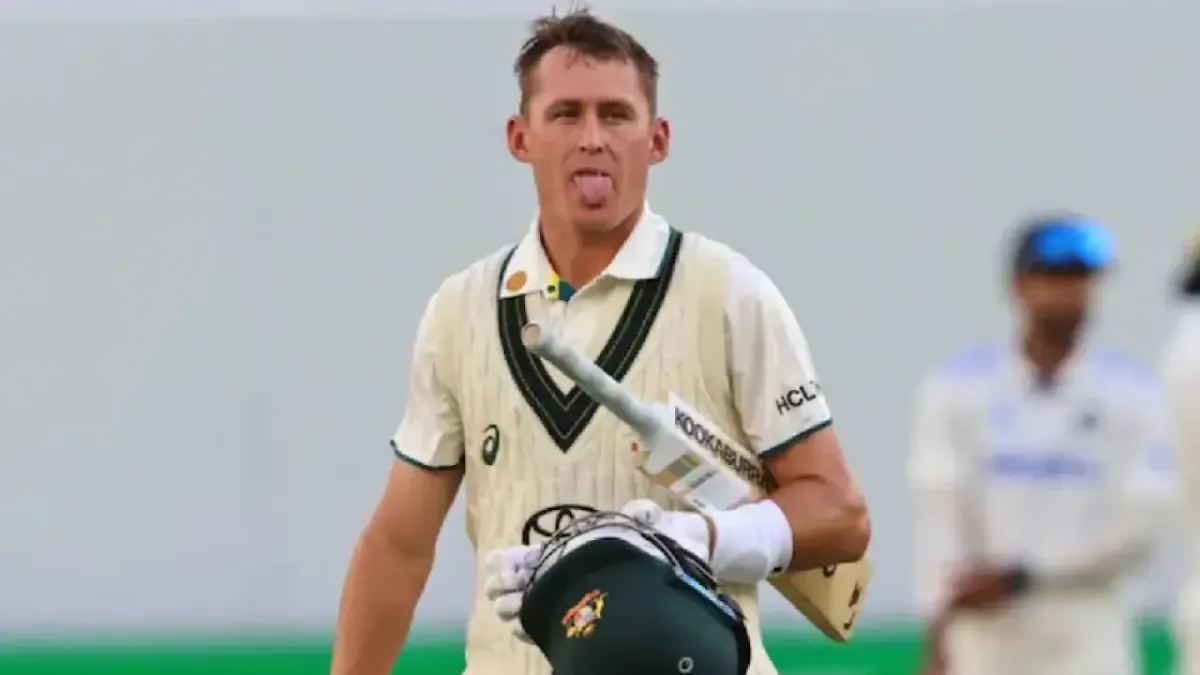
The number attached to Australia’s batting problem is 31. It is what Marnus Labuschagne made in the second innings at Darwin, and it is also the score that only Steve Smith and Cameron Green bettered across the match.
Australia’s coach Andrew McDonald was asked about it and did not hide behind the process.
“It’s easy for me to sit here and try to defend that, but ultimately it’s 31.”
He had spent the preceding answer saying the opposite of a defence, noting that Labuschagne had been moving well, clipping off his pads and getting back through the ball down the ground before he got out. Then the qualifier. “We want runs is the bottom line,” McDonald said, and “he needs some big runs.”
Two voices, one week, the same conclusion
The captain had got there first. Speaking after the defeat, Pat Cummins framed it as a balance between it being one Test and also a bit of a trend, and put the question plainly: whether to intervene now or let it play out. He was blunter about the group than about any individual. “It’s pretty clear it’s not quite functioning as well as we would like as a group,” he said, adding that if changes to their style were needed, they had a week or so and had better do it quickly.
Cummins also indicated the net may be cast wider than the touring party, saying selectors may be willing to look outside the 13-man squad picked for Darwin.
The case against, in numbers
The batting record is the problem, not the technique. Australia were dismissed for 198 in their first innings and 284 in their second, and their top-order pair are the ones carrying it. Jake Weatherald and Marnus Labuschagne have both averaged under 27 since the start of last summer’s Ashes. Weatherald made 23 and 0 in Darwin.
Labuschagne’s situation carries a weight Weatherald’s does not. He was dropped last year against West Indies and asked to change his method, then scored five domestic centuries in nine innings for Queensland in the Sheffield Shield to regain his place.
What a second axing would mean
ESPNcricinfo’s reporting puts the stakes above one selection. A prevailing view is that being left out a second time would carry significance for Labuschagne that it does not for others, and the succession problem is real. With uncertainty over how long Smith will keep playing, Australia wanted an experienced batter bedded in at No. 3 for whenever he stops.
The alternatives are not obvious. Matt Renshaw, at 30, is the one option best suited to a top-three role, having made three centuries in 10 Shield innings, while Sam Konstas and Campbell Kellaway both missed out in the CA XI game.
McDonald knows how it reads from outside. “The easy option is to call for change,” he said, noting that a lot of people call for change even when Australia are winning. His closing thought was the one that matters before Saturday. The next decision will be the most important one.