
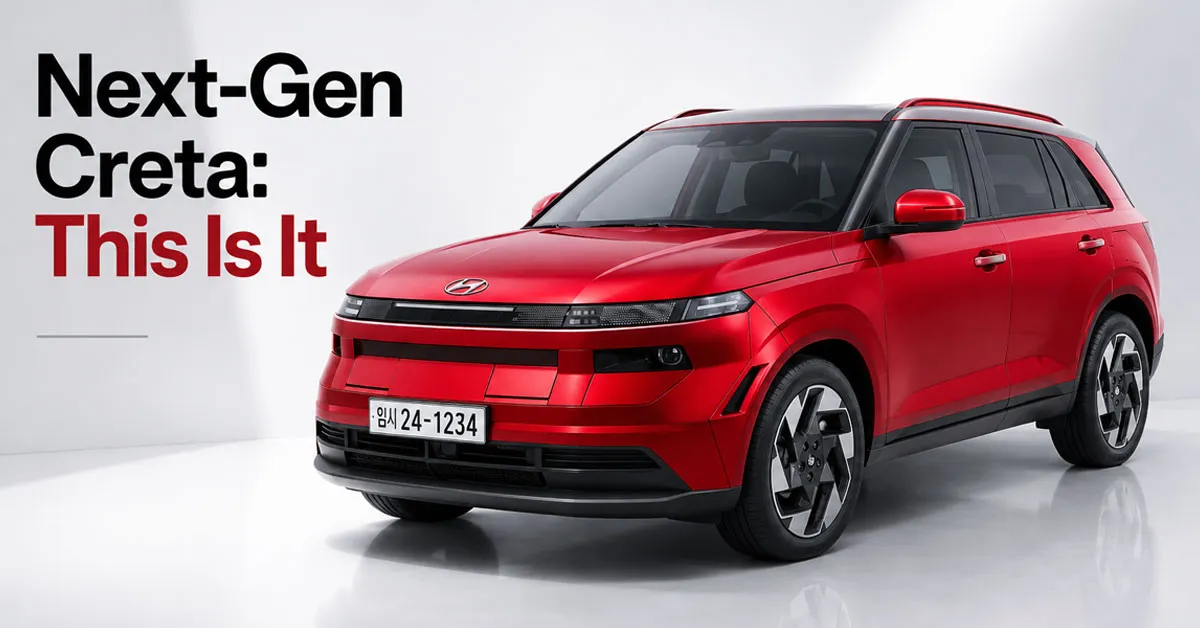

The Creta, one of Hyundai’s strongest-selling SUVs, is set to get a major generational update. Set to arrive in late 2026 or early 2027, the next-generation Creta has already been spied testing in India. A set of leaked images that surfaced recently, show how the new SUV would look like.
Hyundai seems to have taken an all-new styling direction with the new Creta. The previous generation used to be based on the K2 platform. The next-generation model has moved to the newer, more advanced K3 architecture. This is the same that underpins the second-generation Kia Seltos. The upcoming Creta will be larger than the outgoing model. The design, from what we can see in these renderings, goes well with the larger proportions.
These renderings are based on the pictures recently leaked by Koreancarblog. It showed portions of the upcoming Kona SX3. The Kona SX3 will be sold in India as the Creta. Shared on Car Spiasthis image shows a front three-quarter view of the upcoming SUV.
The exterior design is a clear departure from that of the current model. It has a more cohesive and futuristic styling. A clear influence of the Crater concept (showcased at the 2025 Los Angeles Auto Show) was previously expected on the new Creta. The concept is based on the carmaker’s ‘Art of Steel’ design philosophy.
However, this rendering paints a completely different picture. It doesn’t look like the Crater anymore! The car shown here has a taller hood line and a more vertical front fascia. This gives it a more SUV-like stance.
We believe the vehicle shown here is the electric version. There are multiple reasons to assume so. One, there is no proper grille- an inevitable in the internal combustion version. Secondly, the ‘grille’ and lighting elements resemble those seen in the IONIQ sub-brand. And finally, air intakes can be seen on the front bumper- likely to facilitate battery cooling.
Side air curtains can also be seen on the front wheel arches. The headlamps have an interesting design and are located below the LED DRLs. The lighting units seem to have parametric pixel elements in them- a detail IONIQ users would be very familiar with. The render also shows large, stylish alloy wheels and regular pull-type door handles. Previous spy shots had confirmed that the production model will come with flush-fitting door handles.
Truth be told, this render shows a polarising design. Not everyone would like it. Time remains before we see the actual design of India’s most-loved Hyundai SUV’s next generation.
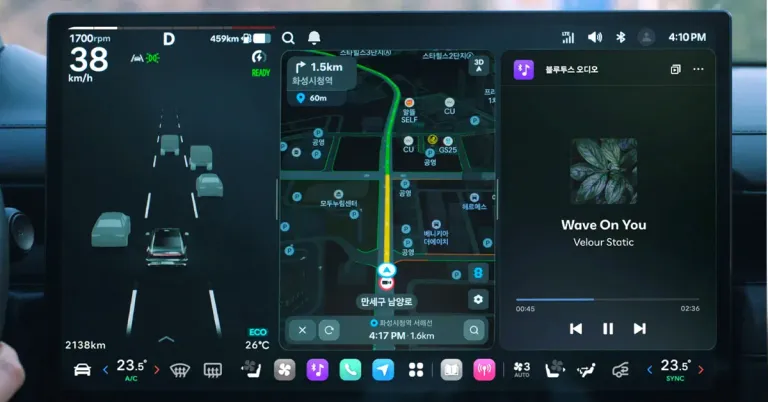
The upcoming Creta’s interior is expected to get major restyling. It will offer significantly more room, particularly at the rear. It will look modern and will likely have a Beige theme,. The redesign will have a strong focus on ensuring smart space management and premium interfaces. The new SUV will use high-quality trims and colours. It will have an updated feature list.
One of the biggest highlights inside will be the addition of Hyundai’s Pleos Connect infotainment system. A recent spy sighting from India has already confirmed this. This will be a major upgrade over the dual 10.25-inch displays used in the outgoing model. The Pleos system will use a massive central screen and a sleek driver display. The central display will feature fresh user interface and the system will also come with physical controls for all essential functions. The idea here is to minimise driver distraction.
The vehicle is also expected to use ‘shift-by-wire’ technology and the central tunnel will likely offer massive storage. The new Creta will continue to offer features like wireless charger, redesigned ambient lighting, dual-zone climate control, panoramic sunroof, ventilated seats, and more.
Moving the new generation to the K3 platform is expected to bring significant improvements in overall safety and crashworthiness. Like the Seltos, the upcoming Creta could also excel in Bharat NCAP crash tests.
Initially, the new-generation Creta is expected to continue with the same set of engines as the outgoing model- 1.5L naturally aspirated petrol, 1.5L turbocharged petrol and 1.5L diesel. The output figures are also likely to remain unchanged. Later, a new 1.5L strong hybrid powertrain is likely to be added to the SUV. This will pair a 1.5L petrol engine with an electric motor and battery pack. Hyundai hasn’t yet revealed this engine or its specifications officially.
Comments are closed.