- Big decision of this company!
- UPI Payment will be stopped from October 10
- What exactly is the controversy?
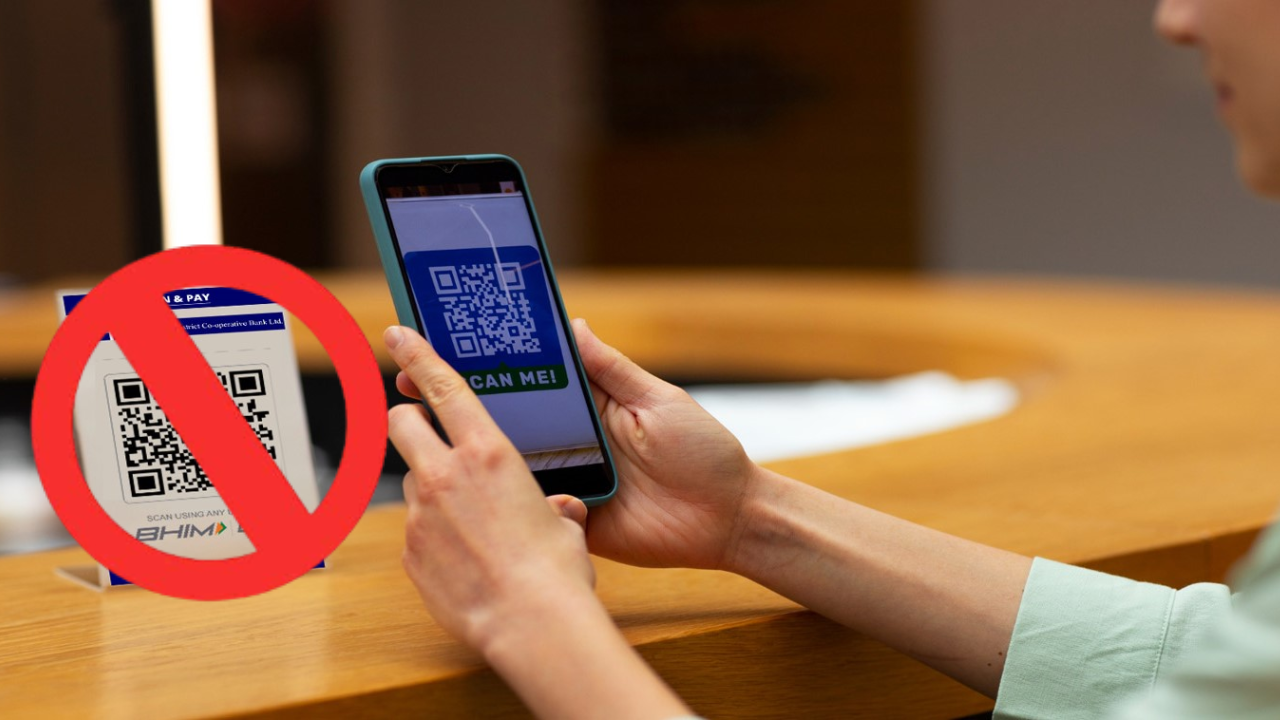
UPI Payment Shutdown : The question of what will happen next after the Indian government's decision to impose MDR charges on UPI has started to arise. When this decision came out, the dissatisfaction among the traders and the effect on the business accordingly has now come to the fore. An example of this is that business concerns about UPI are now being reflected in practice. A company that is an online marketplace for industrial goods has decided not to use UPI directly and accept it. Let's know in detail what is behind this decision. (UPI Payment Shutdown)
2 thousand of PM Kisan Yojana both father and son will get in the same house? What exactly is government regulation?
Pneucons has announced that it will stop accepting UPI payments on its platform from October 10, 2026. According to the company, the new MDR imposed on UPI is going to cause a huge drop in their profits. The decision comes at a time when 0.4% MDR will be applicable on select person-to-merchant UPI transactions above ₹2,000 from October 15, 2026. But this fee will be charged not by the customer but by the merchant.
Why did Pneucons shut down UPI?
According to Newcons co-founder Pritesh Lakhani, the company earns roughly 0.5% commission on an order before tax. Therefore, if a major part of the order amount is to be received in the form of UPI MDR, it may not be profitable for the company to accept the payment and may become more expensive.
Suppose a customer purchases goods worth ₹10,000. The company's 0.5% commission is ₹50. Now, after adding 18% GST, the customer pays a total of ₹11,800. The 0.4% MDR charge was approximately ₹47.20. This means, out of ₹50 commission, approximately ₹47.20 goes towards MDR. According to the company, this cuts into roughly 94% of their profits.
Does MDR have to be paid on GST also?
Newcons also said that while the company's commission is based on a base price of ₹10,000, the MDR is charged on the total amount paid by the customer including GST. This further increases the payment cost of the company. Additionally, applicable GST is also payable on MDR. For example, an MDR of ₹47.20 at 18% would be approximately ₹8.50. The company says this can be claimed as input tax credit post-GST, but the payment has to be made in advance, putting pressure on working capital.
How much will UPI charge?
As per the new rules, all UPI payments are exempt from charges. Merchant UPI payments up to ₹2,000 will be exempted from MDR. 0.4% MDR will be applicable on select P2M transactions above ₹2,000.
Meanwhile, the MDR will be limited to a maximum of ₹300 for transactions of ₹75,000 or more. No MDR will be levied on P2P UPI payments. In some essential and low-profit sectors like fuel, railways, telecom, insurance and agricultural inputs, a uniform ₹5 MDR has been fixed for transactions above ₹2,000.
There is no charge to customers
MDR will not be levied. This means, if you are making a UPI payment of ₹10,000, you will not need to pay an additional 0.4% charge. Banks have been directed to ensure that this cost is borne by the merchant and not passed on to the customer.
But Pneucons' decision shows that businesses whose profits are already very low could be hit harder by the new rule. Especially in businesses where the commission per order is low, even a small percentage of MDR can cut a large chunk of revenue.
Will other companies also discontinue UPI?
Currently, Pneucons' decision is an exceptional case and there are no reports of other companies shutting down UPI. But, the concern about MDR among traders has definitely increased. Recently, some business associations have even requested the government to postpone the implementation of MDR and increase the limit for small businesses.
Business Ideas : Make Bumper Earnings… Start 'These' 5 Businesses on Navratri Diwali with Just 50K Budget; No license is required