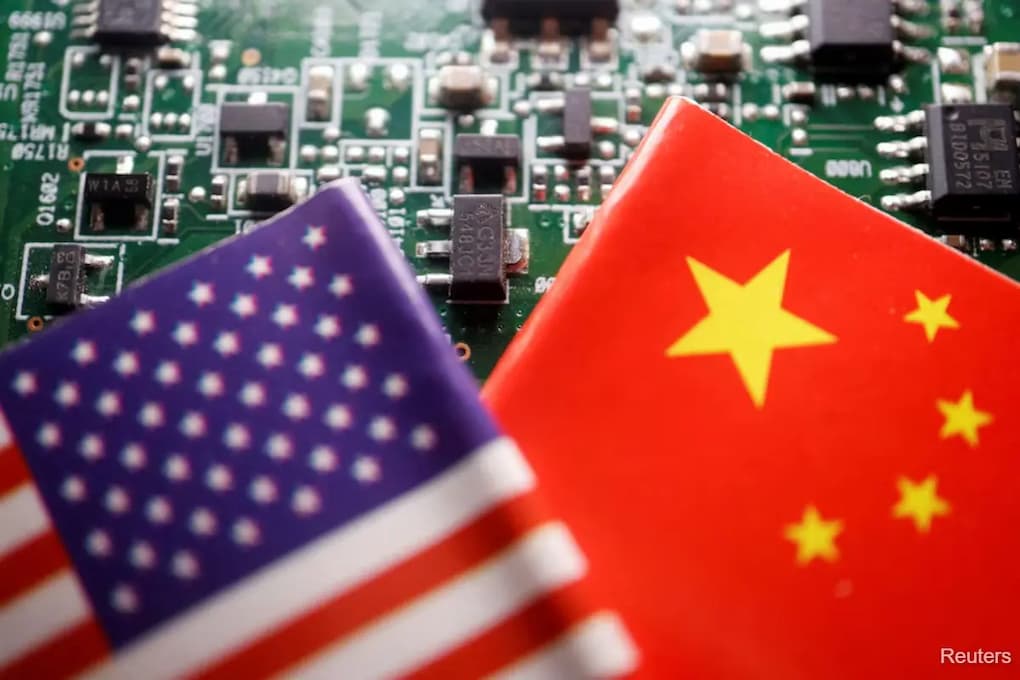
America has taken another big and tough decision to maintain its dominance in the field of international Artificial Intelligence (AI). Many restrictions are already in place to prevent American-made AI chips from reaching China, but now America has increased its surveillance on South-East Asian countries as well. The US has imposed new export rules, especially due to suspicions that China was getting Nvidia chips through countries like Singapore, Malaysia, Thailand and Indonesia. This development has sparked a new debate in the global semiconductor industry as to how these latest US steps will impact the business of major chip makers like Nvidia and China's AI sector.
Why is America banning Nvidia chips? (US China Chip War)
High-performance computing chips play an extremely important role in the development of AI technology. Graphics processing units (GPUs), especially those manufactured by Nvidia, are used extensively to train AI models, analyze huge data, and develop cutting-edge technological systems. On the other hand, China is also giving tough competition to America in the field of AI, where companies like DeepSeek, Alibaba and ByteDance are preparing their AI models. America believes that if these companies continue to get state-of-the-art chips, China's technological capability will increase rapidly. For this reason, along with banning the direct sale of chips to China, efforts are also being made to stop indirect supplies through other countries.
Foreign data centers become support for Chinese companies (US China Chip War)
The number of data centers in Southeast Asian countries such as Singapore, Malaysia, Thailand and Indonesia is rapidly increasing, with access to purchase AI chips from US companies. Due to the lack of direct access to advanced American chips to China, the dependence of Chinese tech companies on these foreign data centers has increased. Companies like Alibaba and ByteDance are using the computing capacity of these overseas data centers to develop their AI models, thereby reducing the impact of US direct export restrictions. According to the report's estimates, about 30 percent of China's total AI computing capacity is being met by foreign data centers, and to stop this, the US is now going to impose strict controls on the supply of chips to foreign data centers.