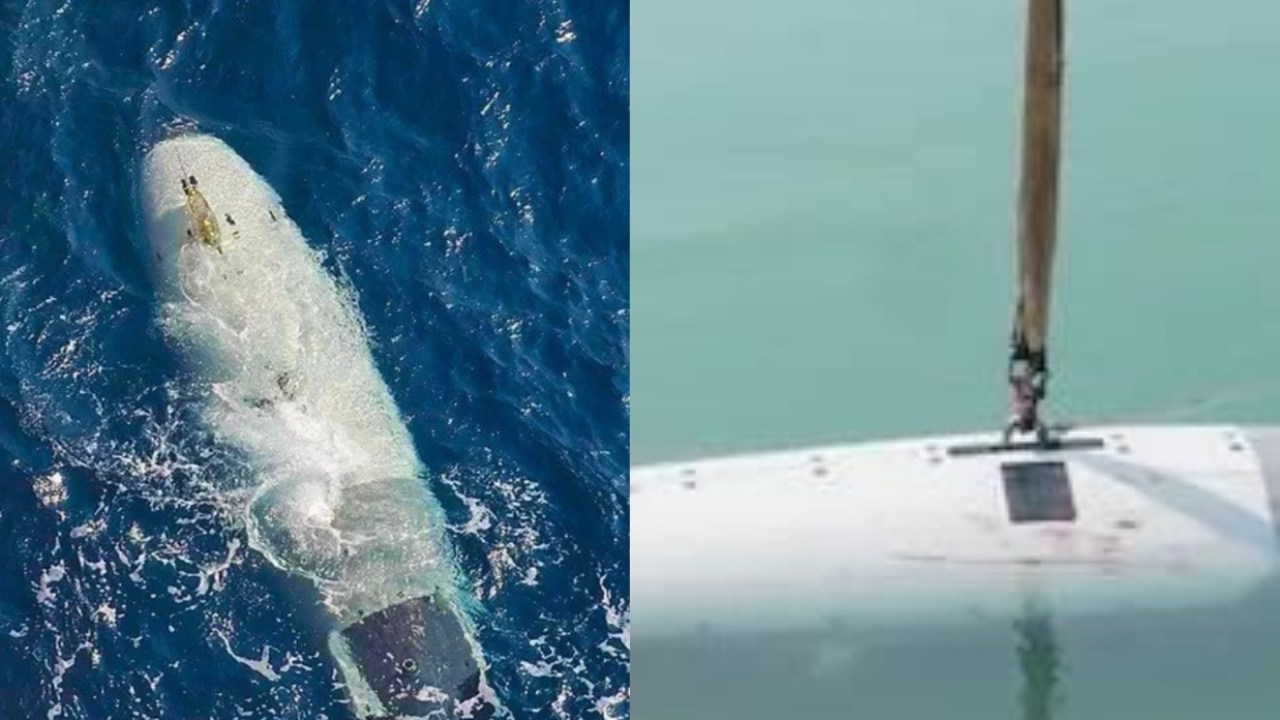
Tehran: The US-Iran conflict entered a new and unexpected phase on Wednesday after Tehran claimed that its naval forces captured an advanced American underwater drone near the Strait of Hormuz. The development triggered global attention as both nations face growing tensions over military operations, maritime security and control of one of the world's most important energy routes.
Iran's Islamic Revolutionary Guard Corps (IRGC) claimed that its naval forces seized a US unmanned underwater vehicle during what it described as a complex intelligence operation. Iranian state media released videos and images showing the underwater system and identified it as the American Dive-LD autonomous underwater vehicle.
The reported capture raised questions about the future of naval warfare, where artificial intelligence, autonomous systems and unmanned technology are rapidly changing how countries conduct surveillance and military operations.
However, the United States has rejected Iran's version of events. American officials said an underwater drone had malfunctioned during a regional surveillance mission and clarified that the vehicle was an older model without classified intelligence equipment. Washington has not confirmed whether the damaged underwater drone mentioned by US officials is the same system that Iran claims to have captured.
Strait Of Hormuz Turns Into New US-Iran Flashpoint
The Strait of Hormuz has become the center of the latest confrontation between the United States and Iran. The narrow waterway is one of the world's most critical energy routes, with a major portion of global oil shipments passing through the region.
Any military disruption in the area could directly impact international oil prices, shipping routes and global energy markets. The latest drone dispute comes amid a wider military confrontation between Washington and Tehran involving naval movements, missile threats, oil tanker attacks and sanctions.
Iran has accused the United States of targeting its interests, while Washington has blamed Tehran for attacks against American military assets in the Gulf region.
The Rise Of Underwater Drone Warfare
The alleged capture of the US underwater drone highlights a major shift in modern military strategy. Countries around the world are investing heavily in unmanned underwater vehicles that can conduct surveillance, collect intelligence and monitor enemy movements without risking the lives of military personnel.
The Dive-LD system reportedly represents a new generation of autonomous underwater technology designed for deep-sea missions, intelligence gathering and maritime monitoring. Experts believe such systems could become a key part of future conflicts as nations compete for control beneath the oceans.
US-Iran Conflict Escalates Over Oil Tankers
The underwater drone controversy comes after a series of attacks involving oil tankers and naval forces. The US military claimed that American forces destroyed five Iranian crude oil tankers after accusing Iran's Revolutionary Guard of attempting attacks against a US Navy warship.
Washington said the targeted vessels were connected to Iran's oil network and were allegedly supporting financial activities linked to the Revolutionary Guard. Iran rejected the allegations and accused the US of aggressive actions against its economy and military interests. The exchange of attacks has increased concerns that the conflict could expand beyond limited strikes into a broader regional confrontation.
Iran Claims US Military Drone Was Destroyed
In another major development, Iran claimed that its air defense forces shot down a US military drone near the Strait of Hormuz. Iranian officials said the drone was detected, tracked and destroyed using an advanced air defense system.
The United States has not confirmed the claim. The conflicting statements from both sides have created uncertainty over the exact details of the incident.
America Increases Pressure Through Sanctions
Along with military action, the United States has intensified economic pressure on Iran. Washington announced new sanctions targeting Iranian aviation companies, accusing parts of the country's aviation sector of supporting government-linked activities.
The sanctions were aimed at restricting financial networks, military supply chains and access to sensitive technology. Iran has criticized the sanctions as economic warfare and has repeatedly warned that it will continue defending its national interests.
Iran to Continue Resistance
Iranian leadership has maintained that the country does not want a direct war but will respond strongly to any military action. President Masoud Pezeshkian said Iran would continue protecting its interests while resisting what Tehran describes as foreign aggression. The latest statements indicate that both countries remain locked in a high-pressure confrontation involving military actions, diplomatic warnings and economic measures.
Background Of US-Iran Conflict
The current crisis follows months of rising tensions between Washington and Tehran. Military operations involving the United States and Israel against Iranian targets were followed by Iranian missile and drone responses against regional US-linked positions.
Although diplomatic efforts had created hopes of negotiations, fresh military incidents have pushed relations back towards confrontation. The Strait of Hormuz remains the biggest strategic concern because any prolonged instability could affect global oil supplies and international trade.
The alleged capture of the American underwater drone could become a major turning point in the US-Iran confrontation. Washington faces the challenge of responding to Iran's claim without triggering a wider military conflict, while Tehran may use the incident to showcase its ability to challenge American technology and naval presence.
Experts believe the next stage of the crisis will depend on whether both sides move towards diplomatic talks or continue retaliatory actions. The latest incident shows that future wars may not only be fought with fighter jets and missiles but also through autonomous drones, artificial intelligence and underwater technology. The world is now watching whether this underwater confrontation becomes a warning signal or the beginning of a larger US-Iran military crisis.