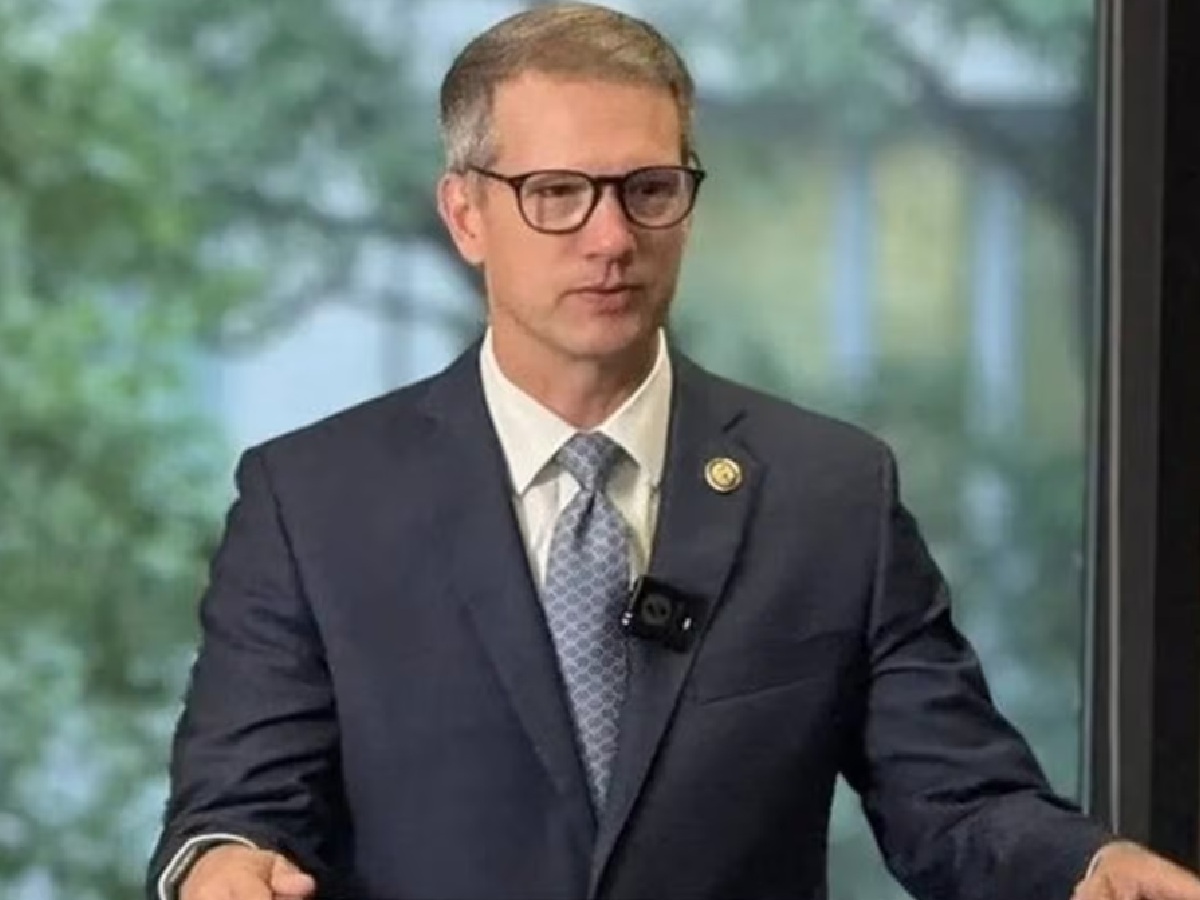
The political firestorm surrounding India’s proposed Foreign Contribution (Regulation) Amendment (FCRA) Bill has officially crossed national borders, drawing sharp international criticism. As the central government gears up to push the controversial legislation through Parliament during the ongoing Monsoon Session, a prominent US lawmaker has launched a fierce attack against the bill. While domestic opposition parties and civil society groups have continuously argued that the legislation grants excessive state control over institutions relying on foreign assistance, international pushback has added a complex diplomatic layer to the debate.
US Congressman Riley Moore Slams FCRA Bill, Cites Threat to US-India Relations
US Congressman Riley Moore took to the social media platform X to voice his intense displeasure, labeling the proposed amendment as a direct threat to minority and religious organizations in India. Referencing historical context, Moore stated that Christians have maintained a presence in India since the arrival of St. Thomas on the Malabar Coast centuries ago. He criticized the legislative direction by asserting that despite this deep historical lineage, India’s Parliament is deliberating amendments that would empower the government to tightly regulate and control churches and charitable trusts. Warning of diplomatic fallout, Moore explicitly stated that moving forward with the bill could potentially jeopardize bilateral ties between Washington and New Delhi.
What is the FCRA Bill and Why is it Under Scrutiny?
The heavily debated FCRA Amendment Bill was initially introduced in the Lok Sabha during the Budget Session and is now slated for formal consideration and debate in the Monsoon Session. The core legal framework governs all foreign donations and grants directed toward non-governmental organizations (NGOs), charitable trusts, and educational and religious bodies across the country. Under existing rules, any entity wishing to accept foreign funds must register with the Ministry of Home Affairs and renew its license every five years. Recent government data indicates that as of July 15, 2026, there are 14,449 active FCRA-registered organizations in India, which collectively accumulated a massive ₹55,741 crore in foreign donations between 2019 and 2022.
Key Proposals and Stricter Guidelines Under the New Amendment
The proposed legislative changes introduce rigorous compliance hurdles and tighter financial oversight for recipient organizations. Among the major amendments, the central government is empowered to appoint an official administrator to take over the management of foreign donations and physical assets acquired by an entity if its FCRA registration is revoked or fails renewal. Additionally, organizations that have received or utilized foreign contributions totaling less than ₹1 million over the preceding two years will lose eligibility for license renewal. The framework also clamps down on secondary transfers, prohibiting entities from passing foreign donations down to other organizations, alongside imposing strict temporal deadlines for utilizing funds and mandatory project disclosures across official websites and social media channels.