
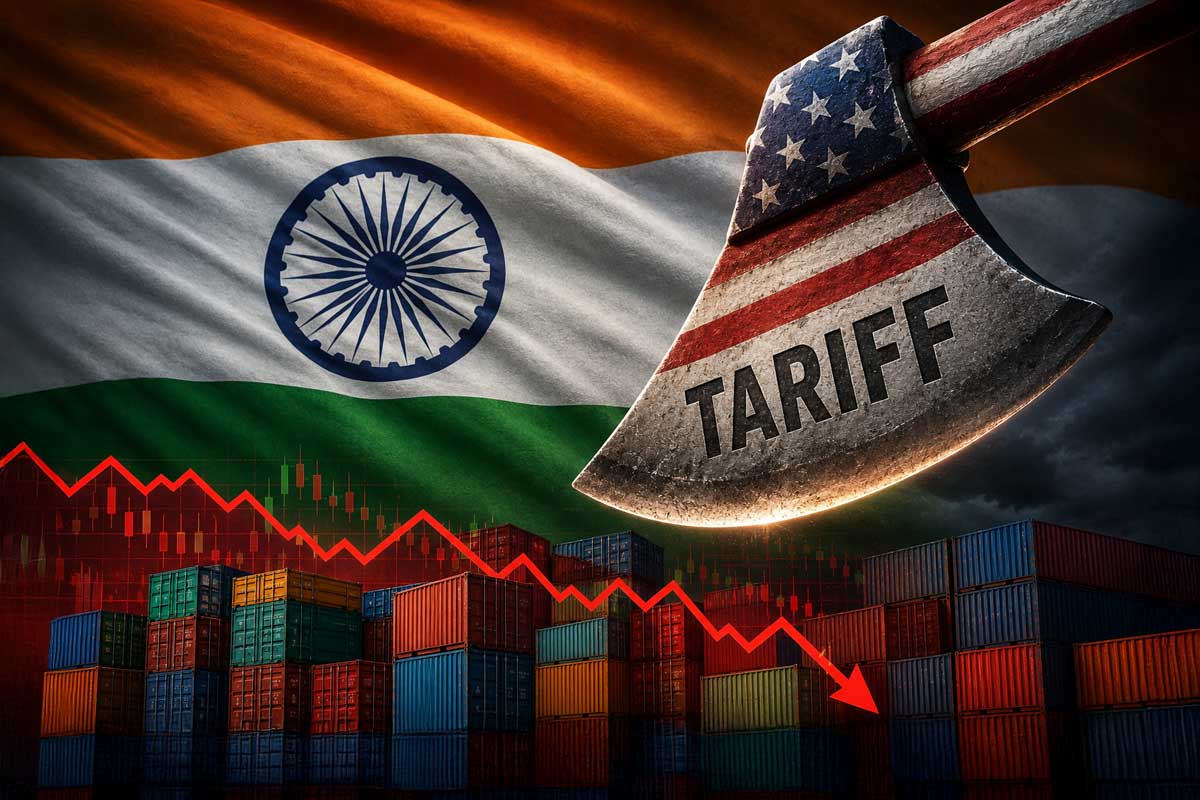
US tariffs on India again! What does the Ministry of Commerce say in Trump’s announcement?

America has proposed to impose 12.5 percent additional tariff on India (US Tariff On India). Delhi did not take this well. In a brief response, Delhi informed that the trade agreement with America is still being discussed. Discussions are continuing between the two countries on various issues. The tariff issue is also not final.
The US Department of Commerce has proposed to impose these tariffs on a total of 60 countries, including India, using Section 301 of the US Act. Under US law, the tariffs are proposed to ban imports of goods made with forced labor. Needless to say, this step of the Trump administration in the midst of the crisis created around the world due to the war in the Middle East is of considerable concern to India.
A Union Ministry of Commerce statement on the matter said, “India is in discussions with the US on the implementation of Article 301. Also, work is underway to finalize the trade agreement between the two countries as per the joint statement announced on 2 February 2026 and released on 7 February 2026.” The Center further informed that, besides the products already covered under Article 232 duty, certain other products have been excluded from the proposed tariff regime. However, everything is still under discussion.
According to the US Department of Commerce, among the 60 countries that have been proposed to impose additional tariffs of 12.5 percent, India, China, Japan, South Korea, Britain, and several Southeast Asian countries are noteworthy. The White House claims the move is aimed at countries that have failed to impose restrictions on products made with forced labor and that have failed to enforce such laws. Countries that have imposed a full or partial ban on forced labor-based imports may face a 10 percent tariff, and those that have implemented no such ban may face a 12.5 percent tariff. However, this proposal is still under discussion. The US administration will take a final decision on this issue only after receiving and reviewing public opinion.
Comments are closed.