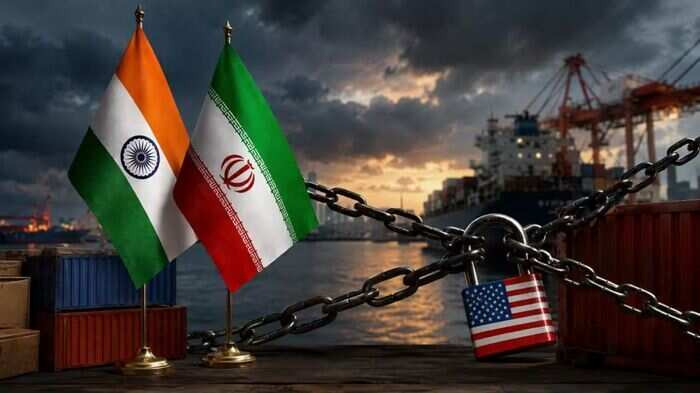
Amidst the changing geopolitical equations in West Asia, the impact of America’s economic tightening grip on Iran is now clearly visible on Indian business. New campaigns launched by Washington to isolate Iran from the global financial system and the ban imposed by the United Arab Emirates (UAE) on trade activities with Tehran have raised great concerns for India. This seems to have a direct impact on the export of premium Basmati rice, tea and pharmaceuticals (medicines) from India to Iran. This situation has emerged as a new and big business challenge for Indian exporters and farmers.
Big threat looms on export of rice and tea
According to the Indian Rice Exporters Federation, in the first half of the year 2026 alone, India has exported rice worth about $ 383.1 million (about Rs 3,638 crore) to Iran. Iran is one of the largest and important foreign markets for Indian long grain premium Basmati rice. There has been a huge disruption in this supply chain due to US sanctions and closure of UAE routes. Moreover, tea worth about $14.3 million has been exported from India to Iran during the same period. Tea Board experts believe that if alternative methods of payment and shipping are not found soon, Basmati millers and tea planters of North India may have to suffer huge financial losses.
Difficulties increased due to closure of payment and Dubai route
Traditionally most of the trade between India and Iran was conducted through the financial and commercial channels of the United Arab Emirates (UAE). Indian traders used to receive payments in dirhams or dollars through UAE. But now with the UAE suspending financial transactions with Iran, this strong network of intermediaries has weakened. Although there are some technical exemptions for medicines and food items on humanitarian grounds, the levy and transaction costs have increased significantly due to stringent banking compliance (over-compliance), expensive shipping freight and high marine insurance premiums.
There is also a possibility of impact on strategic and energy security.
Bilateral trade between India and Iran has already declined significantly over the past few years, down from a peak of $17 billion in fiscal year 2018-19. At present this trade is mainly limited to essential and humanitarian exempted goods. Apart from this, clouds of uncertainty are also looming over India’s energy security and the strategically important Chabahar Port Project and the International North-SOUTH Transport Corridor (INSTC). Experts say that if the situation remains like this, India will have to find new and safe global markets for its agricultural products.