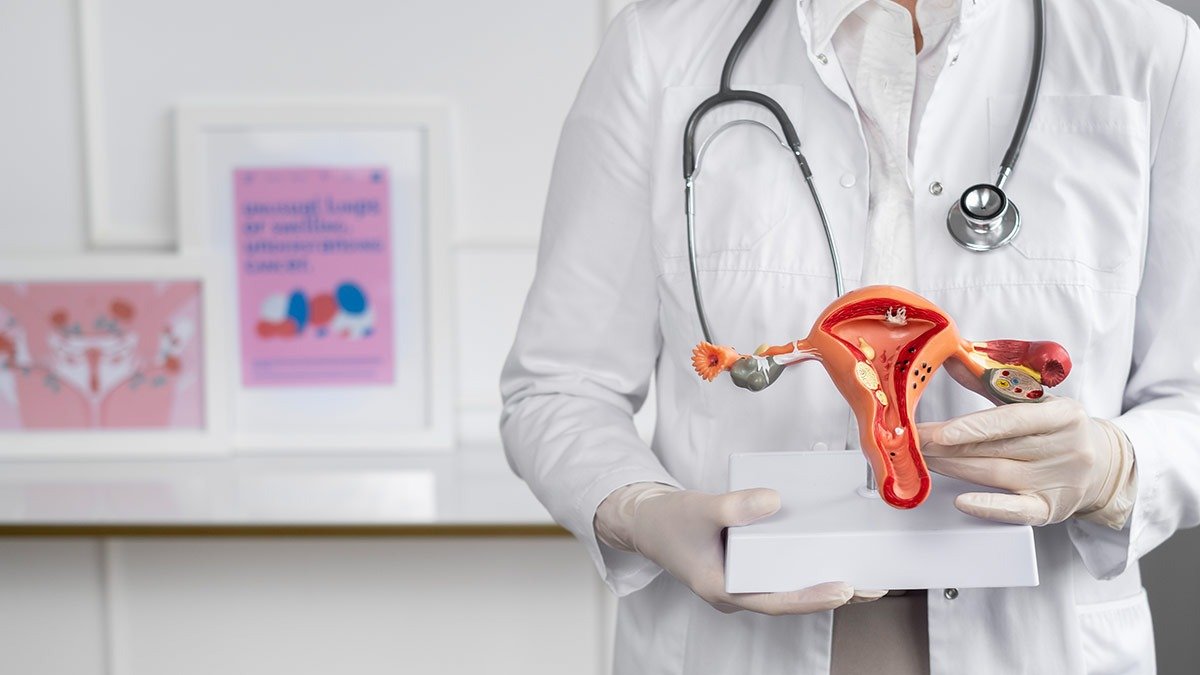
Sometimes in the history of medical science, such cases come to the fore which completely stun not only the general public but also the experienced surgeons and scientists. Recently, when a normal man, who was outwardly completely healthy, bearded and with normal male genitalia, reached the hospital for treatment of stomach ache or hernia, the doctors in the operation theater were left wide-eyed. When the surgeon was examining the lower part of the abdomen, he saw a fully developed uterus, fallopian tubes and an organ like cervix. At first sight it seems like a miracle, a divine event or a fantastical story, but according to modern genetics and embryology it is an extremely rare and true congenital condition. This medical condition can be expressed in the language of science. ‘Persistent Müllerian Duct Syndrome’ (PMDS) It is said. Only a few hundred cases have been recorded worldwide so far, which forces a fresh understanding of the complexities of human anatomy.
To understand this rare condition we have to go back to the time when a baby was just a few weeks old fetus in the mother’s womb. For the first 6 to 7 weeks of conception, every human fetus is anatomically neutral. At that time a dual vagina system is present in the body of the fetus:
-
Wolffian Duct: Which further forms the male reproductive organs (such as vas deferens, epididymis and seminal vesicles).
-
Müllerian Duct: Which further develops the female reproductive organs (uterus, fallopian tubes and upper vaginal tract). If the genetic code of the fetus 46 That is, if it is a male, then the SRY gene present on his Y chromosome becomes active and the formation of testicles starts. The Sertoli cells of these testicles produce a special hormone called Anti-Müllerian Hormone (AMH) Or called Mullerian Inhibiting Substance (MIS). Under normal circumstances, this AMH hormone destroys or disappears the Mullerian duct completely, leaving only the male organs and stopping the development of the female organs.
Persistent Mullerian Duct Syndrome (PMDS) is a rare genetic disorder (Autosomal Recessive Disorder). In this condition, the patient is genetically completely male (XY chromosome), has normal testosterone hormone and his external genitalia are also like normal men. But the inner uterus is saved because of two major shortcomings:
-
Mutations in AMH gene: In approximately 45% of cases, the fetal testicles do not produce sufficient amounts of anti-Mullerian hormone (AMH).
-
AMH receptor defect (AMHR2 gene mutation): In about 40% of the cases, the hormone is produced in normal amounts, but the receptors present on the cells are not able to detect that signal. This is called insensitivity to hormones. In both circumstances the Mullerian duct does not receive the order to disappear. The result is that the man’s testicles and male organs develop normally, but at the same time an underdeveloped or full uterus and fallopian tubes also quietly develop and remain inside his abdomen forever.
Men suffering from PMDS usually do not experience any kind of problem in childhood or adolescence. Their voice is heavy like that of normal men, they have normal beard and mustache on their face and their muscles are also developed like men. This condition remains hidden for years and is revealed mostly under two circumstances:
-
Undescended Testis (Cryptorchidism): When in childhood, the testicles are not able to descend normally into the scrotum (scrotum) and remain stuck in the stomach.
-
Inguinal Hernia: At puberty or at the age of 30-40 years, the patient goes to the doctor complaining of swelling and pain in the lower abdomen or thigh joint. Sometimes the uterus and fallopian tubes slip into the hernia sac, which is called ‘hernia uteri inguinali’. When the surgeon makes an incision to repair the hernia or conducts an ultrasound/MRI, it is then the sensational revelation that a uterus is present in the patient’s abdomen.
The most sensitive question that arises in such cases is whether the person can live a normal married life and produce children?
-
Fertility status: In many cases, if the testicles are healthy and the vas deferens are protected, the man produces sperm and is able to become a father normally. However, in many patients, due to the testicles being trapped inside the abdomen and high temperature, the sperm count becomes zero (Azoospermia) or very low, which can lead to infertility.
-
Surgical Procedure and Cancer Risk: The biggest challenge before the doctors is to safely remove this internal uterus. If female organs and testicles stuck in the abdomen are not treated timely, they have an increased risk of developing tumors or cancer (such as seminoma or adenocarcinoma). Therefore, the uterus is removed very carefully through laparoscopic or open surgery. During this, utmost care is taken to ensure that there is no damage to the man’s seminal ducts and blood vessels so that his masculine ability and erection are not affected.
This rare condition proves how finely and complexly constructed the human body and nature are. The silencing of a small hormone or gene can alter the entire internal structure of the body. Today’s modern medical science and advanced genetic testing are able to cure such cases completely safely without any social stigma or inferiority complex, allowing the affected person to live a normal, healthy and dignified life.