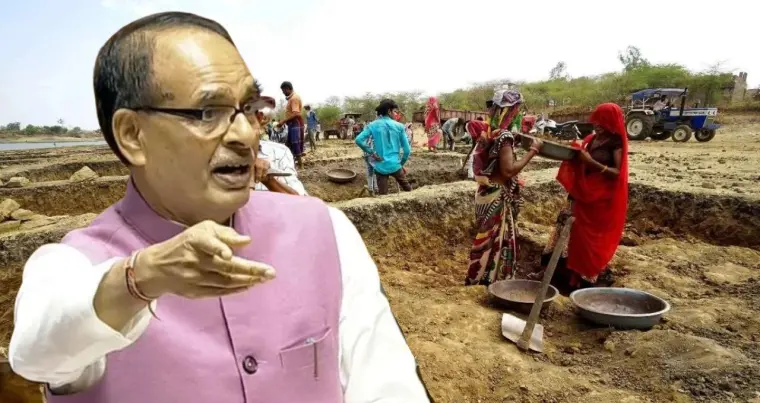
It has been almost a month since the VB-G RAM G scheme, which was implemented in place of MGNREGA, was started. During this period, more than 9.69 crore person-day employment has been generated under the scheme.
New Delhi: The Central Government has shared important figures in the Lok Sabha regarding rural employment. According to the government, more than 9.69 crore person-days of employment were recorded in rural areas of the country in the first month after the implementation of VB-GRAM. Under the new system, the average wage rate has also increased. Now the national average daily wage has reached Rs 327.4.
The new rural employment scheme has been implemented in place of MGNREGA. According to the government, its objective is to provide legal guarantee of employment to rural families as well as to increase income and employment opportunities in the rural economy.
9.69 crore person-day employment in the first month
According to written answers given in the Lok Sabha, more than 9.69 crore person-days of employment were recorded in a period of about one month after the implementation of VB-GRAM G. Person-day means employment provided to one person for one day. Therefore, this figure does not indicate how many different people got jobs, but shows the total number of employment days.
The importance of such employment in rural areas is even greater because the scheme focuses on providing work to those families whose adult members are ready to do unskilled manual labour.
Average wage increased to Rs 327.4
The government said that under VB-G RAM G, an interim base wage rate of Rs 300 per day was implemented from July 1. After this, the national average declared wage increased from Rs 298.8 to Rs 327.4 per day. Accordingly, the national average wage has increased by about Rs 28.6 per day. According to the government, before the scheme was implemented, the declared wages in many states were less than Rs 300.
The lowest declared daily wage was around Rs 241. However, the actual wage rate may vary from state to state and will depend on the relevant rules and notifications.
Parliamentary committee recommends Rs 400 minimum wage
Meanwhile, the Parliamentary Standing Committee related to Rural Development and Panchayati Raj has expressed the need to review the existing system of determining wages under the Rural Employment Scheme. The committee headed by Congress MP Saptagiri Shankar Ulka has recommended reviewing the base year and inflation scale used in determining wages.
The committee says the current system cannot adequately reflect the real cost of living in rural areas. The committee has recommended considering a minimum wage of Rs 400 per day, keeping in mind the regional economic conditions.
Emphasis on fixing wages in line with inflation
The Parliamentary Committee has stressed the need for regular revision of wages keeping in mind the actual spending capacity of rural households. According to the committee, such an inflation index is necessary for rural areas, which can better reflect the actual cost of living. The committee has also recommended systematic indexation of wages i.e. ensuring periodic changes in line with inflation.
It believes that unless there is a comprehensive reform of the wage determination structure, financial scope for adequate wage increases should be created in the existing system.
Guarantee of 125 days employment to every family
Rural Development Minister Shivraj Singh Chauhan told in the Lok Sabha that VB-G RAM G is applicable in rural areas of the country. Under the scheme, every eligible rural family is given a legal guarantee of 125 days of wage employment in a financial year. This employment is for adult family members who are willing to do unskilled manual work. The government claims that this system will help provide rural families with employment and a more stable source of income.
On states' concerns regarding the financial structure of VB-G RAM G, the Center clarified that a 60:40 funding model has been adopted in the scheme. That is, in normal states, the central and state governments will share the expenditure in the prescribed ratio. There is a separate funding arrangement for the North-Eastern and Himalayan states as well as union territories. The expenditure in these areas will be shared in the ratio of 90:10, in which the central government will bear 90 percent share.