He spoke at a ministry press conference on the preliminary findings of the Office of the U.S. Trade Representative (USTR) in its investigation into industrial overcapacity.
The U.S. released findings for 14 of the 16 economies under investigation, Vietnam included, under Section 301 of the Trade Act of 1974, which targets unfair trade practices. President Donald Trump’s administration has proposed new tariffs of 15-35% on these partners.
Chu Thang Trung, acting director of the ministry’s Trade Remedies Authority, said the USTR has proposed an additional tariff of up to 35% on Vietnam. The rate is only a proposal, has not taken effect and could fall to 20% if the two countries reach an Agreement on Reciprocal, Fair and Balanced Trade (ART).
The final rate will depend on information the parties provide, the outcome of consultations and progress in Vietnam-U.S. negotiations, he added.
Thai said Vietnam is working with the U.S. through two parallel channels. The first is taking full part in the U.S. investigation, including supplying information, submitting written rebuttals and attending public hearings. The ministry has prepared comments to send to U.S. investigators.
The second is negotiating the reciprocal trade agreement, in which Vietnam has offered commitments that match, and in some areas exceed, those in all the free trade agreements (FTAs) it has signed.
“Vietnam has put forward commitments at the highest possible level, showing maximum effort in the negotiations, including commitments that are unprecedented,” he said.
Thai added that the investigated countries he had spoken with on the sidelines of international conferences all disagreed with the overcapacity allegations behind the tariffs.
On Wednesday, just before the U.S. released its preliminary report, Permanent Deputy Prime Minister Pham Gia Tuc met with ministries and agencies to discuss risk management measures.
On the reciprocal trade talks, Foreign Ministry spokeswoman Pham Thu Hang told a press conference the same day that the two sides have largely agreed on the content. “Only a few technical issues remain to be discussed and clarified before the negotiations are completed,” she said.
|
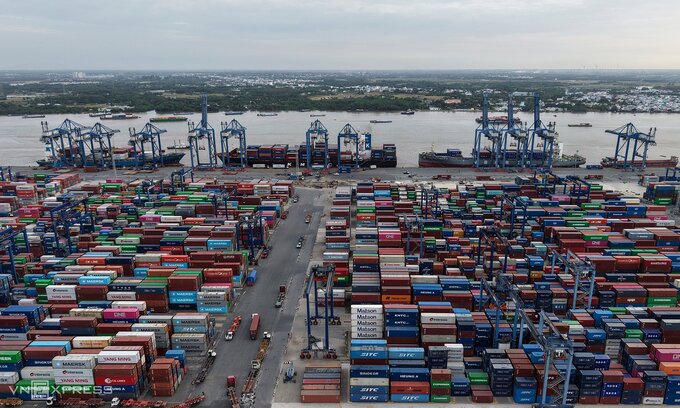
Containers at Cat Lai Port in Ho Chi Minh City on Feb. 4, 2026. Photo by Read/Thanh Tung |
In July, the U.S. began collecting new tariffs on 60 economies over imports of products made with forced labor, with Vietnam facing a rate of 12.5%.
Thai said Washington has yet to decide how tariffs from the two investigations will be applied. “They have also not decided whether the two tariffs will be stacked or merged,” he said, adding that the U.S. plans to weigh the tariffs as a whole after taking in the parties’ views during consultations.
Vietnam also faces a Section 301 investigation into intellectual property, handled by the Ministry of Science and Technology. The U.S. has extended that probe, and it is unclear when preliminary findings will be released.
Thai said Vietnam has made considerable efforts to enforce intellectual property rules and has joined new-generation FTAs with high standards in the field, so it hopes the U.S. will not impose tariffs when the investigation ends.
Amid the shifts in trade policy, the ministry advised businesses to draw up their own risk management plans suited to each product group.
Under the preliminary overcapacity findings, the USTR proposed exempting 2,021 tariff lines, including some Vietnamese exports such as tea and coffee. Products covered by Section 232, the national security tariffs on steel, aluminum and cars, may also be spared the additional Section 301 duties in line with recent U.S. practice, meaning risk levels will vary across sectors, the ministry said.
It urged companies to watch for warnings on tariff evasion, diversify their markets and consult the government’s 2026-2030 overall plan for managing the trade surplus to head off risks.
Despite the complex international trade environment, Vietnam’s total import-export turnover is expected to hit a record of more than $1.2 trillion this year, exceeding its target, Thai said.