At lunchtime, nearly every red and blue plastic chair at their Toronto eatery is occupied. Customers chat while enjoying snacks such as mixed rice paper salad (banh trang tron), sweet soup Thatand rice paper rolls (banh trang cuon).
Vietnamese-language signs adorn the walls, recreating the atmosphere of casual street-side eateries in Ho Chi Minh City.
Behind the business are Kim Ngoc and My Loan, both 29, who opened their first Premium Banh outlet in October 2024 using savings accumulated over years of working.
|
Kim Ngoc (L) and My Loan at their restaurant in Toronto, Canada. Photo courtesy of Ngoc |
By August 2026, they had their third outlet and around 20 employees.
The duo moved to Canada in 2017 to study culinary arts. After graduating and gaining work experience, they met while working at a steakhouse in Toronto.
Both grew up in HCMC and shared a fondness for Vietnamese street food. Whenever they craved a familiar dish, they would ask friends and relatives coming from Vietnam to bring rice paper.
Their search for familiar flavors made them realize there was demand for Vietnamese street food in Toronto.
Giving up stable jobs and good salaries to sell Vietnamese snacks was not an easy decision.
“We figured that since we’re still young, we might as well give it a try,” they explain.
 |
|
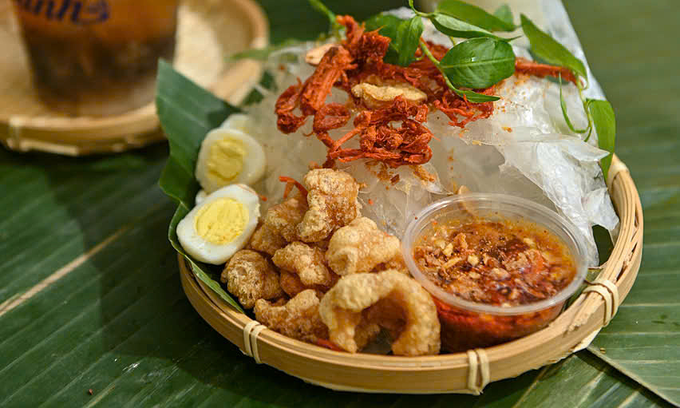
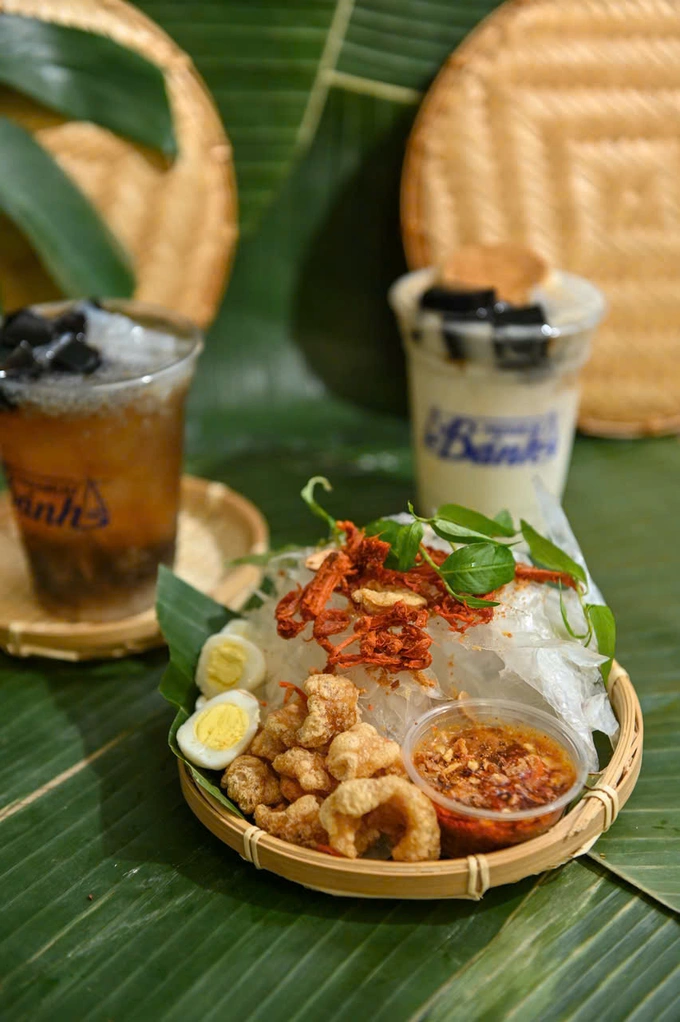
Banh trang tron, mixed rice paper salad, is a must-try at Premium Banh. Photo courtesy of Ngoc |
In October 2024, they invested their savings to open their first outlet.
“We want Vietnamese customers to rediscover familiar flavors and offer foreigners a chance to explore popular Vietnamese street foods,” Ngoc says.
Around 70% of their ingredients, including dried beef and dried shrimp, are imported from Vietnam, while fresh meat, vegetables, and eggs are sourced locally.
The pair pay attention to small details to preserve the original flavors. For banh trang tronfor instance, they use kumquat instead of regular lime to achieve its characteristic sourness.
A serving of mixed rice paper salad costs CAD13-14 (US$9.12-9.82) while other snacks range from CAD10-20; desserts and drinks are priced at CAD7-11.
Building business from scratch
The first 18 months were challenging.
Ngoc and Loan took responsibility for almost every aspect of the business, from finding locations and renovating premises to sourcing ingredients, recruiting employees, managing finances, developing recipes, and monitoring food quality.
The business initially brought in too little money, meaning the two were without a regular income to take care of their living expenses for a longish period.
They relied on their savings and reducing their spending from around CAD4,000 each to CAD1,500.
They also had to navigate Canadian business regulations and food safety standards while establishing a reliable supply chain for their ingredients.
Loan recalls the difficult days: “There were times when the work left us completely exhausted; some nights, we barely slept at all. We just kept encouraging each other, reminding ourselves that even a small improvement over the previous day was a win.”
A turning point came last year when they took their food to a Vietnamese culinary festival in Canada. Their stall attracted long queues from the moment it opened comprising both Vietnamese expatriates and locals.
Following the event, many visitors sought out their restaurant and recommended it to friends and family, helping the business build a stable customer base.
Ngoc remembers one customer who tried banh trang cuon for the first time and was surprised by the combination of flavors.
“She took a bite and exclaimed, ‘Wow!’—she hadn’t expected it to be so delicious. In the west, people are familiar with mango smoothies, but the idea of using mango inside rice paper rolls was completely new to them. When she learned the dish originated in Vietnam, she said, ‘Oh my goodness, why didn’t I discover this sooner?’ She ended up coming back every single week.”
As the brand expanded to multiple locations, maintaining consistent food quality became another challenge.
Ngoc and Loan developed standardized ingredient measurements, seasoning ratios and preparation procedures for every dish, particularly banh trang tron and their varieties of That.
Their focus has shifted from establishing the business to building a sustainable Vietnamese food brand in Canada.
“Rapid expansion is certainly welcome, but the most important thing is to maintain quality and a genuine passion for the food,” the two add.