The device, called AusculPatch, measures roughly 20 by 47 by 3 millimeters. At its center is an ultra-thin silicon cantilever, separated from its frame by an air gap about a micron wide, that picks up the faint mechanical vibrations traveling through skin from the heart, lungs and blood vessels.
A coin cell battery and an integrated chip convert those vibrations into a readout a doctor can review remotely.
The team described the work in June in the journal Nature Communications, with UNSW doctoral candidate Tran Bach Dang as first author. The sensor reads across a band from 0.2 Hz to more than 10 kHz, capturing pulse waves, heart sounds, breathing patterns and vocal cord vibrations.
“Our goal is to develop cheap but effective devices so that people can monitor their own health at home,” Phuong said.
Phuong holds a Scientia Associate Professorship in UNSW’s School of Mechanical and Manufacturing Engineering and, since 2024, a Future Fellowship from the Australian Research Council. His group works on semiconductor devices including MEMS and NEMS, integrated sensors and flexible electronics.
UNSW placed 19th in the world and first in Australia in the 2027 QS World University Rankings released in June, the first time it has topped the national table.
Phuong already excelled academically in high school, where he won third prize at the national level and reached the selection round for Vietnam’s International Mathematical Olympiad team. He was admitted without examination to Hanoi University of Science and Technology in 2004 to study automation.
His father fell ill that same year and needed intensive care. Phuong told himself he had to become a good enough engineer to look after his family.
After a strong first year he won a full Japanese government scholarship.
He arrived without the language. He and other international students spent a year at Tokyo University of Foreign Studies before sitting entrance exams for their specializations.
“I buried myself in preparation and worked twice as hard to compete, and I got into the mechanical engineering department at the University of Tokyo,” he said.
In his fourth year he spent almost all his time in the laboratory, writing a thesis on sensors for mobility assistance robots meant to help the elderly, medical staff lifting patients and workers doing heavy labor. He stayed at Tokyo for a master’s, switching fully to semiconductor sensors.
Two members of his group dropped out.
“The pressure was enormous, but I think Vietnamese people have one strength, which is resilience and endurance,” he said.
|
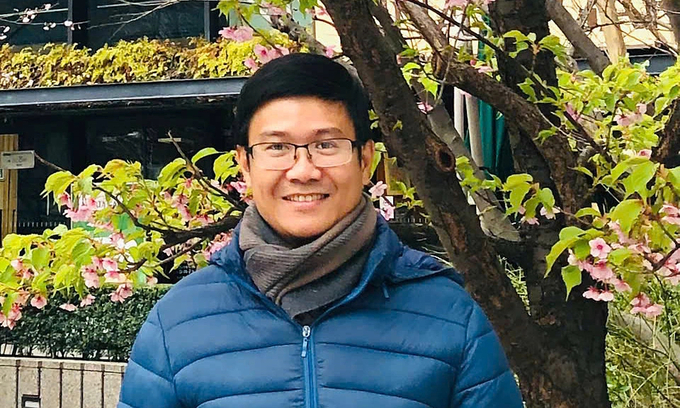
Associate Professor Phan Hoang Phuong. Photo courtesy of Phan Hoang Phuong |
He finished in 2013 and moved to Griffith University in Australia for a doctorate under two Vietnamese supervisors, Dzung Viet Dao and Nam-Trung Nguyen, building sensors for harsh industrial environments.
Visiting his father in hospital, he had watched patients pinned in place by equipment trailing cables, and thought wireless and flexible would be better.
Silicon carbide is rigid and brittle because it is grown on a hard silicon base. Working on a project to cool high-power electronics in 2017, Phuong found it could be lifted onto a soft one.
He approached John Rogers, a leading soft electronics researcher at Northwestern University, and spent 2019 there as a visiting scholar. After repeated failures the transfer worked, and the results ran in ACS Nano in 2019 and in the Proceedings of the National Academy of Sciences in 2022.
Doctors began working with him on implants that could sit inside the body for years without replacement. Their questions sent him back to devices worn outside it, this time for people with heart disease or at risk of it.
Patients with heart conditions have to travel to a clinic to be assessed, Phuong said, which delays detection and worsens outcomes.
Rather than improve the stethoscope, his team built something that sticks to the chest and sends data to a doctor over the internet.
The group modeled the sensor to catch the very low frequencies of heart sound, obtained approval for human trials, and tuned the adhesive so the patch would hold without irritating skin.
In a separate demonstration, they trained a machine learning model on throat vibrations to recognize spoken words and wirelessly steer a robotic arm, a result they say could eventually help people with speech disorders.
Phuong is now working with St Vincent’s Hospital in Sydney to gather data, with roughly 200 patients targeted this year, all of them either living with heart valve disease or using left ventricular assist devices.
A machine learning model trained on that data would then predict which valve condition a patient has.
Studies of about 1,000 patients are planned after that, and Phuong estimates four to five years before a medical-grade version could reach clinics.
He also collaborates on a soft micro-endoscopic robot led by UNSW associate professor Do Thanh Nho, designed to detect and remove cancers in tubular organs such as the breast, lungs and pancreas.
Healthcare has room for students of semiconductors, electronics and mechatronics, Phuong said. Demand for remote care is rising faster than the sensors available to serve it, and materials such as soft polymers could be made at scale.
Hardware engineers, semiconductor engineers above all, remain in demand even as AI advances, because designing, fabricating and testing hardware still takes people.
Beyond persistence, he said, young engineers need curiosity about devices and the patience to work out how they run.
“In the end, a solid foundation in semiconductors and physics, together with independent logical thinking rather than dependence on AI, is the key,” he said.