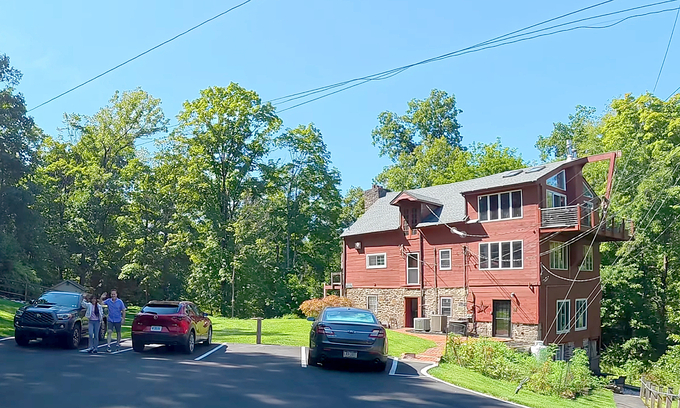
Luong, 33, from Binh Phuoc Province, met Walter F. Hammer in 2021 through mutual friends in HCMC. At the time, she was teaching at an international school, while he worked as an engineer and businessman.
Hammer had traveled to 11 countries but considered Vietnam the most livable, returning three or four times a year.
When the two first got to know each other, Luong helped him connect with potential business partners, while he often spent time with the volunteer group where she taught English.
During their outings, Hammer would carry Luong’s then 3-year-old son, Liam, on his shoulders and play with him for hours.
|
Luong and Walter stand in front of their residence in Pennsylvania in August 2026. Photo from YouTube/KC Cuoc Song My |
On Valentine’s Day in 2023, Hammer proposed to Luong, saying: “We’ve both been through heartbreak. Let’s make up for it together. I love you, and I also love your son very much.”
The American man’s sincerity restored Luong’s faith in marriage. In March 2025, she followed him to a foreign land. Five months later, her son joined them.
On his first afternoon at the new house, Liam was exhausted and didn’t pay attention to his surroundings. But by the next day, he was running barefoot on the grass, racing and playing soccer with his stepfather and picking fruits in the garden with his mother. “That was when Rush Valley Mills truly became home,” Luong says.
Rush Valley Mills has a history of over 300 years. It was built in 1718, originally as a water-powered mill, and then, in 1750, the owner built a small house to live in. Over generations, the site was converted into apartments.
In 2003, Hammer purchased the entire estate. With his engineering background, it took him seven years to repair and upgrade the four-hectare property. It now consists of two main structures with similar architectural styles: foundations laid with 40-centimeter-thick natural stone, and upper floors built of wood.
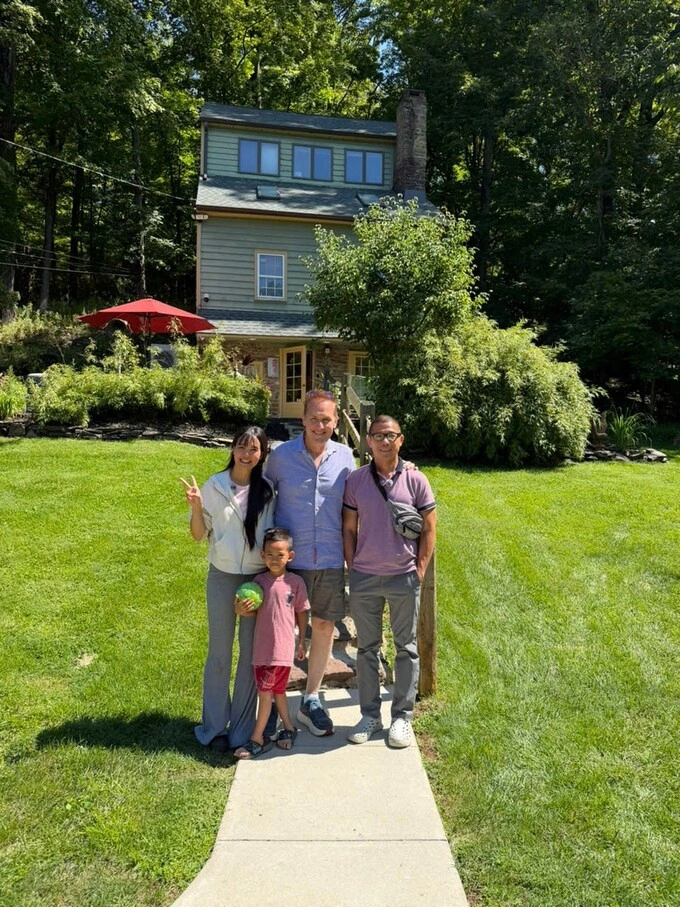
Of them, the old red wooden mill, measuring 375 square meters, is divided into four rental apartments. Opposite the mill is a green 120-square-meter wooden house that serves as the living quarters for Walter’s family.
200 meters away is a two-story mechanical workshop. Behind it, he has set up a completely separate laundry area so that the noise would not disturb the living space. The property, nestling among 80 hectares of forest, is inhabited only by their family and five others.
 |
|
Luong and her husband with their son and a Vietnamese guest. Photo courtesy of Luong |
Life for the Hammers is peaceful. In summer, the family often wades in Mill Creek to catch snails, shrimp, and freshwater crabs hiding under the rocks. There are many days when they lie in bed, watching wild deer and rabbits graze right outside the window.
Last winter, the snow was 40 cm deep, and the slope in front of their house became a sledding track. On weekends, the American man takes his wife and son for rides in the forest in an off-road vehicle.
Whenever he sees logs blocking a shallow stream, he pulls them out with cables or saws them off to clear the flow. Since Luong arrived, a garden with melons, eggplant, and various Vietnamese herbs has appeared along the stream bank.
To share the workload with her husband, she spends one morning a week mowing the lawn and tending the garden. He supported his wife’s decision to work so that she can be independent.
Three months after arriving in the U.S., she completed the six credits required by the state, submitted her bachelor’s degree in early childhood education, and was hired by a private school that is 15 minutes away by car.
While she is at work, he takes care of the housework, from cooking to picking up their son. He teaches Liam to be independent, enjoy nature, and limit the use of electronic devices. The child adapted quickly, caught up with the English curriculum, and is about to enter first grade.
The inside of their wooden kitchen always smells of braised pork, sour soup, and boiled vegetables every evening. Not only is Hammer captivated and able to recite the names of his wife’s hometown dishes, but the neighbors around the area have also become familiar with Vietnamese dishes that Luong cooks.
The couple have agreed not to have more children so that they can focus on caring for Liam. Though attached to this 300-year-old estate, Hammer prefers the communal Vietnamese lifestyle, and so plans to return to Vietnam with his family two years from now and live there for a while.
When he found out about the policy allowing foreigners to acquire Vietnamese citizenship if married to local citizens, he urged her to look into the paperwork immediately. He is thinking of buying another house in Vietnam once he retires so that he can split his time between the two countries.
Looking at the deer running behind their house and turning to see her husband playing with their son, Luong considers her current life the epitome of peace. “It does not matter whether we live in an ancient house in the U.S. or an apartment in Saigon. A warm home isn’t defined by the exterior,” she says. “As long as you come home to someone who has already got the rice cooking, and loves both you and your child, anywhere is warm.”
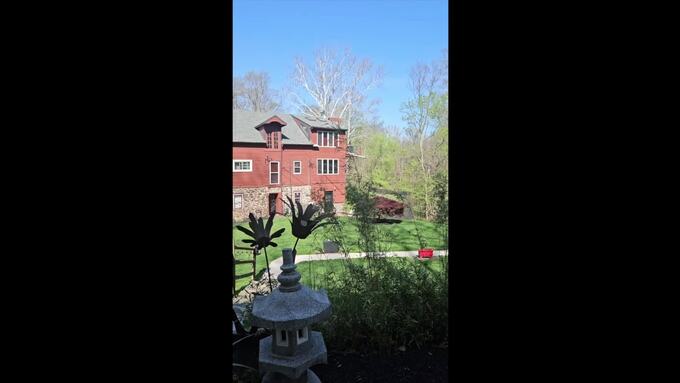
A video of the life of the Vietnamese-American family. Video from YouTube/Me viet o my