
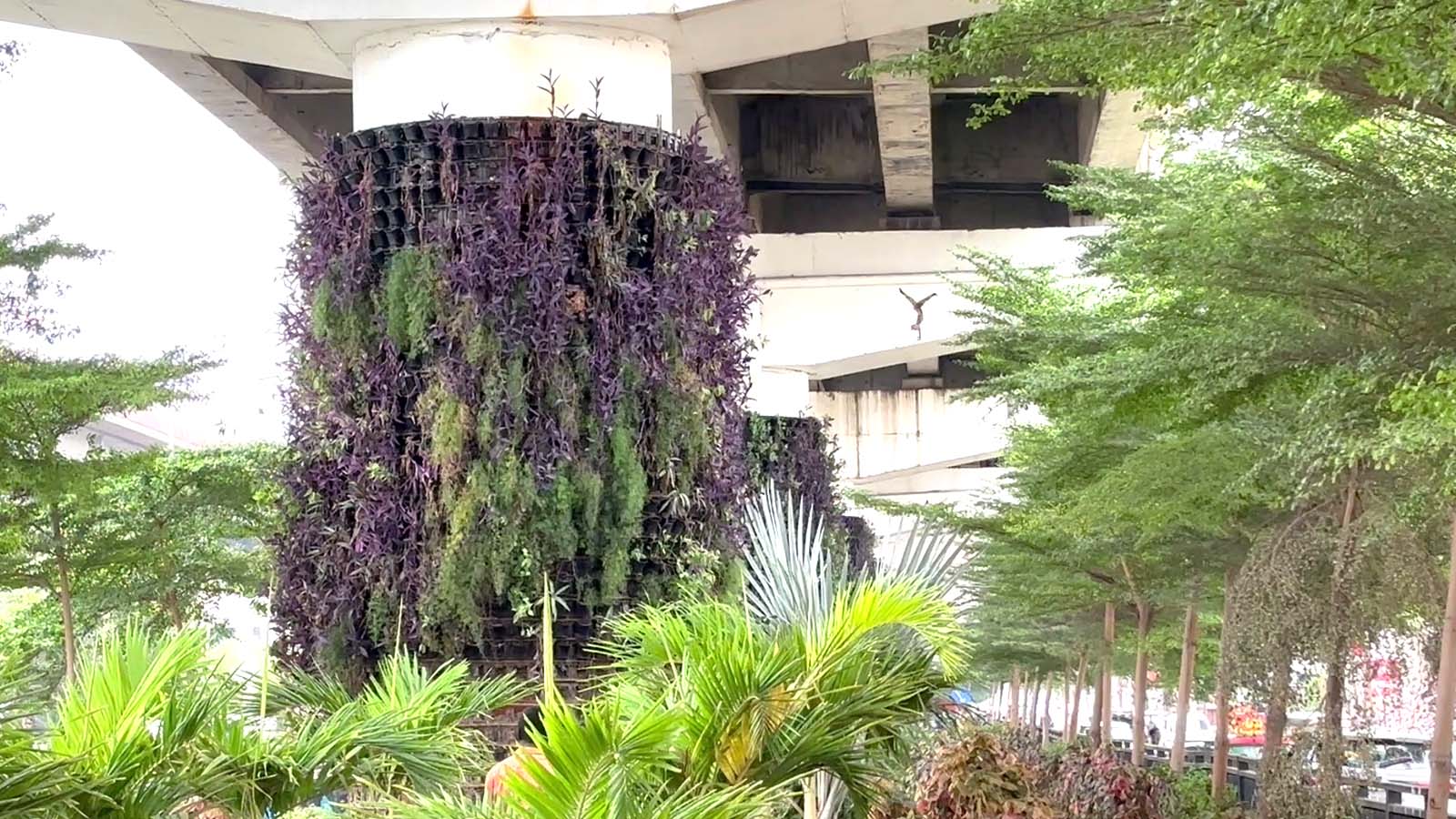

Like many other Indian cities, Vijayawada, the second-largest in Andhra Pradesh, is becoming a sea of concrete amid rapid urbanisation. However, the civic authorities have decided to make the hard structures look soft and soothing to the eyes. Consequently, they have adorned pillars of Vijayawada’s major flyovers with colourful Croton plants.
Also read: Glorious past, bleak future? Faculty crunch, political meddling haunt Andhra varsities
These vertical gardens, which have been erected by the city’s civic authority (Vijayawada Municipal Corporation or VMC), however, offer more than just aesthetic appeal. It also aims to reduce the quantity of air pollution and urban heat levels and allow the city residents to lead a healthier life.
It started with the city’s Kanakadurga Flyover
The idea was first implemented in 2017-18 with the city’s Kanakadurga Flyover, which runs a distance of more than two-and-a-half kilometres, and later expanded to five flyover and bridge projects in key locations of Vijayawada, including Benz Circle, One Town and Netaji Bridge.
The Benz Circle flyover, for example, features 105 pillars. By March 2024, sixty of these pillars saw installation of the vertical gardens. Similarly, 17 pillars of the One Town flyover and the railings of the Netaji Bridge (flyover) have been adorned with vegetation. Moreover, similar work has begun at the Screw Bridge area after funds worth Rs 18 lakh were allocated.
The entire beautification project was not announced all at once. While funds from the 15th Finance Commission’s ‘Air Pollution Grant’ were utilised, last year, beautification works — comprising landscaping and vertical gardens — worth Rs 5 crore were carried out along the stretch between the Benz Circle Flyover and the Ramavarappadu-Screw Bridge.
While half of the total work, valued at Rs 2.5 crore, had been completed in February last year, T Chandrasekhar, VMC Executive Engineer (Parks), said the work was progressing somewhat slowly due to a shortage of soil. It was learned that Rs 850 was being spent per square foot for the entire project.
Why Crotons were chosen?
But why were Croton plants chosen for the beautification? While their colourful leaves make them look attractive, there are also reasons of adaptability. Climbers or trees cannot survive beneath flyover pillars due to a combination of low light, high pollution, dust, and direct exposure to sunlight.
Also read: Andhra CM Naidu proposes Rs 25,000 incentive to boost birth rate
Using potted plants within a modular frame makes it easier to replace them, while also preventing root systems from spreading and damaging the pillars. According to A S N Prasad, VMC Executive Engineer (Parks), the plants will be changed once every three months. A drip irrigation system and mesh support systems have been installed, with the maintenance responsibility handed over to the contractor, Operational Eminence.
Locals allege maintenance an issue
Many local people have alleged that the maintenance of these gardens has been far from perfect. Photos and videos of withered plants in many of these vertical gardens have been doing the rounds, with heat and pollution being cited as the main reasons. VMC authorities, however, claimed that daily maintenance is being carried out and they are considering the use of shade-tolerant plant varieties, including Pandanus, to better suit the conditions beneath flyovers.
Also read: Andhra’s Markapur heat surge signals new climate hotspot
Besides the flyover gardens, the VMC has also been taking other green initiatives. It has set up parks in spaces beneath flyovers, avenue plantations, and general roadside greenery.
The F1H2O Park beneath the Kanakadurga Flyover is one such initiative.
Taking a cue from other major cities such as Hyderabad and Mumbai, the VMC aims to make Vijayawada a ‘Green City’. While maintenance remains a major challenge, the right choice of plant species and technology and cooperation from the local people and environmental activists can help Vijayawada’s ‘green walls’ be sustainable for years to come.
(This article was originally published in The Federal Andhra Pradesh.)

Comments are closed.