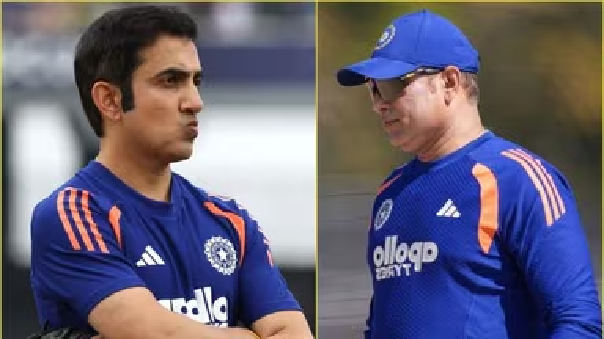
New Delhi. The Indian cricket team has attracted everyone’s attention not only by winning the series on the Zimbabwe tour but also by its transformed style. At the center of this transformation was interim head coach VVS Laxman, who, without any rhetoric or controversy, instilled new confidence in the team in just three matches. His style of trusting the players and calm leadership proved that successful coaching is not limited to strategy; the dressing room atmosphere is equally important.
During the tour of England and Ireland, the Indian team faced a series of defeats and criticism. Questions were raised about many decisions, from team selection to strategy. During this time, when Gautam Gambhir was unavailable, VVS Laxman took over as interim coach and established positive communication with the players. He focused on boosting their morale rather than applying public pressure.
Its impact was evident on the field as well. Several players, including captain Shreyas Iyer and young batsman Vaibhav Suryavanshi, openly praised Laxman’s guidance. An atmosphere of confidence and ease was created within the team, allowing the players to play their natural game without any added pressure. After a long time, positive energy was clearly visible in the Indian dressing room.
VVS Laxman’s selection policy also became a topic of discussion. He did make changes to the team, but not just for the sake of experimentation, but based on the players’ abilities and the team’s needs. Yash Thakur was given a chance in the second T20 match, while Suryansh Shedge was included in the playing eleven in the third match after winning the series. This sent a message to the players that everyone will get an opportunity based on their performance and preparation.
Laxman’s connection with young players is considered his greatest strength. Having worked extensively at the BCCI Centre of Excellence, he understands the mindset and needs of emerging cricketers well. Many players, including Shubman Gill, Yashasvi Jaiswal, and Vaibhav Suryavanshi, have honed their skills under his guidance. This experience also served him well as interim coach.
However, it wouldn’t be fair to say that all the team’s problems have been resolved based on three matches. India dropped several easy catches in the third T20I against Zimbabwe, leaving fielding a concern. While improvements have been seen in batting and strategy, consistency in fielding remains a key issue.
VVS Laxman has served as interim head coach several times before, and his work has been praised each time. Despite this, he prioritized the responsibility of developing young players at the Centers of Excellence over becoming the permanent head coach. His recent performance has once again reignited the debate about whether Indian cricket should consider having separate head coaches for different formats in the future.
For now, it’s certain that the Zimbabwe tour has proven that a team’s success isn’t solely dependent on strategy or technique, but equally important is leadership that inspires confidence in players and provides them with an environment to play freely. VVS Laxman, with his calm demeanor and balanced decisions, has conveyed this message to the entire cricketing world.