
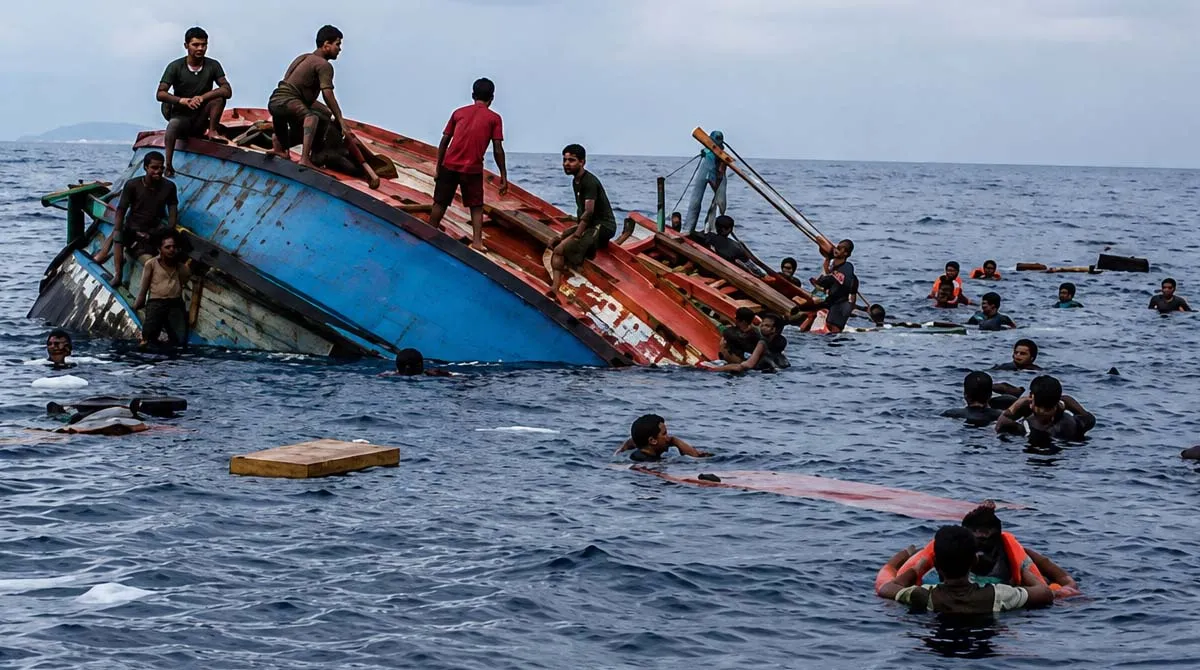

On the morning of July 17, a very sad and heartbreaking news has come to light. Two boats carrying Rohingya refugees from Myanmar have capsized in the sea waves in the Bay of Bengal. According to the joint statement of two major organizations of the United Nations (UN), ‘International Organization for Migration’ (IOM) and ‘United Nations High Commissioner for Refugees’ (UNHCR), more than 500 people are feared to have died by drowning in this horrific accident. This incident is considered to be one of the most painful maritime accidents ever in terms of human tragedy.
How did this fatal accident happen?
According to the information received, these boats had left from the western Rakhine state of Myanmar in the last week of June. These boats were carrying people from the Rohingya community, who were fed up with the ongoing oppression in Myanmar and the overcrowded camps of Bangladesh and had come out in search of a safe life. There were about 250 people in the first boat, which lost contact shortly after landing in the sea. At the same time, on July 8, the second boat, carrying about 280 passengers, was hit by a severe storm near the Irrawaddy coast and sank completely.
Overloading and bad weather took life
Maritime experts believe that the main reasons for the sinking of these boats were ‘overloading’ and severe lack of safety equipment. These old and overcrowded boats could not tolerate the high waves in the sea and the suddenly deteriorating weather. United Nations agencies have said that this area of the Bay of Bengal and the Andaman Sea has today turned into one of the most dangerous sea routes in the world. Every year, thousands of Rohingyas, who flee to countries like Malaysia or Indonesia to save their lives, fall victim to similar deadly routes.
Search and rescue request
Although the number of dead bodies has not yet been officially confirmed because communications at sea are down and the conditions are extremely treacherous, the UN fears that almost all the people on board the boats are dead. After this tragedy, human rights organizations have appealed to South-East Asian countries to immediately start ‘search and rescue’ operations for possible migrants stranded at sea. This accident once again forces us to think about how people are forced to risk their lives in search of a better future.

Comments are closed.