
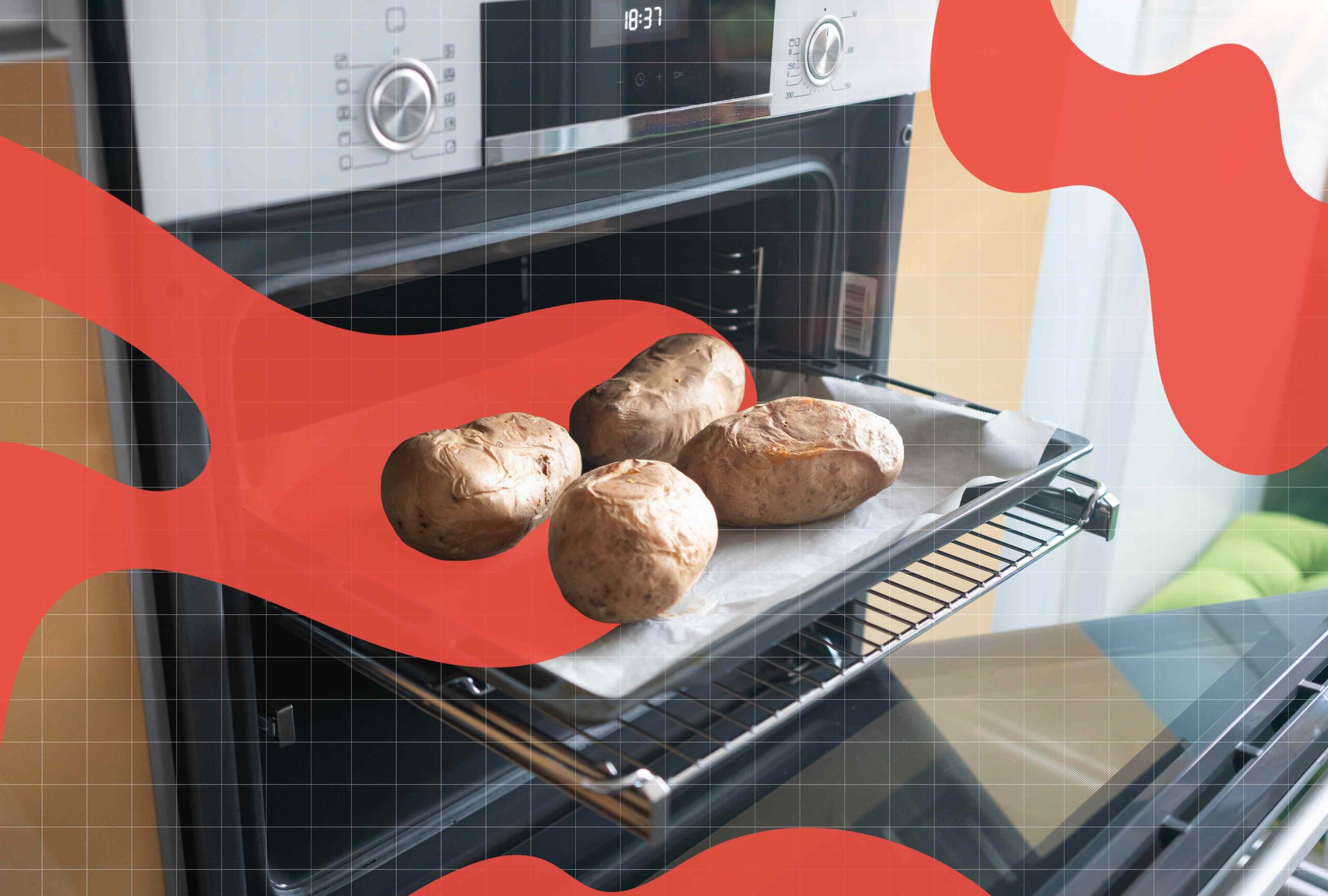

These simple tips will take your baked potato to the next level.
Reviewed by Dietitian Katey Davidson, M.Sc.FN, RD, CPT
Key Points
- Chefs recommend using russet potatoes for a fluffy interior and crispy skin.
- Don’t wrap the potato in foil and be sure to poke holes in the skin to let steam escape.
- For extra flavor, consider adding garlic oil and other flavorful garnishes.
Baked potatoes seem so simple to make that we often don’t put a lot of thought into their preparation. Give the potatoes a wash, poke them with a fork, wrap them in foil and toss them in a hot oven for an hour or so. What could be easier?
While it’s true that making baked potatoes is straightforward, there are a few simple but important steps to follow if you want a truly exceptional spud. Otherwise, you might end up with a dry, mealy interior and a soggy, flavorless skin.
We reached out to chefs from across the country to get their tips for making excellent baked potatoes. Their advice can turn a humble potato into a satisfying—and even elegant—side dish. Read on to learn how.
Pick the Right Potato
Pano Karatassosan executive chef at Kyma in Atlanta and contestant on Food Network’s Beat Bobby Flaysays he uses russets for his baked potatoes. “The end goal for a great baked potato is to achieve a flavorful crispy skin, slightly blistered with a fluffy interior.”
Russet potatoes are high in starch and low in water, which makes the inside light and fluffy when cooked. Higher-moisture potatoes, like Yukon Gold, will have a creamier interior, but the skin may not crisp as well.
Clean & Dry the Potatoes
Potatoes need a good scrub before cooking, as they are often still lightly coated in a bit of soil. Since one goal of a great baked potato is crispy skin, cleaning them thoroughly is essential.
“First, be sure to wash your potatoes with cold water and scrub off any excess dirt that may be left on them,” says Jim Primeauan executive chef at Halls Chophouse. Baked potatoes are an important menu item at the classic steakhouse, which serves about 125 a week for dinner service. He adds that patting the potatoes dry with clean paper towels helps encourage a crispy skin.
Prep Potatoes for Baking
Once your russets are well cleaned and dry, give them a poke. “Pierce each potato with a small paring knife up to 5 times to help cook evenly and avoid any potato explosions,” says Primeau. You can also use a fork to poke small holes in the skin.
Next, rub a light coating of oil over the skin. Primeau recommends a light olive oil or a blended oil. Karatassos prefers a high-heat, neutral oil like avocado oil. “Unfortunately for me, extra-virgin olive oil burns before the potato is done and creates uneven cooking and color,” says Karatassos. Finish by sprinkling with a bit of kosher salt and black pepper, if desired.
Skip the Foil
One of the biggest debates about baked potatoes is whether to wrap them in foil. The simple answer is: If you want crispy skin, skip the foil.
“Wrapping in foil will preserve the skin and the finished product will be slightly more moist than a baked potato without the wrap,” explains Primeau. However, foil traps steam, preventing the skin from crisping.
Turn on Convection
If your oven has a convection setting, use it. “I like to use the convection oven mode on the oven to circulate hot air around the potato, which helps dry out, crisp and blister the skin of the potato,” says Karatassos. “The convection mode also helps achieve an evenly cooked skin and fluffy interior.”
Michael Rosenthalchef de cuisine at Rise Over Run in San Francisco, agrees. “If you have a convection setting, it changes the game. The goal is not just to cook the potato but to also crisp the skin up for that extra bit of texture.”
The chefs we spoke with recommend a moderately hot oven, somewhere from 375°F to 425°F. Once the oven is preheated, place the potatoes directly on the oven rack for about 50 minutes. You can also bake the potatoes on a wire rack set on a large rimmed baking sheet. Either way, avoid direct contact with a baking sheet, which can cause uneven cooking or dry spots.
An alternative is baking on a bed of kosher salt. Hervé Maliverta chef-instructor and director of culinary affairs at the Institute of Culinary Education, says baking potatoes on a bed of salt prevents them from drying out. “If I’m making baked potatoes for a dish or just to eat, bake it on a bed of salt,” shares Malivert. “This way, the potatoes don’t have direct contact with the hot baking sheet and that distance prevents a dry or overcooked spot that can happen when baking potatoes. It can be any kind of salt, but it should distance the potato from the tray by at least a few centimeters.” The salt doesn’t necessarily change the flavor of the potato, but prevents a crusty bottom.
Test for Doneness
Baked potatoes take about an hour to cook, but you can start checking for doneness after 50 minutes. “At 50 to 55 minutes, I like to see how well it is doing by sliding in a small paring knife,” says Karatassos. “The potato is done when you can slide the knife in the potato and the knife comes out easily and cleanly.”
For added flavor, Karatassos recommends brushing the potatoes with garlic oil during the last 10 minutes of baking.
Once done, carefully remove the potatoes from the oven and let them rest for five minutes. “There is nothing hotter in the universe than a baked potato fresh out of the oven, so don’t be concerned that they will get cold. They won’t,” assures Primeau.
Carefully cut a long slice along the top of the potato to allow steam to escape. This ensures that trapped moisture doesn’t make the skin soft. Karatassos suggests rolling the potato in a clean kitchen towel to help break up the interior, then gently squeezing the edges to fluff the insides.
Garnish & Serve
Finish with a touch of fat, like butter or crème fraîche, or sprinkle with freshly grated cheeses such as Cheddar or Gruyère. Crispy bacon lardons are another tasty option.
Lawrence Weekschef and owner of Murray’s Creole Pub in Louisville, Kentucky, likes brushing the skin with garlic butter or garlic oil. “I let it rest in the oven to steam before cutting it open and loading it to the brim.”
Our Expert Take
A great baked potato should have a light, fluffy interior and a slightly crispy, flavorful skin. To achieve this, be sure to use a starchy potato like a russet, wash and dry it thoroughly, poke holes in the skin to allow steam to escape, season well and bake in a moderately hot oven. Once cooled slightly, finish with your favorite garnishes and you’ll be rewarded with a chef-level baked potato.

Comments are closed.