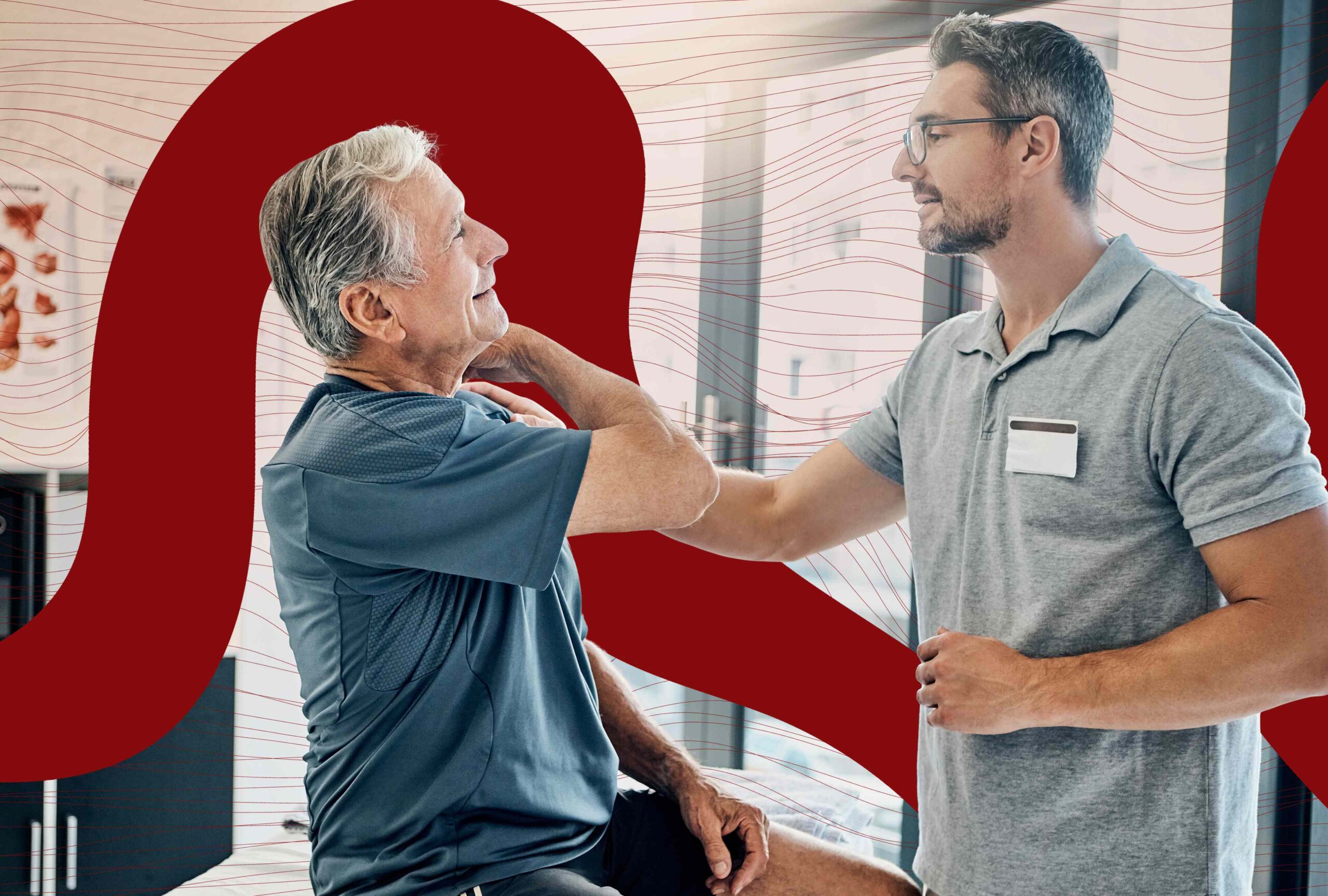
Perform this a few times a day to help undo stiffness from prolonged sitting.
Reviewed by Dietitian Katey Davidson, M.Sc.FN, RD, CPT
Key Points
- Chin tucks may help relieve neck stiffness by improving head and neck positioning.
- Perform chin tucks throughout the day, especially after prolonged sitting.
- Take movement breaks and adjust your screen height to help reduce neck and back strain.
Are you sitting down as you read this? Maybe you’re scrolling on your phone with your head tilted forward or hunched over your computer screen. It’s easy to settle into these positions without realizing it, but spending long stretches in one position can leave your neck and back feeling stiff and uncomfortable.
Sure, a standing desk or walking pad can help you add more movement to your day, but they aren’t the only ways to reduce stiffness. Enter chin tucks: a simple exercise physical therapists recommend to help support better posture and ease neck and back discomfort. Read on to learn why this simple movement deserves a spot in your routine, plus other expert tips to help improve muscle stiffness.
Why Chin Tucks Help with Neck and Back Stiffness
Chin tucks, also called chin retractions, involve gently drawing your head back over your shoulders. Cervical retraction is part of the McKenzie approach to neck exercise and may help ease the strain associated with holding your head forward for long periods.
As Because Wu, DPTexplains, “A forward head and shoulder posture causes head and neck stiffness. The chin retraction places your head, which is the weight of a bowling ball, directly over your torso, where most of your body weight is.”
Think about how much time you spend leaning toward a screen or looking down at your phone. Rob Letizia, PT, D.P.T., says these everyday positions can cause the muscles supporting your head to work overtime. “When your head drifts forward, the small muscles under the back of your skull and upper traps have to work constantly just to hold it up, and they tighten. The chin tuck wakes up the deep muscles at the front of the neck and brings your head back over your shoulders, so those back muscles can finally let go.”
Research offers support for this approach. In a small 2024 study, adults with chronic neck pain who completed a six-week program involving neck retractions and progressions experienced improvements in neck pain, neck-related disability and head posture. While the study didn’t measure stiffness directly, its findings suggest these movements may help support more comfortable neck function.
Wu adds that bringing the head back over the torso can help reduce the demand on the muscles behind the neck, too. “The muscles in the back are straining to pull your head back in space so positioning it correctly will help restore the muscle length and position the weight directly down the spinal column (versus in front) thereby reducing head and neck stiffness.”
How to Do It
To perform a chin tuck, follow these expert-recommended steps:
- Sit or stand tall with your eyes looking straight ahead.
- Gently glide your head straight back, as though you’re making a double chin, without tilting your head up or down. You should feel a light stretch at the base of your skull.
- Hold for a few seconds, then relax. Repeat 10 times.
- Perform this a few times throughout the day, especially after spending prolonged time at a screen.
If you need to modify the movement, try one of these alternatives:
- For extra support, lie on your back with a small folded towel under your head. Gently tuck your chin without lifting your head or pressing forcefully into the towel.
- Alternatively, stand with your back against a wall and gently draw your head back toward it.
You shouldn’t experience any pain with any variation of this movement. If you do, stop and speak with your health care team. They can help to identify what is causing the pain and if personalized physical therapy may be a better fit.
Is It Safe for Everyone?
Generally speaking, the chin tuck is a safe exercise that most healthy individuals can do on their own. That said, experts suggest skipping this movement if you’ve had recent neck surgery, a neck injury or been told you have neck instability.
“Stop and get evaluated if it sends tingling, numbness or pain down into your arm or hand,” warns Letizia. “And, stiffness that comes with a fever, or a sudden, severe headache, isn’t an exercise problem. Get medical care right away.”
Wu adds, “The exercise should make you feel better, not worse. If it is unclear, please see a physical therapist that can assess your posture and movement to see if this exercise is appropriate for you.”
Other Tips to Improve Stiffness
Movement breaks can go a long way toward relieving the strain of sitting for long periods, but they aren’t the only strategies physical therapists recommend. Keep these tips in mind to help improve mobility in your neck and back.
- Raise Your Screen. Letizia notes computer screens should be placed at eye level. If you’re using your phone, bring it up to your face instead of lowering your head to view it.
- Plan Movement Breaks. “Get up and move every half hour or so; a few shoulder rolls and shoulder-blade squeezes go a long way”, adds Letizia.
- Incorporate Chest Stretches Into Your Routine. “Stretching the chest or pectoral muscles can help unload head and neck stiffness, opening up the front of the chest and positioning the shoulders back in space,” shares Wu. “This reduces the tension on the posterior muscles straining to pull the head and shoulders back.”
- Check Your Pillow. It may be time to invest in a new one. “It should keep your head level with your spine, not propped up or dropping down, whether you sleep on your back or your side,” says Letizia.
Our Expert Take
Improving your neck and back stiffness is possible without expensive equipment or a gym membership. Small, everyday movements, like chin tucks, can help bring your head back into alignment with your body and relieve tension throughout your neck and back.
Try adding chin tucks into your day, especially after spending prolonged periods looking at a screen. You can also make other simple adjustments, like changing your desk setup, taking movement breaks and incorporating additional stretches. These small changes may be just what you need to help relieve a stiff neck.