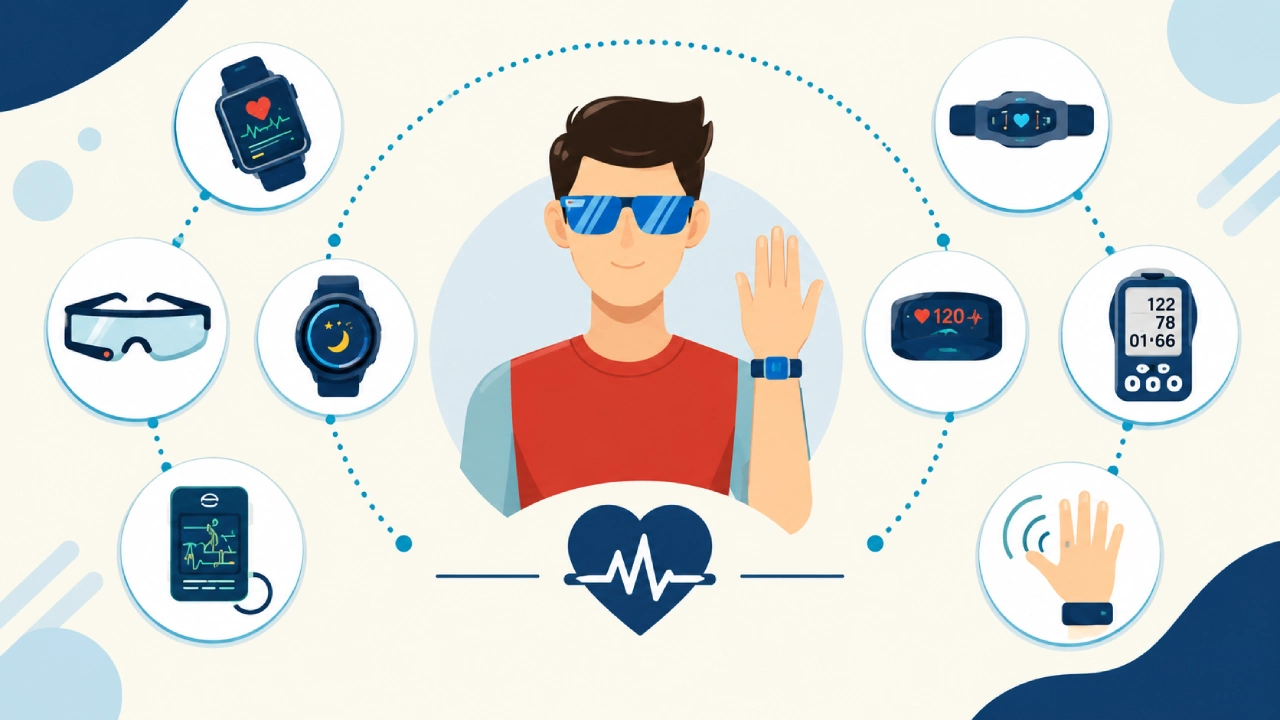
Wearable health sensors are changing the way people understand and monitor their health. Devices such as smartwatches, fitness bands, smart rings, and specialised medical wearables can collect information from the body throughout the day. Instead of checking health only during a doctor’s appointment or at a hospital, users can now track certain measurements continuously while going about their normal activities.
These sensors can monitor indicators such as heart rate, physical activity, sleep, body temperature, blood oxygen levels and, in specialised devices, glucose and other biological signals. Recent research shows that wearable sensors have growing potential in healthcare, rehabilitation and disease-risk monitoring, although questions about accuracy, validation and privacy remain important.
What Are Wearable Health Sensors?
Wearable health sensors are small electronic sensors built into devices that can be worn on the body. Their main purpose is to collect physiological or behavioural information and convert it into digital data.
A smartwatch, for example, may use optical sensors to estimate heart rate, motion sensors to measure activity, and specialised sensors to collect other information. The data is processed by software and algorithms before being displayed through an app or device interface.
The technology ranges from simple fitness tracking to more advanced medical monitoring. Consumer devices generally focus on wellness and trends, while medical-grade wearables can be designed for specific clinical purposes.
The major advantage is continuous observation. A single measurement provides a snapshot, but repeated measurements can reveal patterns over time.
How Continuous Monitoring Works
Continuous monitoring is one of the most important opportunities offered by wearable health technology. Instead of manually recording health information, a sensor can collect measurements at regular intervals while the device is being worn.
For example, a device may track changes in heart rate during rest, exercise, and sleep. A person can then observe how their measurements change throughout the day. In healthcare settings, continuous monitoring may help professionals understand a patient’s condition outside occasional clinical measurements.
Modern wearable systems can also combine several types of information. Movement, heart rate, sleep, and other measurements can be analysed together to identify changes or unusual patterns.
However, continuous monitoring does not automatically mean continuous diagnosis. The information collected by a wearable still needs to be interpreted correctly, preferably in the appropriate medical context.
Real-World Uses of Wearable Health Sensors
Fitness and wellness are perhaps the most familiar use. People can monitor physical activity, heart rate, sleep patterns, and exercise performance. This information can encourage users to become more aware of their daily habits.
Remote patient monitoring is another important area. Wearable devices can potentially allow certain health measurements to be collected while a patient remains at home. This can be particularly useful when doctors need information about health trends rather than a single reading.
Heart monitoring is an especially significant application. Some wearable devices can detect irregular heart rhythms and notify users when a measurement may require attention. Research has found promising performance for detecting atrial fibrillation in some wearable systems, although accuracy varies depending on the device, measurement, and circumstances.
Rehabilitation is also benefiting from wearable sensors. Movement sensors can monitor walking patterns, mobility, and physical activity. A 2026 systematic review found applications involving conditions such as Parkinson’s disease, stroke, multiple sclerosis and frailty.
Another major development is continuous glucose monitoring. In August 2026, the U.S. FDA authorised a wearable system capable of continuously monitoring both glucose and ketones for people with diabetes, illustrating how wearable sensing is moving into increasingly specialised medical applications.
The Importance of Health Alerts
Alerts are one of the most visible benefits of wearable sensors. Instead of requiring users to constantly check their measurements, a device can notify them when it detects a potentially unusual reading.
For example, an alert might indicate an unusually high or low heart rate, an irregular rhythm, or another measurement that falls outside a device’s configured range.

This can be useful because health problems do not always occur during scheduled appointments. A wearable can potentially capture changes that might otherwise go unnoticed.
At the same time, an alert should not automatically be treated as a diagnosis. A wearable may produce false alarms or miss an important event. Anyone receiving a concerning health alert should consider the context and seek appropriate medical advice rather than relying entirely on the device.
How Accurate Are Wearable Health Sensors?
Accuracy is one of the biggest challenges facing wearable health technology. A device can produce a precise-looking number without that number being medically accurate. Sensor quality, device placement, movement, skin characteristics, algorithms, and environmental conditions can all influence measurements.
A major review of consumer wearables found that accuracy varies considerably depending on what is being measured. Heart-rate measurements can perform relatively well in some circumstances, while measurements such as energy expenditure and certain aspects of physical activity and sleep can be considerably less reliable. The researchers also highlighted the lack of standardised validation across devices.
This means consumers should be careful about treating every wearable measurement as a clinical fact. A smartwatch may be excellent for identifying a general trend but less suitable for making an important medical decision.
The difference between health tracking and medical diagnosis is therefore crucial. Wearables can provide useful information, but they do not necessarily replace professional medical equipment or clinical judgement.
Data Privacy: The Hidden Challenge
Wearable health sensors can create another major concern: data privacy. Health information can be highly personal. Wearables and their companion apps may collect information about physical activity, sleep, heart rate, medical conditions, and other aspects of a person’s daily life. This creates questions about where the information is stored, who can access it, and how it may be used.
The privacy issue becomes even more complicated because data can move between the wearable, smartphone, cloud services, and third-party applications. The U.S. Federal Trade Commission notes that health apps can collect sensitive information and that different privacy laws may apply depending on the service and circumstances.
Users therefore need to understand privacy policies and permissions before connecting health devices and other services. Companies developing wearable technology also have a responsibility to make data collection transparent and protect sensitive information.
Risks of Over-Reliance on Wearables
The growing popularity of wearable technology creates a psychological risk as well: over-reliance on numbers.
A user might become overly concerned about a small change in heart rate or sleep data even when the change has little medical significance. Conversely, a normal-looking reading could create false reassurance.
Wearable measurements are most useful when viewed as part of a larger picture rather than as an unquestionable verdict on someone’s health.
There is also the problem of unequal performance across different users and situations. Research has identified factors such as sensor type, algorithms, device design, and processing limitations as influences on wearable accuracy.
Opportunities for the Future
The future of wearable health sensors is likely to involve more advanced sensors, better algorithms, and closer integration with healthcare systems.
Artificial intelligence could help identify meaningful patterns in large amounts of sensor data. Instead of simply showing hundreds of measurements, future systems could potentially highlight important changes and present information in a more understandable way.
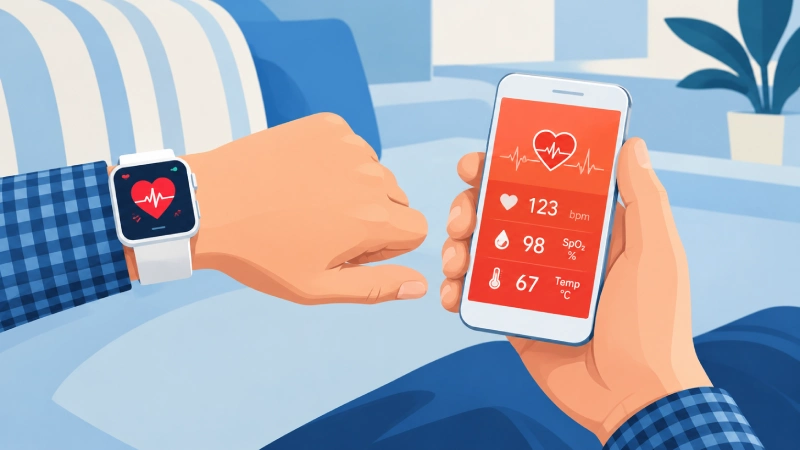
Wearables could also become increasingly useful for preventive healthcare. Long-term health trends may help researchers and clinicians understand changes in mobility, sleep, cardiovascular activity, and other indicators.
However, future progress will depend on better validation. Researchers have repeatedly highlighted the need for standardised testing and larger real-world studies before wearable measurements can be confidently used for broader clinical purposes.
Conclusion
Wearable health sensors represent an important shift from occasional health measurement towards continuous and connected monitoring. Smartwatches, fitness bands, rings and specialised medical devices can provide valuable information about activity, sleep, heart function and other health indicators.
Their greatest opportunity lies in making health information more accessible and helping identify changes over time. At the same time, limitations in accuracy, false alerts, privacy concerns and the danger of over-reliance mean that wearable data should be interpreted carefully.
The future of wearable healthcare will therefore depend not simply on making sensors smaller or more powerful, but on making them accurate, clinically useful, secure and trustworthy. When combined with professional medical care and responsible data practices, wearable health sensors could become an increasingly important part of modern healthcare.
(Source)