Uber And Pony.ai Take Robotaxis Global
Uber is accelerating its robotaxi ambitions through an expanded partnership with autonomous-driving company Pony.ai. The companies plan to deploy 2,000 Pony.ai self-driving taxis across Europe while also taking their partnership into the Middle East. The move builds on their commercial robotaxi service launched in Zagreb, Croatia, in March, which the companies described as Europe’s first commercial robotaxi service. Four additional European cities are expected to receive the service, although their names and rollout timelines have not yet been revealed. The expansion highlights how autonomous taxis are gradually moving from experimental projects to real-world transportation services. For Uber, partnerships with autonomous-driving specialists could help it scale driverless mobility without developing every technology component itself.
Unitree Robotics’ IPO Creates Humanoid Robot Frenzy
China’s Unitree Robotics is heading toward a landmark stock-market debut after pricing its IPO at 150.8 yuan per shareraising around $900 million and valuing the company at approximately $9 billion. Retail investors have shown extraordinary enthusiasm, with the online portion of the offering reportedly oversubscribed more than 5,000 times. Unitree is set to become the first humanoid robot company to list on mainland China’s stock exchanges. However, the excitement comes with an important question: can humanoid robots evolve from impressive demonstrations, running and acrobatics into machines capable of performing valuable commercial work? Investors are betting heavily on that transition. The company’s strategic investors, including AI startup DeepSeek, further underline the growing connection between artificial intelligence and robotics.
Google Puts AI At The Heart Of Pixel 11
Google has unveiled its Pixel 11 lineup, but the smartphone’s biggest selling point may not be its hardware. Instead, Google is placing its most advanced version of Gemini at the center of the new devices. The lineup includes the Pixel 11, Pixel 11 Pro, Pixel 11 Pro XL and Pixel 11 Pro Fold. Gemini Intelligence is designed to understand what users are doing on their phones and take actions across multiple applications, pushing smartphones closer to becoming AI-powered assistants rather than simple app containers. The timing is particularly significant because Apple is expected to introduce a rebuilt Siri powered by Google’s AI models. The smartphone battle is therefore increasingly becoming an AI assistant battle.
Meta And Nvidia Double Down On Open AI
The open-weight AI race is gaining momentum as Meta and Nvidia release AI models that developers can download and use through the open-source ecosystem. Their approach contrasts with proprietary systems from companies such as OpenAI and Anthropic. The shift comes after major technology companies urged policymakers not to impose premature restrictions on open-weight models, including those developed in China. Supporters argue that open AI encourages innovation, competition and broader access to advanced technology. Critics, however, remain concerned about national security, intellectual property and techniques such as model distillation. With Meta and Nvidia now expanding their own open offerings, the debate is moving beyond policy discussions and becoming a direct competitive strategy in the AI industry.
Tencent Bets Billions On China’s AI Future
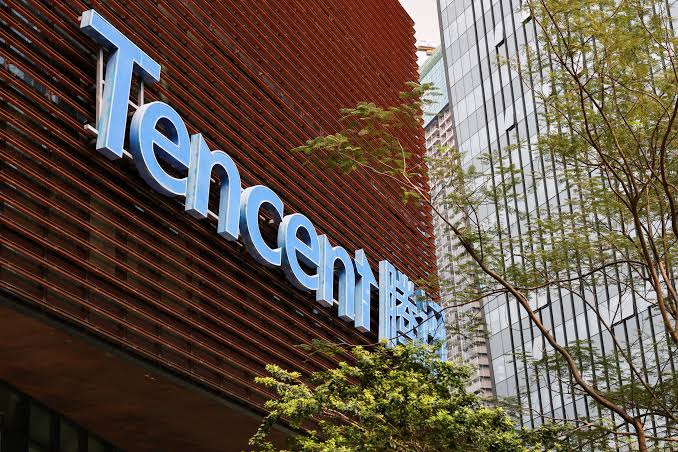
Tencent is dramatically increasing its spending on artificial intelligence as competition in China’s AI market intensifies. The company’s capital expenditure jumped 65% to 52.8 billion yuan, or about $7.8 billionduring the June quarter. Much of the investment is aimed at building and acquiring the computing infrastructure needed to develop and monetize AI models. The spending push, however, comes at a cost: Tencent reported negative free cash flow of 13.8 billion yuan for the quarter. The company believes stronger AI capabilities can eventually generate superior returns, but the strategy illustrates the enormous financial commitment required to compete in generative AI. For major technology companies, having powerful models increasingly means having access to enormous amounts of computing power.
Credits: Reuters
Nvidia Plans A $500 Billion AI Financing Machine
The AI boom is entering a new financial phase, according to Nvidia CEO Jensen Huang. After years of funding AI infrastructure largely through corporate balance sheets and massive debt and equity raises, Huang believes Wall Street can help finance the next stage. He unveiled a plan involving major financial institutions including Goldman Sachs, BlackRock, Blackstone, KKR, Apollo and Brookfield. Together, these firms say they are prepared to raise $500 billion or potentially more for the construction and expansion of AI factories. The initiative reflects the staggering scale of demand for chips, data centers and computing infrastructure. As hyperscalers race to expand AI capacity, the industry is increasingly becoming not just a technology story, but one of the world’s biggest infrastructure and investment stories.