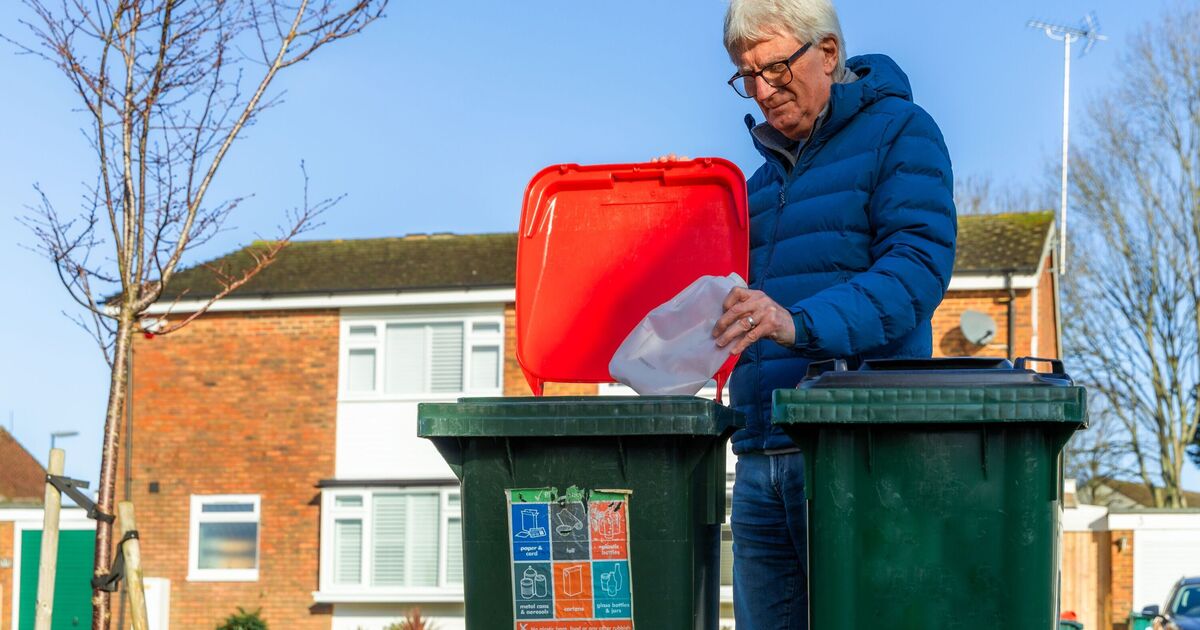
Almost everyone has been guilty of it at one point or another. You’re out on a walk, and you happen to have finished a packet of crisps or noticed a bit of litter on the ground, so you pop it into a household bin on your way past.
Of course, in most cases that’s just being a tidy person – but if you are constantly filling your neighbours bins with your own waste, or they are using yours, it becomes a bit more complex.
What does the law say?
There is no exact law against popping your crisp packet in your neighbours bin – but this can change with scale.
If your neighbour is consistently using your bin as their own, this could be considered fly tipping. It is classed as “depositing controlled waste on land without authority” under the Environmental Protection Act 1990, section 33.
Local authorities can issue fixed penalty notices for minor offences with fines ranging between £150 and £1,000, depending on how serious it is and the local council rules.
According to rubbish removal company Kruze, the risk comes from persistent use, or trade use. Their website reads: “One-off and tiny gets ignored. Repeated, bulky, or trade gets enforced. Trade waste is the one that reliably gets people in real trouble, because a business has a separate legal duty to keep its waste in a proper commercial stream, and a residential bin breaches that on top of everything else.”
What to do if someone is using your bin
The most tempting way of dealing with this would be to take everything that isn’t yours out of the bin and leave it out – but this could be a costly mistake. If you’re caught doing this, then you are the one fly tipping and the finger (and fine) points back at you.
Instead, it’s a good idea to check the rubbish – see if there is anything with a name or address on it that you can find. Photograph this as evidence in case you decide to report it to the council.
However, the best course of action is to have a friendly, calm conversation with the neighbour about bin usage and politely ask them to refrain from using yours. The first question the council will ask is whether you have spoken to the culprit, so make sure you have tried that avenue first.