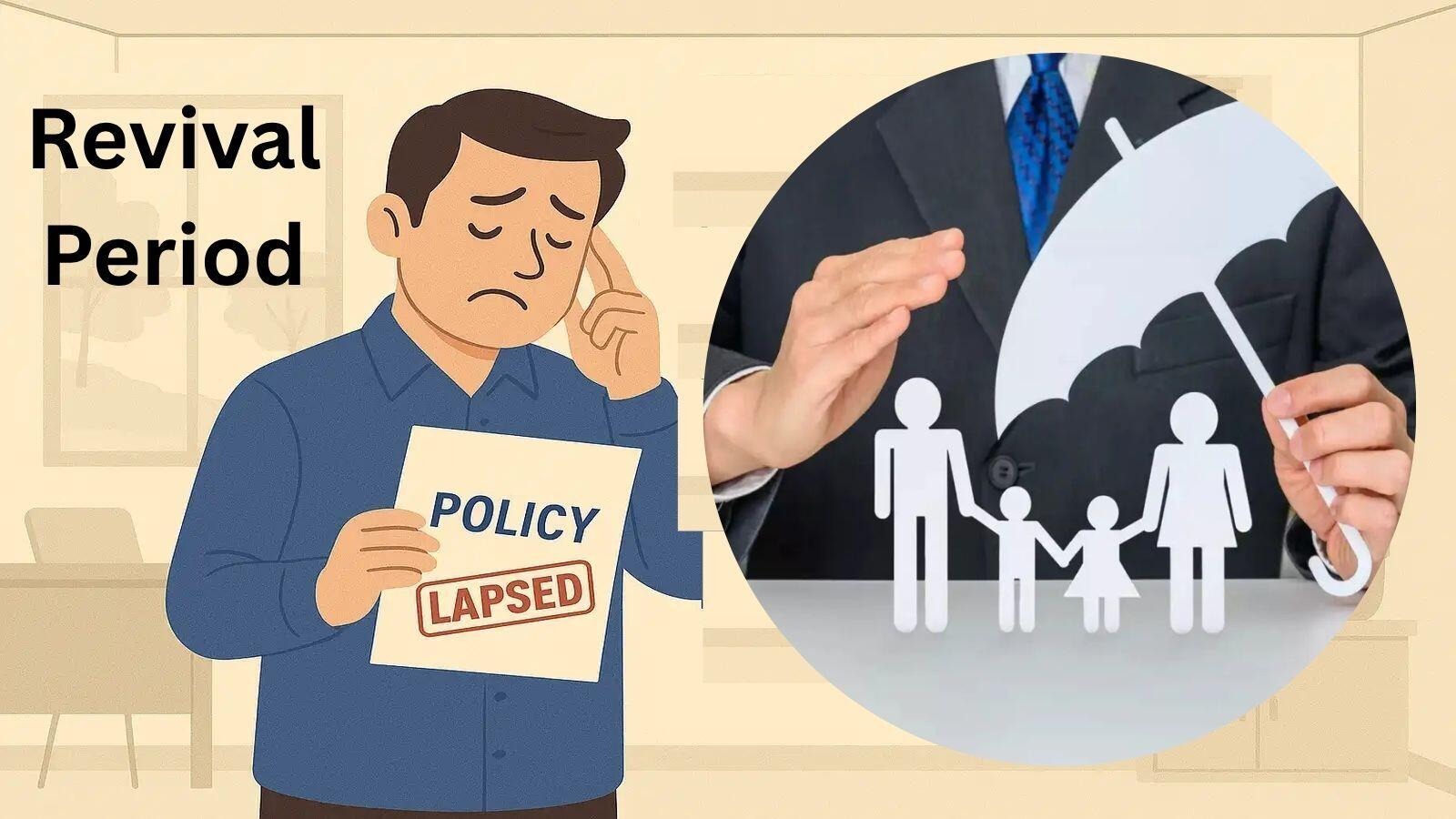
When a person is not able to pay his life insurance policy premium on time and also within the prescribed grace period (extra time), the insurance company declares that policy as lapsed or inoperative. As soon as the policy lapses, the death benefit, maturity cover and all other types of financial security provided to the insured completely ceases. In this situation, if any untoward incident happens to the policyholder, his family or nominee does not get a single rupee from the insurance company. Most of the people are not able to make the payment on time due to financial constraints, job loss or forgetting the premium payment date, putting their years of hard work and investment at risk. To deal with such serious problems, a special opportunity is provided to the policyholders in the insurance sector, which is called revival period, through which the discontinued insurance can be revived.
Revival period is a stipulated time period within which insurance companies give an opportunity to reactivate a lapsed or closed policy with certain conditions. As per Insurance Regulatory and Development Authority of India (IRDAI) rules, a life insurance policy lapsed due to non-payment of premium can be revived usually within 3 to 5 years from the date of its first unpaid premium. Insurance experts call this a ‘second chance’ for policyholders because through this a person can get all the old benefits of his old discontinued plan reinstated without purchasing a new policy. Reviving an old policy is more economical and beneficial than buying a new policy because the bonuses already deposited and investment benefits remain safe.
To revive a lapsed life insurance policy, the policyholder has to pay all the outstanding premiums in lump sum or in installments. Along with this, insurance companies can also charge late fees or simple interest as per the prescribed rules. In the revival process, the insurance company ensures that the health of the policyholder is in good condition, for which a simple health declaration form or in some cases a medical check-up report may also be asked. Many big insurance companies and Life Insurance Corporation of India (LIC) also run special revival campaigns from time to time for the convenience of customers, in which huge discounts are given on late fees and penalties. In the digital age, most companies now provide the facility to re-activate the policy in a few clicks at home through online portals.
To keep the policy running smoothly and avoid any kind of paper trouble in future, some important things should always be kept in mind. First of all, the policyholder should always use the auto-debit (ECS) or bank mandate facility so that the premium is automatically deducted from the bank account at the scheduled time and never miss the payment date. Even if the policy lapses due to any reason, it is wise to get it activated immediately within the initial months of the grace period or revival period because as time passes, the burden of penalty and interest increases. Additionally, whenever a new policy document or revised terms are received from the insurance company after revival, it is necessary to study them closely so that all the rules related to the coverage remain clear.