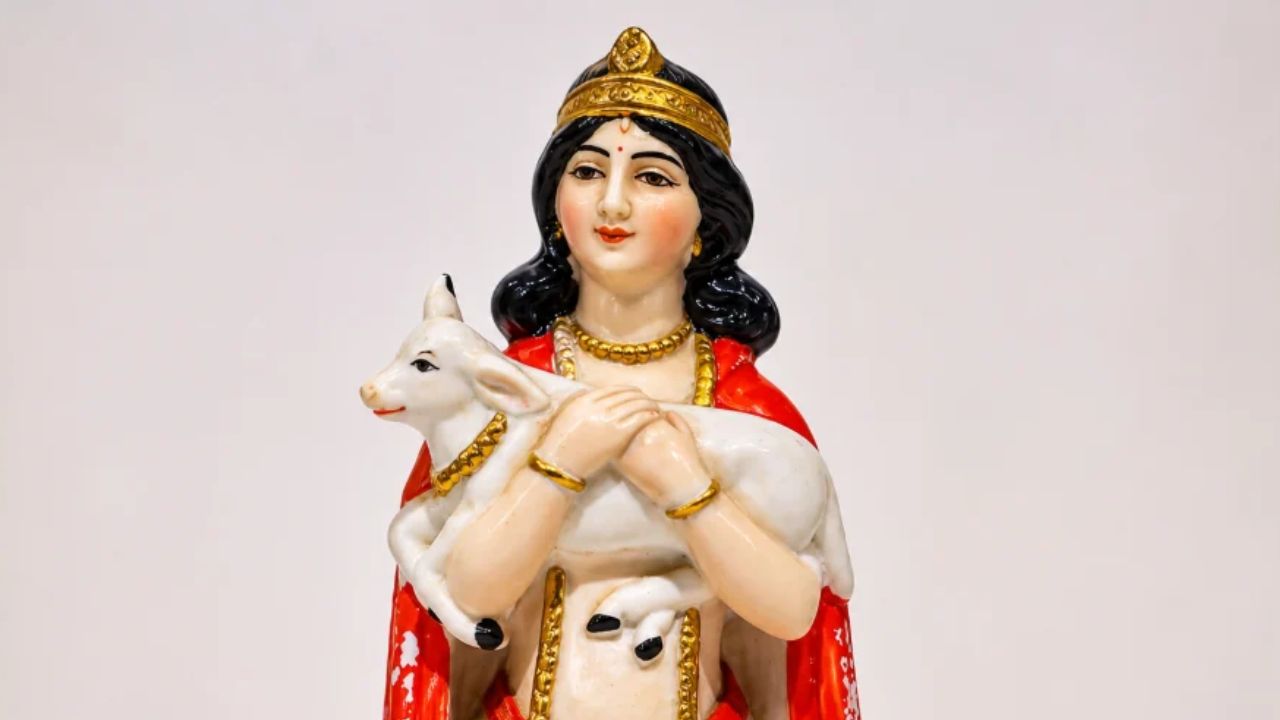
Recently an exhibition was held in the Lalbhai Dalpatbhai Museum in Ahmedabad, Gujarat, where idols of Lord Krishna and Shiva made of porcelain were kept. These sculptures are very different from other sculptures. In these, Lord Krishna's face is very delicate and a European-style crown is seen with a pinkish tint on his face, while in many idols Lord Krishna is seen with a cow in his lap.
In the idol, Lord Krishna is seen in a completely European style. Apart from this, a statue of Lord Shiva resembling a Japanese face was also displayed in the exhibition. The secret of these sculptures is hidden in the history of Indian sculpture.
Anil Rai had shown an exhibition of idols of God made of porcelain in the Lalbhai Dalpatbhai Museum. Anil Rai visited an antique shop in Surat in the 1990s. There he saw statues of Lord Shiva with a Japanese face and Lord Krishna with a European style. He bought these statues, after which he started learning about their history.
Also read: Ahoi Ashtami 2026: When is Ahoi Ashtami? Note the date, auspicious time and method of worship
What is the secret of the unique statues?
According to Anil Rai, the history of idols of Gods and Goddesses made of ceramic dates back to the colonial period. When the use of printing press was increasing in India at the end of the 19th century, photographs started being printed. At the same time, colorful pictures of gods and goddesses were printed in Chitrashala Press of Pune along with Chorbagan Art Studio of Calcutta, which were bought by many people.
Raja Ravi Verma, the painter of that period, brought the pictures of Gods and Goddesses to people's homes through his paintings. Because of this step, the pictures of Gods and Goddesses were not limited to the homes of rich people only, but also reached the homes of common people. However, even at that time, statues made of bronze and wood were very expensive and not every person could buy them.
Also read: Apart from Diwali, which festivals will be celebrated in the month of November?
Sculptures made in Germany and Japan
In the 19th century, a large number of people used to see pictures of gods and goddesses. Seeing this, European traders thought that statues should be made at a lower price, which could be sold to the Indian people. Indian traders sent prints of pictures of gods and goddesses to European traders. Looking at the same photographs, artisans from Germany, Austria and Japan made sculptures. However, they had never made idols of gods and goddesses nor had they ever seen Indian people.
Foreign sculptors understood the pictures of gods and goddesses and made sculptures based on them. These statues were made from porcelain. Because of this, they were different and more expensive than bronze statues. This is the reason why the style of these statues is very unique.