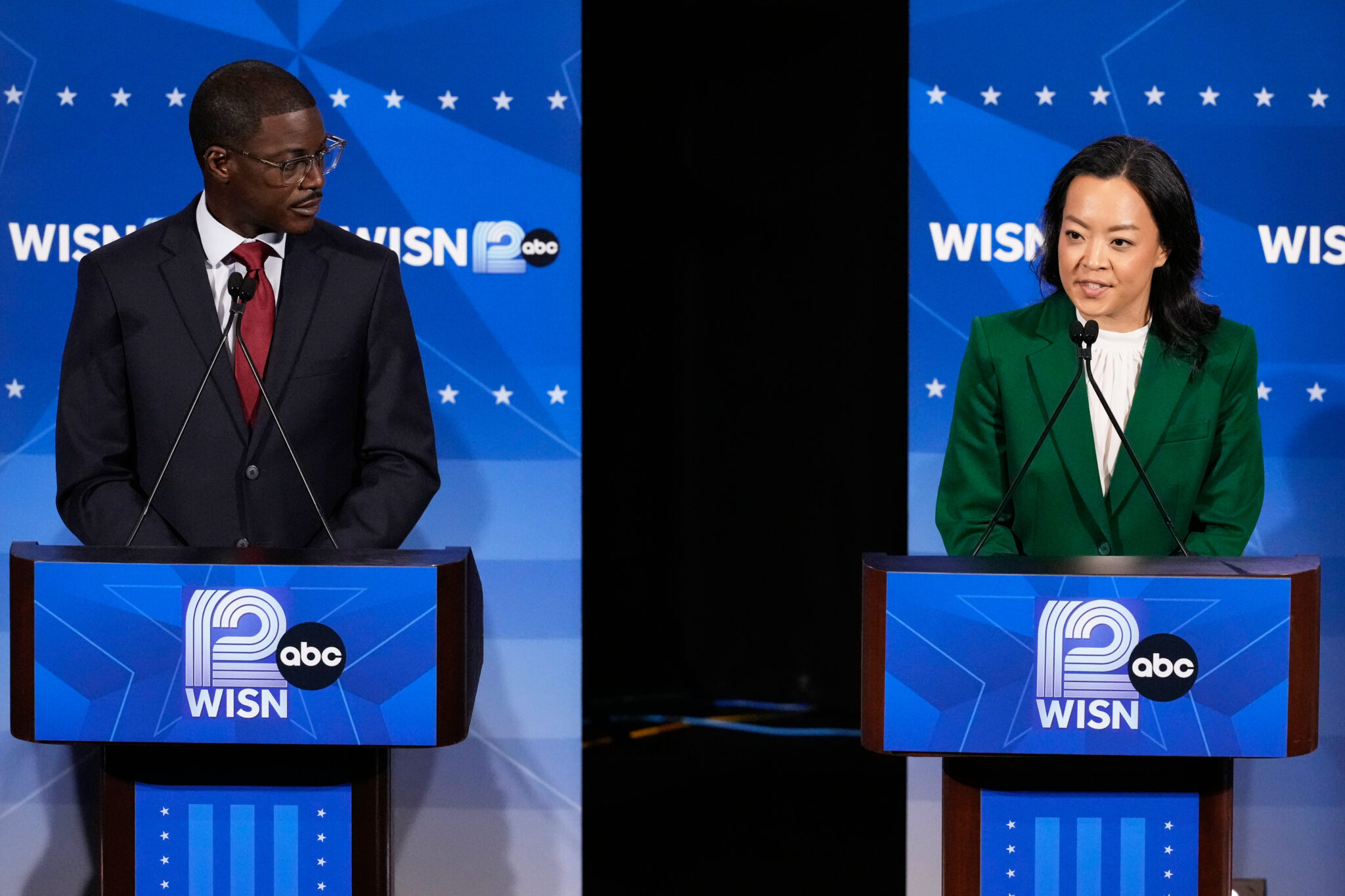
What to Watch in Wisconsin, Minnesota and South Carolina Tuesday’s Primaries/ TezzBuzz/ WASHINGTON/ J. Mansour/ Tuesday’s primaries will test progressive momentum in major Democratic contests in Wisconsin and Minnesota. Other races will measure support for longtime incumbents, younger challengers and establishment-backed House candidates. South Carolina Republicans will choose among Darline Graham and experienced rivals in a special Senate primary.

Quick Look
- Wisconsin holds a competitive Democratic primary for governor.
- Democratic socialist Francesca Hong leads Milwaukee County Executive David Crowley in polls.
- The winner will face Trump-backed Republican Tom Tiffany.
- Wisconsin’s governorship could influence congressional redistricting and the 2028 election.
- Minnesota Democrats will choose between Angie Craig and Peggy Flanagan for Senate.
- Republicans believe the divisive primary could make the open seat competitive.
- Connecticut Gov. Ned Lamont faces progressive Josh Elliott.
- Rep. John Larson faces his first primary challenge in 14 terms.
- Rebecca Cooke seeks a Wisconsin House rematch against Derek Van Orden.
- Cooke has raised about $8.6 million.
- South Carolina holds a special Republican Senate primary.
- Trump endorsed interim Sen. Darline Graham.
- Her opponents include Russell Fry, Ralph Norman and Mark Sanford.
- A South Carolina runoff would be held Aug. 25.


Deep Look
Upper Midwest becomes center of Democratic ideological fight
The Democratic Party’s continuing debate between its progressive and moderate wings moves to Wisconsin and Minnesota on Tuesday.
Wisconsin Democrats are choosing a nominee for governor, while Minnesota voters are selecting a candidate for an open U.S. Senate seat.
Both contests pit left-leaning candidates against rivals associated with the party’s more traditional leadership.
The results will show whether progressive momentum can continue expanding beyond reliably liberal urban districts into swing states and competitive statewide races.
El-Sayed victory energizes progressive candidates
Progressive candidates have repeatedly defeated establishment-backed rivals during the 2026 primary season.
Many of those victories occurred in deeply Democratic cities, including New York and Denver.
Abdul El-Sayed’s victory in Michigan’s Democratic Senate primary last week represented a more significant breakthrough.
El-Sayed narrowly defeated Rep. Haley Stevens in a state that voted for Donald Trump in 2016 and 2024.
His success demonstrated that a progressive candidate could win a high-profile primary in a major battleground, but it also intensified Democratic concerns about electability in November.
Wisconsin candidate Francesca Hong and Minnesota Lt. Gov. Peggy Flanagan will now attempt to extend the left’s gains into additional statewide contests.
Hong leads chaotic Wisconsin governor’s primary
Hong, a state representative and self-described democratic socialist, is the front-runner for the Democratic gubernatorial nomination in Wisconsin.
Her principal opponent is Milwaukee County Executive David Crowley, who has been endorsed by Democratic Gov. Tony Evers.
Evers is not seeking another term and has campaigned with Crowley in the primary’s closing days.
Public polling has shown Hong maintaining a steady advantage despite the governor’s endorsement.
The primary’s fragmented field could further benefit her.
Several more traditional candidates remain on the ballot and could divide the vote that might otherwise consolidate behind Crowley.
Withdrawn candidates remain on Wisconsin ballot
Former Lt. Gov. Mandela Barnes suspended his campaign late in July but remains listed on the ballot.
Lt. Gov. Sara Rodriguez also ended her candidacy after a campaign finance scandal, but her name remains before voters.
Absentee ballots already cast for either withdrawn candidate cannot be changed.
Their continued presence creates the possibility that a substantial number of Democratic votes will go to candidates no longer actively seeking the nomination.
That could allow Hong to win with less than majority support while her opponents divide the rest of the electorate.
Hong’s previous statements create general-election concerns
Hong has faced scrutiny over controversial positions and social media comments.
In 2020, she expressed strong support for defunding the police, a position she now rejects.
Prominent Democratic strategists worry that Hong can appeal effectively to the party’s primary electorate but could struggle in a statewide general election.
Wisconsin remains closely divided, and Trump carried it in the 2024 presidential election.
The Democratic nominee will face Republican U.S. Rep. Tom Tiffany, who has Trump’s endorsement.
Wisconsin governorship could shape House control
The stakes extend beyond Wisconsin’s state government.
Democrats hope to win both chambers of the Legislature while retaining the governor’s office.
Full control could allow them to redraw the state’s congressional districts and counter the advantage Republicans built through mid-decade redistricting.
Without a more favorable Wisconsin map, Democrats could face a more difficult path to winning the U.S. House in 2028.
The governor’s race is therefore important to national party strategy as well as state policy.
Governor could play key role in 2028 election
Wisconsin is also expected to remain a crucial presidential battleground in 2028.
The governor will have an important role in overseeing and certifying the election result.
Trump attempted to challenge Wisconsin’s outcome after Joe Biden won the state in 2020.
Evers helped block efforts to overturn that result.
Tiffany supported Trump’s attempt to reverse the election, increasing Democratic concern about the consequences of losing the governor’s office before the next presidential contest.
Minnesota Senate primary tests progressive appeal
Minnesota’s Democratic Senate primary features Flanagan against centrist Rep. Angie Craig.
The winner will be favored to replace retiring Democratic Sen. Tina Smith, although Republicans argue that the bruising primary creates an opportunity.
Minnesota has voted Democratic throughout the Trump era, but the party’s margins have narrowed.
Craig represents a competitive congressional district and has emphasized her ability to win moderate, suburban and rural voters.
Flanagan argues that Craig has been too accommodating to Trump, particularly on immigration enforcement.
Republicans see opening in Minnesota
Republicans hope the ideological conflict will weaken the eventual Democratic nominee.
Craig’s more moderate record could alienate progressive voters in the primary.
Flanagan’s positions could give Republicans more opportunities to portray the Democratic nominee as too far left for the statewide electorate.
The open seat is strategically important because control of the Senate may depend on a small number of competitive races.
Minnesota has not elected a Republican to statewide office since 2006, but the GOP believes changing voting patterns and Democratic divisions could make the contest more competitive than usual.
Lamont goes from insurgent to establishment incumbent
Connecticut’s gubernatorial primary presents another version of the party’s generational and ideological debate.
Gov. Ned Lamont, now 72, is seeking a third term against progressive state Rep. Josh Elliott, 41.
Lamont entered statewide politics as an insurgent candidate in 2006.
Then a little-known Greenwich selectman and wealthy former entrepreneur, he challenged Sen. Joe Lieberman in the Democratic primary.
Lamont argued that Lieberman, the party’s 2000 vice presidential nominee, had become too conservative and insufficiently loyal to Democrats.
Lamont won the primary, but Lieberman ran as an independent and retained his Senate seat in the general election.
Elliott challenges Lamont from left
Lamont continued seeking office and was elected governor in 2018.
He now occupies the establishment position he once challenged.
Elliott argues that Lamont has not confronted Trump strongly enough and that a solidly Democratic state should pursue a more progressive fiscal agenda.
For much of the campaign, Lamont largely ignored Elliott and focused on promoting his own record.
The governor has recently begun airing advertisements against his challenger, suggesting that the campaign may have become more competitive.
Larson faces age and money questions
Connecticut Rep. John Larson is confronting his first primary challenge after 14 terms in the House.
Former Hartford Mayor Luke Bronin is challenging him in a four-candidate contest.
Bronin, 47, argues that the 78-year-old Larson is too old and too closely connected to major political donors.
Larson counters that his congressional seniority and experience allow him to deliver more effectively for the district.
The primary follows a national pattern of younger Democrats challenging veteran incumbents and arguing that the party requires generational change.
Hartford Board of Education member Ruth Fortune and state Rep. Jillian Gilchrest are also competing.
Wisconsin House rematch likely
Democrats in western Wisconsin’s 3rd Congressional District are expected to renominate Rebecca Cooke.
Cooke, a nonprofit executive and small-business owner, is competing against Eau Claire City Council President Emily Berge.
Cooke narrowly lost to Republican Rep. Derek Van Orden in 2024.
A victory Tuesday would set up a rematch in one of the country’s more competitive House districts.
Van Orden, a two-term congressman and strong Trump supporter, is unopposed in the Republican primary.
Cooke holds major financial advantage
Cooke has received institutional backing from national Democrats, including the Democratic Congressional Campaign Committee.
She has raised approximately $8.6 million, compared with about $729,000 for Berge.
The district combines rural farmland, where Republican support has increased during the past decade, with smaller metropolitan areas anchored by state universities and more Democratic voters.
That political mixture has produced closely contested elections and made the district an important target in the fight for House control.
South Carolina returns to polls for special Senate race
South Carolina voters will participate in another round of primaries Tuesday following statewide contests in June.
The state held regular primaries on June 9 and runoffs on June 23 where no candidate received 50% of the vote.
The death of Republican Sen. Lindsey Graham on July 11 created an unexpected special election.
Graham, 71, died after an aortic rupture to his heart.
He had served four Senate terms and had already secured the Republican nomination for another.
Darline Graham tests family name against experience
Gov. Henry McMaster appointed Graham’s sister, Darline Graham, to fill the vacancy temporarily.
Trump endorsed her in the special Republican primary.
Darline Graham is competing against several experienced Republican politicians, including U.S. Reps. Russell Fry and Ralph Norman and former Rep. and Gov. Mark Sanford.
Six additional candidates are also running.
The contest will test whether the Graham family name, Trump’s endorsement and her brief Senate service can overcome voter concerns about her limited political experience.
Another South Carolina runoff is possible
South Carolina requires primary candidates to receive more than 50% of the vote to secure a nomination.
With 10 Republicans in the race, a runoff is likely.
If no candidate receives a majority Tuesday, the two leading contenders will advance to another election on Aug. 25.
The Republican nominee will be heavily favored in November because of South Carolina’s strong conservative lean.
More on US News