By Obnews Editorial Staff
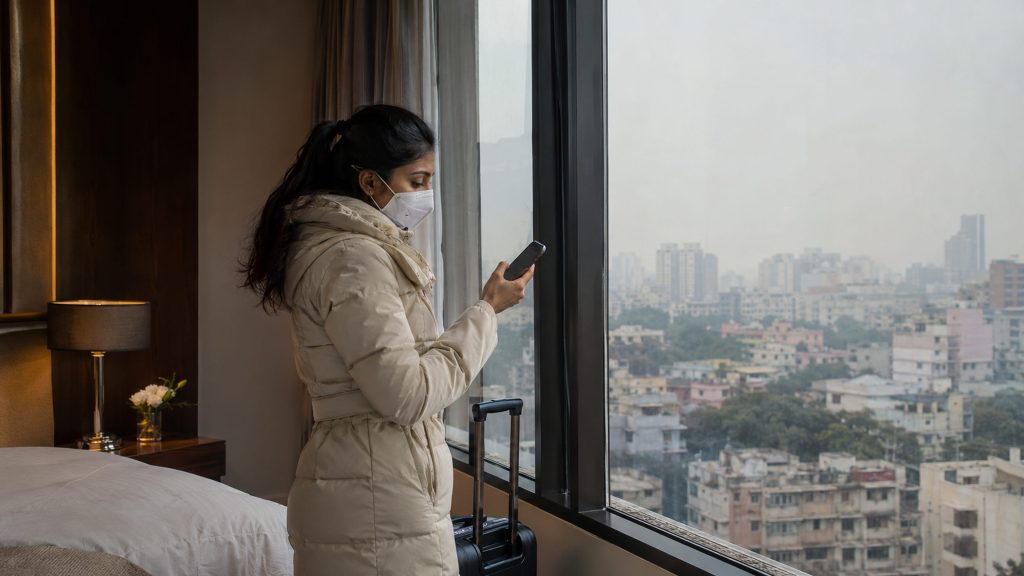
Winter visits to Delhi and Lahore often include plans that are hard to change: family ceremonies, school holidays and multiple stops in one trip. Air quality can complicate those plans. Travellers can make better decisions by checking readings where they will actually be staying and treating them as time-sensitive, rather than relying on a citywide image or a ranking circulated days earlier.
India’s Central Pollution Control Board recorded a daily average Air Quality Index of 382 in Delhi on November 6. The Commission for Air Quality Management cited that reading when it invoked Stage III measures for Delhi and the wider National Capital Region. That is a dated city average, not the current reading for every neighbourhood and not a live statement of the restrictions that will apply on arrival.


Some restrictions are separately dated. Indian authorities said dust-generating construction and demolition activity was restricted across the National Capital Region from November 5 to 20 under a commission order. The wider package of emergency actions can change with air quality and forecasts. Travellers arranging trips by road should check the newest order and confirm with their transport provider rather than extrapolating from an older headline.
Lahore is monitored under a different system. Pakistan’s Punjab Environmental Protection Agency provides an official dashboard with dated readings by station and a separate Lahore page. It also has a crisis management plan that calls for measures when air quality reaches specified levels. A Delhi restriction has no bearing on whether Lahore schools, offices or other activities are affected.
The letters AQI appear on both dashboards, but the numbers should not be compared casually with each other or with Canada’s Air Quality Health Index. Look for the local category, pollutant and observation time. If comparing two stations, also consider whether a reading is a momentary measurement or a daily average. One station describes part of a city, not every journey through it.
Fine particulate matter is one of the concerns behind those readings. Health Canada says exposure matters particularly for people with heart or lung conditions. Canadian travel advice for India flags hazardous air pollution in cities such as Delhi, and Ottawa provides separate travel advice for Pakistan. People with asthma, heart disease or questions about a child’s health can seek individual advice before departure and ask how to respond if symptoms worsen.


A host can help most by identifying practical alternatives before the family arrives: a shorter outdoor portion of an event, an indoor gathering space, or flexibility on exercise and sightseeing. Indoor air quality varies too. A building with useful filtration is different from one that is closed but still admits large amounts of outdoor air. Reducing indoor smoke sources can help lower particle exposure as well.
The day of a trip may bring concerns unrelated to the medical risk. Poor visibility and weather can affect transport, and a pollution measurement does not predict whether a particular flight will operate. Check the airline directly, allow time for ground transfers and use airport alerts for operational changes. A screenshot of the dashboard is not a substitute for an airline update.
Visitors can check conditions again once they reach family, rather than treating the first day’s reading as the pattern for the trip. That is especially important for an itinerary that moves between urban and rural areas or between cities. Air quality may improve for a period and deteriorate later as local emissions and weather change.
The simplest preparation is to save the official monitoring links for both destinations and identify in advance which plans are flexible. That leaves less to decide on a high-pollution day, when an outdoor visit can sometimes be moved without losing the family occasion that brought everyone together.