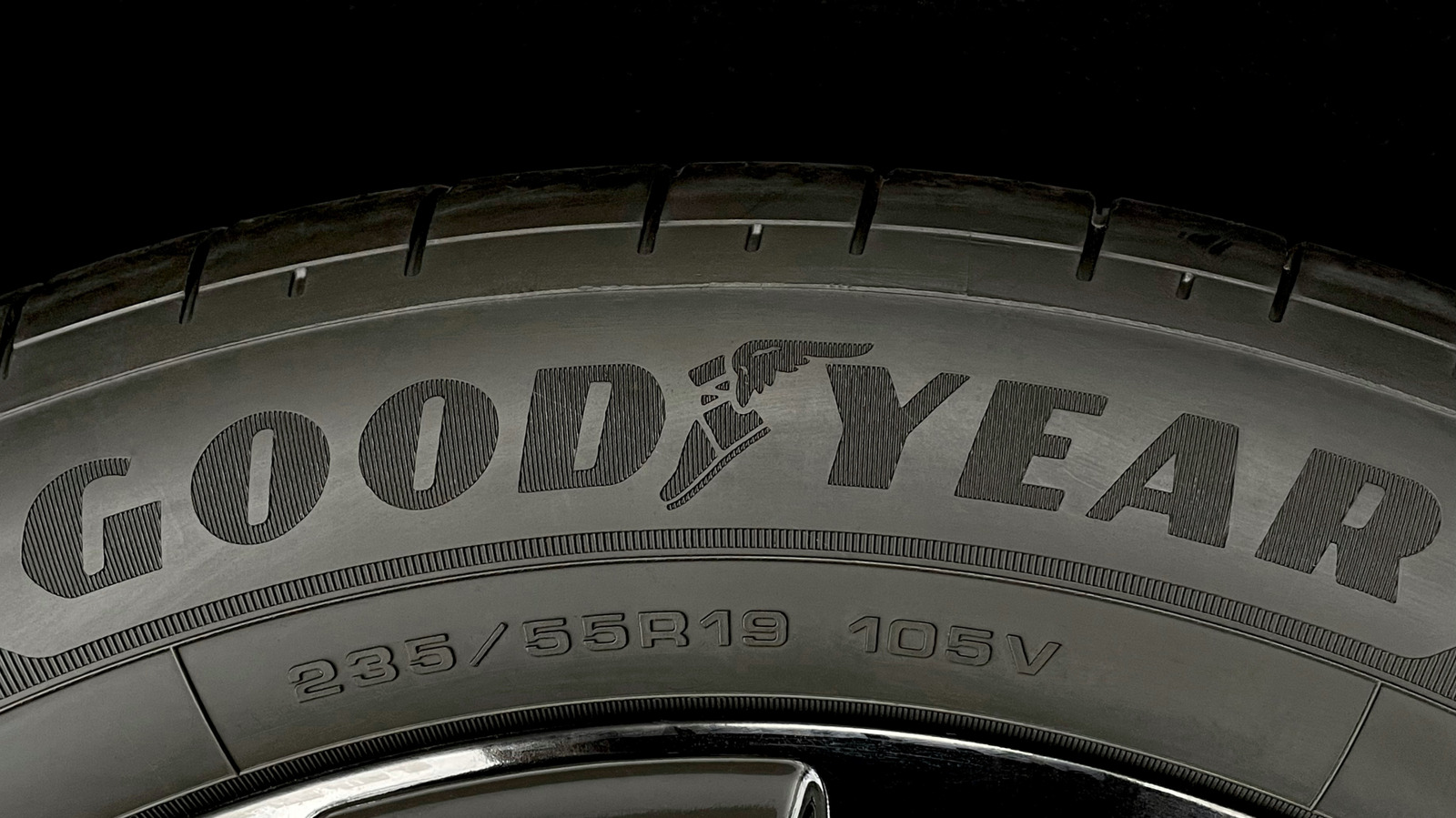
There are often large differences between the various models of each Goodyear tire family, so it can be useful to know more about the type of tire you’re buying rather than relying solely on the name. Broadly speaking, most Goodyear Assurance tires are intended for general use, with an emphasis on tread life and ride quality. Eagle tires, on the other hand, are designed with steering feel and grip in mind. There are, however, Eagles suitable for year-round use, including in light snow, and an Assurance tire rated for severe-snow traction.
To some extent, choosing which model of tire you should buy depends on how you use your car. A lot of highway miles would bring tire life and noise levels more into focus, while better steering response and cornering ability would be desirable attributes on, say, a sports sedan. Limited treadwear warranties can vary enormously, too, from 85,000 miles for the Assurance MaxLife 2 down to 30,000 miles for the Eagle F1 Asymmetric 6. There are also several variations of each tire model that differ in tread design and suitability for different seasons.
More miles from the Goodyear Assurance
The Goodyear Assurance MaxLife 2 is aimed at providing maximum tire life, with an 85,000-mile limited warranty and a correspondingly high Uniform Tire Quality Grading treadwear rating of 820. These are both very impressive numbers, although the actual tire life achieved may be considerably less depending on many factors, including general care and wheel alignment. But if most of your cornering is on on-ramps and off-ramps, then this would be an appropriate tire.
The Assurance ComfortDrive is aimed at providing a smoother ride, with a tread design that minimizes noise and ComfortFlex Technology to cushion from the road surface and provide smoother response when turning. They’re not soft enough to overcome all imperfections in the road surface, but they are well-suited for a driver covering long distances mainly on less-than-perfect surfaces, with no desire for maximum cornering performance. The limited warranty is 65,000 miles.
For more substantial amounts of snow on the ground, the Assurance WeatherReady 2 offers good performance in a range of conditions, with various tread features to displace water and an appropriate rubber compound. It carries the three-peak mountain snowflake symbol for severe-snow traction, although it’s important to remember that all-weather tires generally have less grip on ice than dedicated winter tires. Its limited treadwear warranty is shorter at 60,000 miles.
Higher levels of performance from the Goodyear Eagle
A wide range of performance levels is available from the various Goodyear Eagle tires. For instance, the Eagle Sport All-Season is designed for responsive cornering in wet and dry conditions and carries a 50,000-mile limited treadwear warranty. Its tread design has more performance features to improve wet braking and provide traction in light snow. The Eagle Sport All-Season’s limited treadwear warranty is shorter at 45,000 miles.
At the upper end of the performance spectrum is the Eagle F1 Asymmetric 6, which is designed for responsive cornering and grip in wet and dry conditions. As this is a summer tire, Goodyear doesn’t recommend using it in temperatures below 40 degrees Fahrenheit, so it’s clearly not ideal if substantial periods of frost and freezing are expected. The Eagle F1 Asymmetric 6 carries a 30,000-mile limited treadwear warranty, compared with 60,000 miles or more for the Assurance models discussed above.
There isn’t necessarily a great disparity in cost between the two tire model lines. For example, one size, 245/45R20, costs $265 per tire for the Assurance MaxLife 2 or $270 each for Eagle F1 All-Seasons, before installation and taxes. That’s only a $5 difference for each tire. However, it’s important to note that they have different speed ratings. (It is crucial to choose the correct load and speed ratings for tires.) Whether you choose to get a set of Assurances or Eagles, remember that all of these Goodyear tire warranties are valid for a maximum of six years from the date of purchase or the applicable number of miles, and none apply to original-equipment tires.