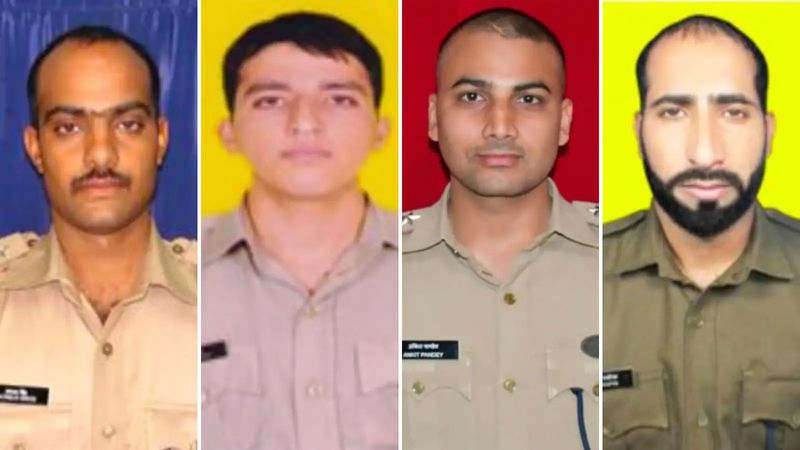
On the evening of 29 September, at a CISF camp guarding the Sewa II hydroelectric project in Basohli, an argument during a change of duty reportedly ended in gunfire. Four personnel, among them an Assistant Commandant, lost their lives. A Head Constable has been arrested and a Court of Inquiry ordered.
It would be wrong to speculate on the mind of the accused; that is for the investigation. Yet anyone who has commanded men in hard places knows the question such an event leaves behind. How does a disagreement travel, sometimes in seconds, the enormous distance from irritation to irreversible action?
That question is not confined to men in uniform. The same week, the Supreme Court appointed National Task Force on student mental health shared preliminary findings from a survey of over 2.43 lakh students. About 15 per cent recalled weeks of feeling overwhelmed, anxious or low in the previous six months. Nine per cent reported suicidal thoughts often or very often in the past year. A third felt like outsiders on their own campus. Coming amid fresh grief over student deaths at IIT Bombay, these are warning lights on the dashboard of a society in a hurry.
The soldier on a lonely post, the student awaiting a result, the young engineer fearing a layoff and the teenager counting likes live in different worlds. They share one battlefield: the human mind under pressure. We keep asking why stress is rising. We should also ask whether our capacity to absorb it is shrinking.
Desire Now Expects Delivery
Hungry? Food arrives in twenty minutes. Bored? A thumb summons entertainment. Unsure of your worth? Post a photograph and count the likes.
For most of history, wanting and getting were separated by time and effort. Families waited weeks for a letter from a son on the border; students waited for results pasted on the school notice board. Waiting was simply life, and it quietly trained us.
Psychologists call this capacity frustration tolerance. In the late 1960s, Walter Mischel at Stanford offered children one marshmallow now or two if they could wait. Later research found that family circumstances shape that ability strongly, which is itself the lesson: self control is not merely inborn. It is built by the environment we create, and it grows with practice, like a muscle under resistance. If every discomfort is removed and every wish granted at once, where will that muscle get its exercise?
The problem is not gratification. It is our growing inability to tolerate its postponement.
The Tiger Has Changed. The Body Has Not.
The fight or flight response once saved our ancestors from predators. Today an insulting message, a public reprimand, a pending EMI or a cruel comment online can set off the same alarm. Hans Selye, the pioneer of stress research, showed that a body kept on alarm too long begins to wear down. A person may appear normal at work while carrying a heavy load of anger or helplessness, until a small event becomes the last straw.
And when strong emotion floods the brain, the regions responsible for judgement lose their grip for a while. Every experienced commander knows this instinctively: separate two angry men first, talk later. When we read that a tragedy followed “a minor argument”, remember that the trigger and the load are rarely the same thing.
The Space Between
The Bhagavad Gita describes the sthitaprajna, the person of steady wisdom, unshaken by sorrow and not craving pleasure. A line popularly attributed to Viktor Frankl, who survived the Nazi camps, says that between stimulus and response there is a space, and in that space lies our freedom.
Mental strength is not the absence of anger, grief or fear. It is the ability to feel an emotion without becoming its servant. I fail an examination and feel devastated. But failing an examination and concluding that my life has failed are two entirely different judgements. That small space between what happens to us and what we do next may be the most important ground we ever defend.
The phone has made that ground harder to hold. It is not the villain; it connects families and democratises knowledge. But it puts comparison in every pocket, setting our unedited lives against other people’s highlight reels, and it fills every silence in which the mind once digested the day.
Stress Is Not the Enemy
Not all stress is harmful. Selye distinguished eustress, the pressure that sharpens us, from distress, the pressure that breaks us. The aim cannot be a stress free human being, because there is no stress free world. The aim must be a stress capable one. As the Army says, the more you sweat in peace, the less you bleed in war.
Institutions Must Look in the Mirror
Yet the burden cannot lie on individuals alone. A soldier cannot meditate away punishing duty hours, and a student cannot jog away institutional humiliation. The Home Ministry’s task force on CAPF suicides and fratricides pointed to prolonged deployments, family separation, leave difficulties and a fear of being mocked as weak. On campuses, over 70 per cent of institutions reportedly lack a full time mental health professional. Resilience must never become an alibi for unhealthy institutions. Grievances must have somewhere to go, counselling must be confidential, and asking for help must never quietly damage a career.
Five Conversations We Need to Have
To the young: Marks, followers and a first job are chapters, not the whole book. Learn to lose a match and shake hands, and to say three hard words: I am struggling.
To parents: Do not clear every obstacle from your child’s path. Let them meet small disappointments while you are there to help them stand. And put your own phone down at dinner.
To teachers: You often see a change before the family does. A bright child who goes quiet is sending a signal. A word in time can matter more than a lecture.
To young professionals: A job is something you do, not who you are. Keep a sport, a friend you can call at midnight, and guard your sleep as fiercely as your appraisal.
To those who lead: People sometimes need to be heard before they need to be instructed. Make it safe for them to tell you.
A New Definition of Strength
For generations, strength meant: don’t complain, don’t cry, get on with it. There was value in that, but silence is not always strength. At the other extreme, a culture in which every discomfort becomes trauma leaves people poorly armed for life. Wisdom lies between.
Not every desire has to be fulfilled. Not every argument has to be won. Not every insult requires a reply. Not every failure is final.
The Kathua tragedy will be investigated and responsibility fixed through due process. But together with the grief on our campuses, it should make us think. We spend enormous energy teaching our children how to succeed. Perhaps it is time we spent equal energy teaching them how to be disappointed. The true test of a strong mind is not how it behaves when life says yes. It is what it does when life says:
No. Not now. Not this time.