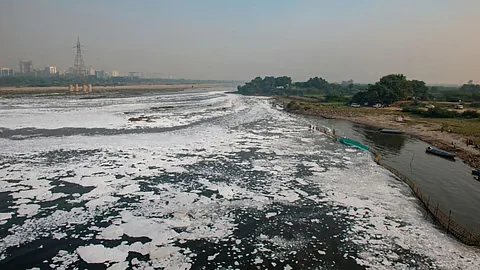
During the festival of Chhath, pollution of Yamuna River in Delhi has once again become a big topic of discussion. A round of allegations and counter-allegations continues between the leaders of BJP and Aam Aadmi Party regarding foam and dead fish in the river. Delhi Government Cabinet Minister Pravesh Verma has alleged that Aam Aadmi Party has dumped dead fish in Yamuna. At the same time, Aam Aadmi Party claims that fish have died due to chemicals being mixed in Yamuna. The biggest question amid political allegations is that what is the real condition of Yamuna? For this, it is important to understand the data of the report of Delhi Pollution Control Committee (DPCC).
What is BOD and why is it important?
According to the data of Delhi Pollution Control Committee (DPCC), BOD levels have been recorded several times higher than the prescribed standard at many places in Yamuna. BOD means Biochemical Oxygen Demand. It refers to the amount of oxygen used by microorganisms while decomposing organic pollutants present in water. In simple words, the higher the BOD in water, the higher will be the level of organic pollution in it. The standard of BOD for bathing water is set at 3 mg per liter. But at many monitoring centers of Yamuna in Delhi, this figure has reached much above this limit.
5 most polluted areas of Yamuna
As per available DPCC data, the pollution status on the basis of BOD is as follows:
ISBT Bridge: 30 mg/L
ITO bridge: 18 mg/L
Asgarpur: 16 mg/L
Nizamuddin Bridge: 12 mg/L
Okhla Barrage: 10 mg/L
Pollution many times more than the standard
If we look at these figures, the BOD level at ISBT bridge is 10 times more than the prescribed 3 mg/L standard. At the same time, it has been recorded 6 times at ITO Bridge, about 5.3 times at Asgarpur, 4 times at Nizamuddin Bridge and more than 3.3 times at Okhla Barrage. The presence of bacteria spread through feces and urine in the river water is also a worrying situation. According to the DPCC report published in September, fecal coliform levels have been recorded several times higher than the prescribed limit at several monitoring stations on the Yamuna.
What is fecal coliform?
Fecal coliform is a group of bacteria, high concentrations of which indicate water pollution through feces and urine. Coming in contact with such water can increase the risk of infections and stomach related diseases. The maximum prescribed limit of fecal coliform for bathing water is 2,500 MPN per 100 ml. But in many parts of Yamuna, its level has left this limit far behind.
Fecal coliform situation in 5 areas of Yamuna
According to available data from DPCC:
Asgarpur: 38,000 MPN/100 ml
ISBT Bridge: 35,000 MPN/100 ml
Okhla Barrage: 21,000 MPN/100 ml
ITO bridge: 17,000 MPN/100 ml
Nizamuddin Bridge: 15,000 MPN/100 ml
15 times more bacteria than the prescribed limit
According to the data, the level of fecal coliform in Asgarpur was recorded at 38,000 MPN per 100 ml. This is 15.2 times more than the prescribed limit of 2,500. At the same time, this level was 14 times higher on ISBT Bridge, 8.4 times higher on Okhla Barrage, 6.8 times higher on ITO Bridge and 6 times higher on Nizamuddin Bridge.
Oxygen dissolved in Yamuna is also less
The situation of Yamuna pollution in Delhi is not limited to just BOD and fecal coliform. The level of dissolved oxygen i.e. DO (Dissolved Oxygen) in the river water also remains a matter of concern. Dissolved oxygen present in water is very important for the survival of fish and other aquatic creatures.
What is DO and why is it important?
DO means dissolved oxygen i.e. oxygen dissolved in water. Aquatic organisms depend on this oxygen to breathe and survive. When the amount of dissolved oxygen in water starts decreasing, life becomes difficult for fish and other organisms. They may also die if the oxygen level becomes too low.
Oxygen level reached below 5 mg/L
According to available data, DO levels at some monitoring stations of Yamuna have been recorded below the prescribed standard of 5 mg per litre. This is a sign of deteriorating water quality of the river. Increases in BOD and occurrence of DO are often linked. As organic matter increases in water, the microorganisms that decompose it use more oxygen. This may reduce the dissolved oxygen available in water.
Follow the LALLURAM.COM MP channel on WhatsApp