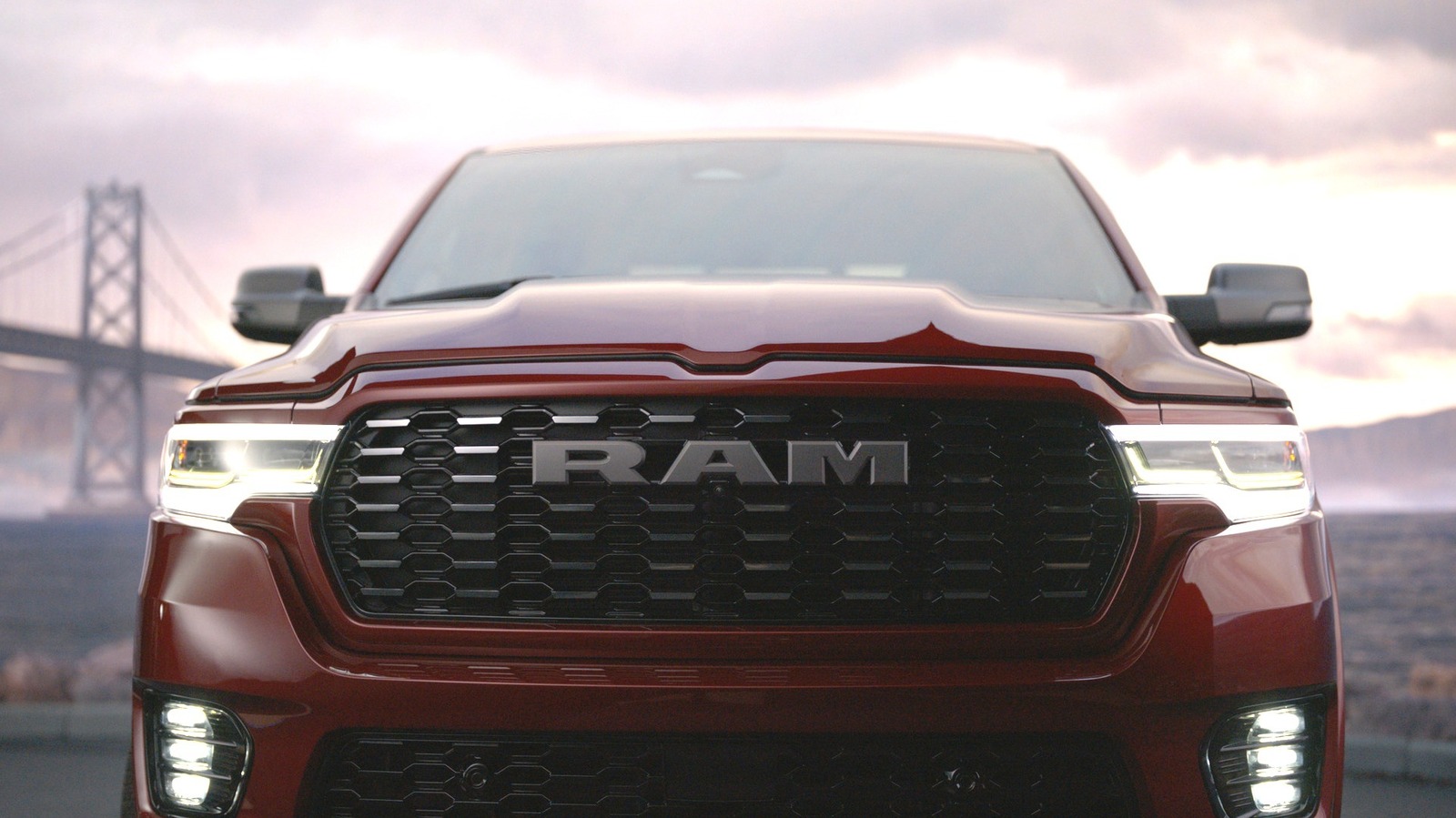
In a pure side-by-side spec sheet comparison, the 2026 Ram 1500’s standard output 3.0-liter twin-turbocharged Hurricane inline six-cylinder engine offers a bit more in terms of horsepower, torque, and towing capacity over the hefty 5.7-liter HEMI V8. The newer powerplant provides an additional 25 horsepower (420 versus 395) and an extra 59 pound-feet of torque (469 versus 410). The Hurricane also edges out the 5.7-liter HEMI V8 in towing capability, with its maximum towing capacity (achieved with the optimum combination of factory options and equipment) of 11,610 pounds. Conversely, a properly equipped HEMI offers up to 11,320 pounds of towing capacity, 290 pounds less.
The Hurricane isn’t a bad engine, as we found it more than ample in our 2025 Ram 1500 Warlock review, but the HEMI’s roots run deep for its many fans. When Ram’s parent company Stellantis canceled the HEMI, it brought it back after consumers demanded it. In fact, after the automaker announced the end of the HEMI’s production in late 2023, Ram’s sales in the first half of 2024 dropped nearly 20% compared to the same period a year prior, per Mopar Insiders. And the Ram 1500 isn’t the only 2026 model that got a HEMI engine again, either.
It should be noted, though, Ram is only offering the HEMI in specific configurations at an additional cost over the Hurricane. For instance, to get the HEMI, you must opt for the shortest bed and the crew cab setup. Certain trims like the Laramie come with the Hurricane standard, but to get the HEMI, you’ll need to pay an extra $1,200 or $2,895.
If the 3.0 Hurricane powerplant is more potent, why go with the HEMI?
The sound, feel, and culture surrounding HEMI engines are likely what keep fans coming back to it. Some describe the 5.7 HEMI V8 as having “character” or “soul,” which is something that’s perhaps missing from the newer turbocharged engineFor enthusiasts, the Hurricane is missing the deep growling sound of the HEMI when it fires up or roars to life when the pedal is pressed down. The fact that Ram’s website features a section with a button that plays the sounds of a 5.7-liter HEMI V8 is also telling.
The HEMI (short for its hemispherical-shaped combustion chamber design) has a history and following that’ll be difficult for new powertrains like the Hurricane to match anytime soon. The HEMI name was introduced in the early 1960’s when the second generation of the engine launched, and many iconic vehicles have had a HEMI under the hood throughout the years.
Testing by automotive outlets demonstrated that when the 3.0 Hurricane is under load, such as when towing, it’s more efficient and features a more low-key steadiness. Whereas the HEMI was louder, more aggressive, and more dramatic, working a bit harder than the Hurricane for the same tasks. The driving feel between these two engines couldn’t be more different, and choosing which to get ultimately comes down to what type of experience you’re looking for in a pickup truck and your towing needs.