

Dharmendra Pradhan Resignation: Whenever news of a Union Minister’s resignation emerges, it creates a stir within political circles. A similar situation unfolded amid the NEET paper leak controversy and ongoing protests at Delhi’s Jantar Mantar by student organizations and civil society groups, when reports surfaced that Union Education Minister Dharmendra Pradhan had submitted his resignation.
This event not only intensified the debate regarding the education system and government accountability but also prompted people to wonder about past instances of Cabinet Ministers resigning and the reasons behind them.
It is worth noting that in the country’s political history, Cabinet Ministers have resigned under various circumstances: some stepped down taking moral responsibility, others resigned due to disagreements with the government, while corruption allegations or public pressure led to the resignation of some others. Let us explore in this article how many Cabinet Ministers have resigned in the past and the reasons for their resignations.
Why did Dharmendra Pradhan’s resignation become a topic of discussion?
Currently, the NEET exam is the subject of a massive nationwide controversy. Students have been continuously protesting over issues such as paper leaks, negligence in the examination process, and a lack of transparency. Thousands of students and numerous organizations were staging protests at Delhi’s Jantar Mantar. Amidst this, news broke that Union Education Minister Dharmendra Pradhan had resigned. This news sparked intense speculation in political circles. However, the resignation of any minister is not viewed merely as a political event; it is also seen in the context of government accountability.
India’s first Cabinet resignation
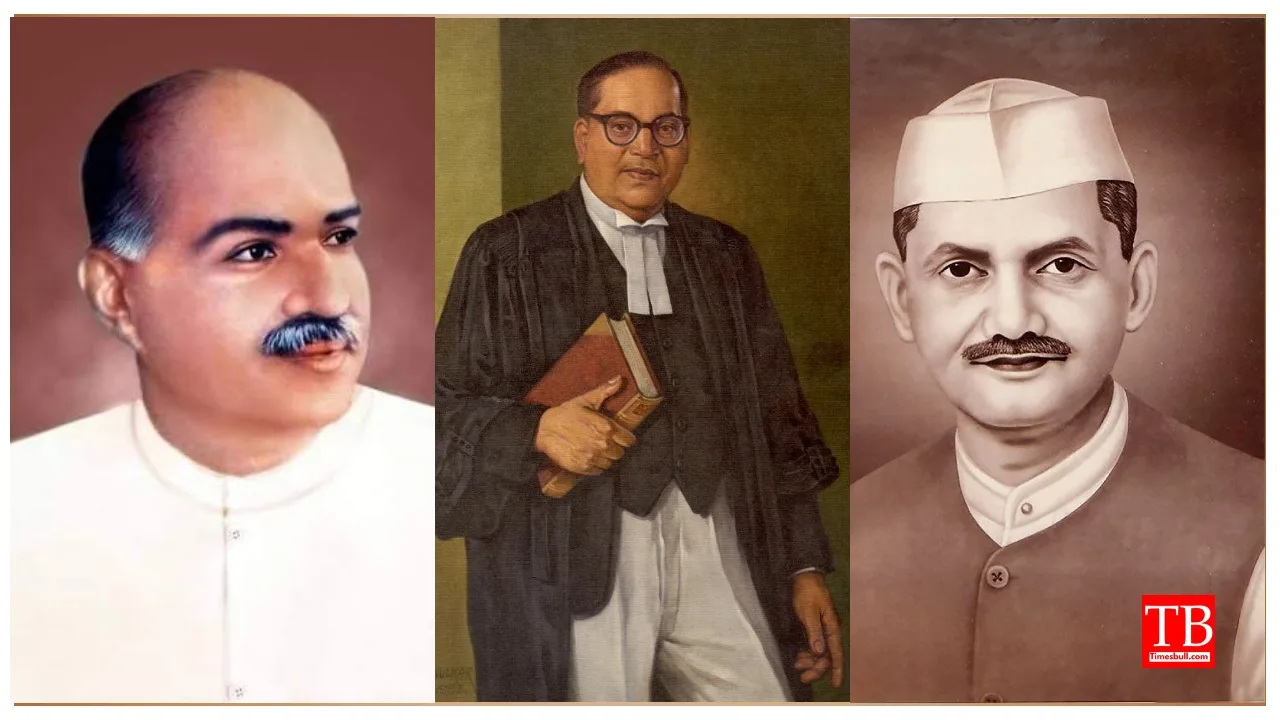
India gained independence on August 15, 1947. Subsequently, the government led by Pandit Jawaharlal Nehru formed the country’s first Union Cabinet. This cabinet included prominent leaders who were entrusted with significant responsibilities. Dr Syama Prasad Mukherjee was among these leaders. He was appointed as the country’s first Minister of Industry and Supply. At the time, he was counted among the nation’s prominent nationalist leaders and was renowned for his integrity and forthright views.
About three years after joining the government, he took a decision that set a new precedent in the history of Indian democracy. On April 6, 1950, Dr Syama Prasad Mukherjee resigned from the Union Cabinet, becoming the first Union Minister in the country to resign from the cabinet.
Why did Dr Syama Prasad Mukherjee resign?
The reason for Dr Syama Prasad Mukherjee’s resignation was the Nehru-Liaquat Pact. This agreement was signed in April 1950 between the Prime Minister of India, Jawaharlal Nehru, and the Prime Minister of Pakistan, Liaquat Ali Khan. Its primary objective was to ensure the safety of religious minorities living in both countries and to alleviate the tensions arising from the Partition.
However, Dr Syama Prasad Mukherjee did not fully agree with this pact. He believed that Hindus and other minorities in Pakistan were facing persecution and that the Indian government should adopt a firmer policy to ensure their safety. He presented his views to the government, but when they were not accepted, he decided to step down from his ministerial post.
What was the Nehru-Liaquat Pact?
Following the Partition of India and Pakistan in 1947, large-scale communal violence erupted in both nations. Millions of people migrated across the borders, raising concerns regarding the safety of minorities in both countries. It was against this backdrop that the Nehru-Liaquat Pact was signed between India and Pakistan in April 1950.
What did Dr Syama Prasad Mukherjee do after resigning?
After leaving the cabinet, Dr Syama Prasad Mukherjee continued his political journey. In 1951, he founded the Bharatiya Jana Sangh with the support of the Rashtriya Swayamsevak Sangh (RSS). This Jana Sangh later laid the foundation for the Bharatiya Janata Party (BJP). He openly opposed the special status of Jammu and Kashmir and raised the slogan that “two constitutions, two prime ministers, and two flags cannot coexist in one country.” For decades, this issue remained a central theme in Indian politics.
Resignation of Dr BR Ambedkar
After Dr Syama Prasad Mukherjee, another prominent national leader, Dr Bhimrao Ramji Ambedkar, also resigned from the Union Cabinet. He was independent India’s first Law and Justice Minister and is regarded as the principal architect of the Indian Constitution. He stepped down from his ministerial post in 1951.
Several reasons are cited for his resignation, the most significant being the government’s stance on the Hindu Code Bill. Dr Ambedkar advocated for granting women greater rights regarding property, marriage, and inheritance; however, he was dissatisfied with the lack of adequate support and priority according to the Hindu Code Bill. Ultimately, he resigned from the Cabinet.
Lal Bahadur Shastri Also Set a Precedent
Former Indian Prime Minister Lal Bahadur Shastri is also among the prominent leaders who resigned from the Union Cabinet. At the time, he was the Minister of Railways and Transport. In 1956, a large number of passengers lost their lives in the Ariyalur train accident in Tamil Nadu. Deeply distressed by this tragic incident, Shastri accepted moral responsibility and resigned from his post.
Key Reasons for Ministerial Resignations in India
It is worth noting that the reasons behind the resignations of Union ministers have evolved; Key factors include disagreements with government policies, the acceptance of moral responsibility, political pressure, and public pressure.
What is the Significance of Resignation in a Democracy?
A minister’s resignation is not merely an administrative procedure; it is considered a vital component of democratic accountability. When a minister steps down due to a serious controversy or on moral grounds, the move is viewed through the lens of democracy and public accountability. However, the circumstances surrounding each resignation vary, as do the underlying reasons.
Conclusion
The news of Dharmendra Pradhan’s resignation has once again sparked a discussion regarding the history of Union ministerial resignations in Indian politics. Looking back at the history of independent India, Dr Syama Prasad Mukherjee was the first minister to resign from the Union Cabinet. He stepped down on April 6, 1950, questioning the government’s policy regarding the Nehru-Liaquat Pact and the safety of minorities in Pakistan. Subsequently, Dr BR Ambedkar resigned due to differences of opinion over the Hindu Code Bill, and Lal Bahadur Shastri resigned by accepting moral responsibility for a train accident; both set strong precedents for accountability in Indian democracy.

Comments are closed.