
Who are Nihang Sikhs? After the controversy in Uttarakhand Gurudwara, know its history and warrior tradition

Dehradun: Nihang sect has once again come into limelight after the ongoing dispute between a group of Nihang Sikhs and the administration at Nagarasu Gurudwara in Rudraprayag district of Uttarakhand. In recent news, there has been more focus on this controversy, but the history of Nihang Sikhs is many centuries old. They belong to a special warrior tradition of Sikhism and are known for their religious beliefs, weapons and distinct identity.
Earlier this month, about half a dozen Nihang Sikhs had climbed onto the roof of Nagarasu Gurdwara to demand the release of their comrades who were arrested after the clash in Karnaprayag.
According to the police, efforts are on to resolve the matter through talks and till Monday two Nihangs have come down from the roof. The administration says that the Hemkund Sahib Yatra and religious activities taking place in the Gurudwara are continuing normally and peacefully.
Beginning of Nihang sect
The Nihangs, also known as Akali Nihangs, are a traditional warrior community of Sikhism. It is believed that it started during the time of Sikh Gurus, when the Sikh community was prepared for self-defense and the art of warfare.
According to historians, its foundation was laid by the sixth Sikh Guru, Guru Hargobind, which was later strengthened by Guru Gobind Singh, who founded the Khalsa Panth in 1699."Akali" word means "Immortal" Or "associated with famine man"Whereas "Nihang" Nihang Sikhs are traditionally considered protectors of the Sikh religion and have played an important role during many conflicts in North India.
Special identity of Nihang Sikhs
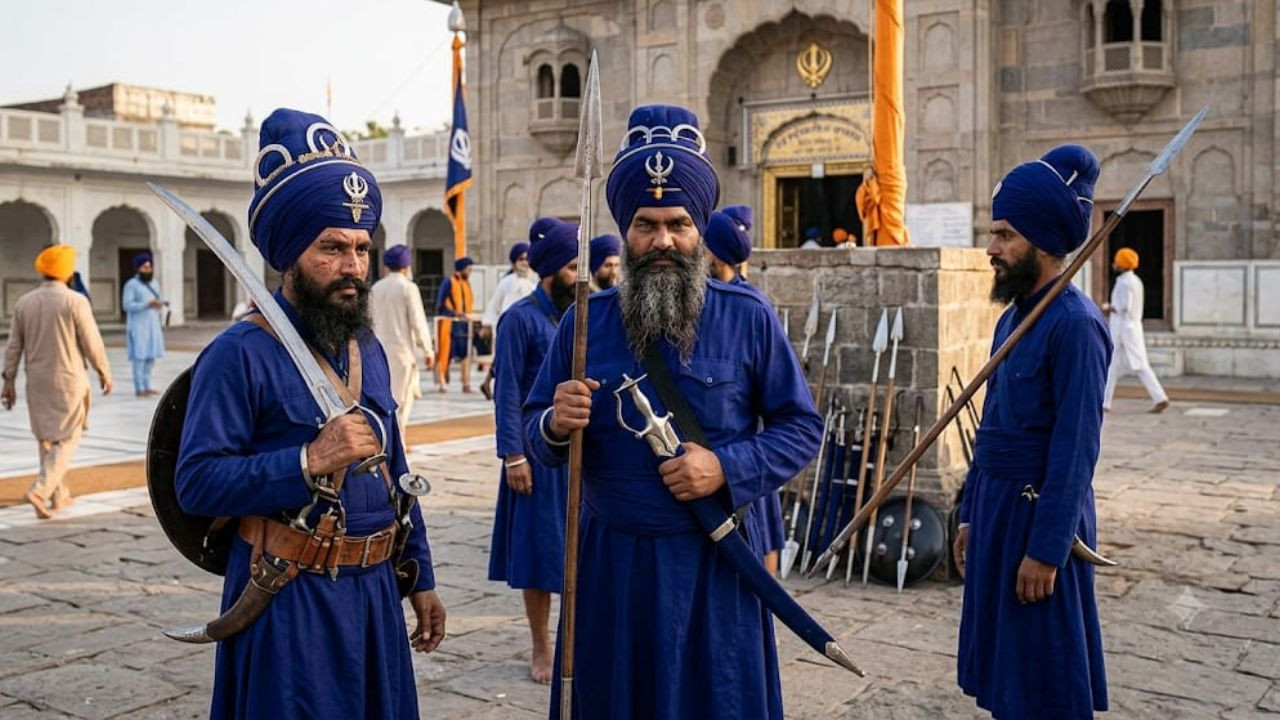
Nihang Sikhs are easily recognized by their dark blue dress, large turban and traditional weapons. His large turban is called ‘Damala’, which often has steel rings called ‘Chakra’ attached to it. Swords, spears and other traditional weapons are also an important part of their identity. Blue color has long been considered a symbol of the warrior tradition of the Khalsa. Even today, many Nihang Sikhs follow the same dress, customs and lifestyle, which they consider to be the traditions of the warriors of the time of the Sikh Gurus.
Important role in Sikh history
In the 18th century, when the Sikh community had to face many attacks and difficulties, the Nihang Sikhs created their own identity. Nihangs fought as small warrior groups and despite being in small numbers, were known to bravely face larger armies. According to historians, later he also played important responsibilities in the army of Maharaja Ranjit Singh’s Sikh Empire.
Famous Nihang leaders like Akali Phula Singh are remembered for their courage, military campaigns and the role they played in protecting Sikh institutions. With time the Nihang Sikhs became the dominant community carrying the legacy of traditional war-arts and weapons. They have kept swordsmanship and other traditional Sikh fighting skills alive to this day.
still part of religious life
Even today, Nihang Sikhs, especially in Punjab, are an important part of Sikhism and religious life. Divided into different groups like Buddha Dal and Tarna Dal, Nihangs take part in religious processions, festivals and demonstrations of traditional martial arts. Many Nihangs also perform service work and help devotees and pilgrims during major religious events. Although Nihang Sikhs are mainly known for preserving their religious and historical traditions, sometimes they also come into limelight due to controversies related to administration or law and order. Due to their distinct costumes, traditional weapons and glorious history, people’s attention is often attracted towards this community.
Nihang Sikh in discussion once again
After the Rudraprayag Gurdwara incident, Nihang Sikhs have once again come into the limelight. This case is related to the clash with the local people in Karnaprayag and the subsequent arrest of four Nihang Sikhs. To ensure a fair investigation in this case, the authorities have handed over the responsibility of investigation to other officials. Apart from this, orders have also been given for a separate investigation into the allegations made regarding the police action.

Comments are closed.