
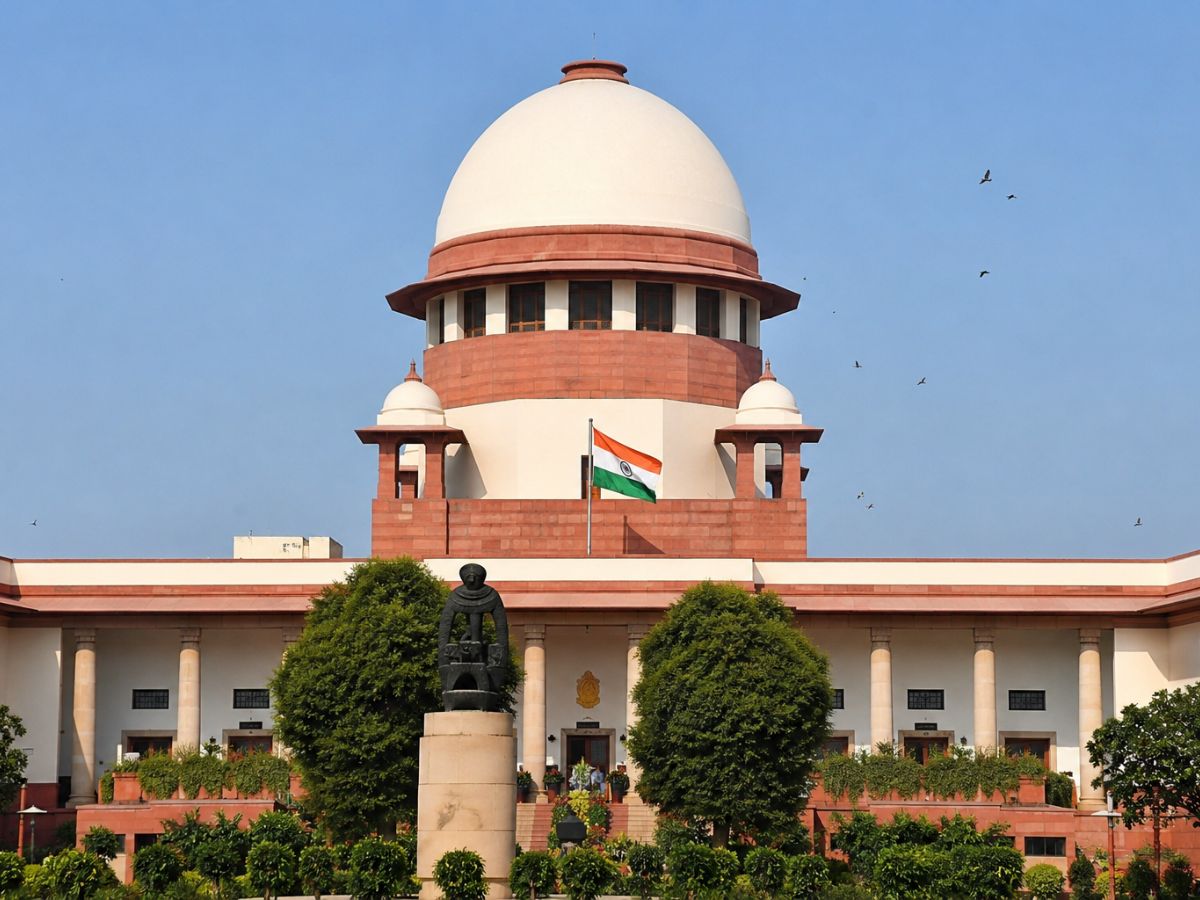
Who Is IPS Urvashi Sengar? Pregnancy Row That Put IPS Training Rules Under Supreme Court Lens

The legal battle involving Urvashi Sengar, a 2023-batch IPS officer, has gone beyond one officer’s training schedule and opened a wider debate on whether decades-old service rules adequately reflect modern medical science and women’s rights. On Friday, the Supreme Court declined to allow Sengar to immediately join the ongoing Phase-II training at the Sardar Vallabhbhai Patel National Police Academy in Hyderabad, saying too much of the programme had already been completed. At the same time, the court questioned the logic behind a 1993 Ministry of Home Affairs (MHA) rule that requires pregnant IPS probationers to take a one-year break after childbirth, observing that medical fitness should be assessed individually instead of applying a blanket policy.
Reportedly, the bench told Urvashi Sengar, “We agree with your submission on the merits. But we cannot implement it. Three out of nine weeks are already over. You will not be able to be trained properly. It will be to your detriment.” The court eventually disposed of her petition and directed the Central Administrative Tribunal (CAT) to decide her original application independently, without being influenced by its observations.
Urvashi Sengar case centres on maternity leave, IPS training and 1993 government rule
As per reports, Urvashi Sengar is a direct recruit IPS officer of the 2023 batch allotted to the Madhya Pradesh cadre. She gave birth to a child on September 20, 2025, and later sought permission to attend the second phase of IPS training, which began on June 22, 2026, after being declared medically fit nearly nine months after delivery.
But the National Police Academy denied the plea on the ground of an 1993 Office Memorandum by the MHA, according to which all IPS probationers who are expecting have to halt their training and start again only after one year from delivery. Contesting the regulation, Sengar asserted that it is a blanket bar irrespective of the health condition of the probationer and without regard to advancements in medicine and technology.
Urvashi Sengar petition prompted Supreme Court to question blanket maternity policy
During earlier hearings, the Supreme Court made several important observations on the policy. According to reports, the bench questioned whether every woman should automatically be barred from training for a fixed period, regardless of her medical fitness.
“This is a beneficial provision under law for protecting women and not to take away the right to undergo training if they are fit for it,” the court observed. It also asked why a medically fit officer should be prevented from resuming training solely because of the Office Memorandum. The judges noted that recovery after childbirth differs from one woman to another, with some capable of returning within nine months while others may need more time. The court indicated that such decisions should be made on a case-by-case basis, not through a blanket prohibition.
Urvashi Sengar denied interim relief as Centre cites training requirements
When the matter returned before the court, the Centre opposed allowing Urvashi Sengar to join the ongoing course midway. Additional Solicitor General Anil Kaushik said the nine-week Phase-II training had already completed three weeks and that several important modules, including field visits, physical training and Madhya Pradesh cadre-specific sessions, had already concluded.
Reportedly, he told the court that the academy requires 95 per cent attendance, making it impossible for Sengar to complete the programme properly if she joined at this stage. When asked what she had missed, the Centre said the completed modules were integral and could not be recreated separately.
Sengar’s counsel argued that she should at least be allowed to attend the remaining classes because the missed portion could no longer be recovered. The bench disagreed, saying allowing an officer to complete only part of the programme would be “absurd” and could ultimately work against her interests, even if her seniority was protected.
The court also recorded the Centre’s statement that it would withdraw its challenge before the Delhi High Court against the CAT’s interim order that had earlier allowed Sengar to attend training. That order had been stayed by the High Court, prompting Urvashi Sengar to approach the Supreme Court. While she did not secure immediate relief, the case has sparked a broader debate on whether maternity-related service rules for IPS officers need to evolve with changing medical realities and workplace equality.
Also Read: Why Does US Want Lawrence Bishnoi, Can India Refuse To Send Him?
Khalid Qasid is a media enthusiast with a strong interest in documentary filmmaking. He holds a Master’s degree in Convergent Journalism from AJK MCRC. He has also written extensively on esports at Sportsdunia. Currently, he covers world and general news at NewsX Digital.
The post Who Is IPS Urvashi Sengar? Pregnancy Row That Put IPS Training Rules Under Supreme Court Lens appeared first on NewsX.

Comments are closed.