Shein, founded in China and headquartered in Singapore, earlier this month received Beijing’s green light to proceed with its Hong Kong initial public offering, its third attempt to go public.
The approval came after Xu, 42, made his first public appearance at a government event in February, where he emphasized Shein’s roots in the southern province of Guangdong and thanked officials for supporting the company’s growth.
Prior to that, Xu had largely stayed out of the public eye, maintaining an unusually low profile even when compared to newer tech entrepreneurs, many of whom have increasingly avoided personal publicity.
|
Sky Xu, also known as Xu Yangtian, at an event in February, 2026. Screenshot taken from Youtube |
Tales of Xu’s elusiveness have been reported by various outlets, including accounts that even his own employees did not recognize him.
The Wall Street Journal, which called him “the world’s most anonymous CEO” in a 2023 headline, recounted an incident in which Xu rode an elevator at Shein’s Guangzhou office with a senior adviser and a crowd of employees.
When the adviser expressed surprise that workers did not appear to recognize their CEO, Xu only replied that it was “not our culture.”
Shein has not publicly released photographs of Xu. Even his internal profile picture did not show his face, instead displaying the slogan “if you have dreams, you are remarkable” over a generic natural landscape, per a 2024 report by the South China Morning Post.
Employees who enjoy making memes based on their boss, as is common in China’s tech industry, can only create text-based memes.
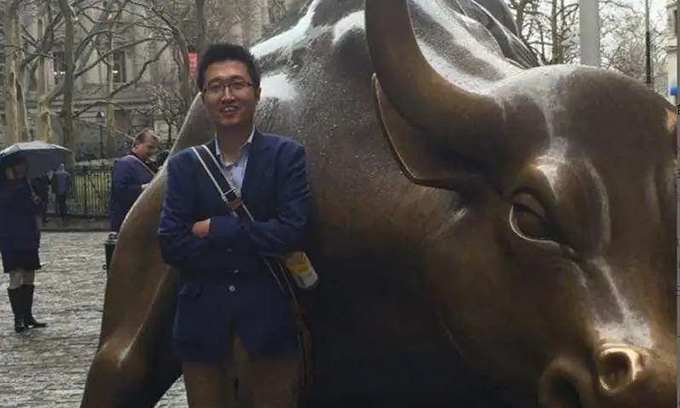
WSJ reported in 2023 that a photograph frequently published in Chinese-language articles about Xu was actually of another entrepreneur with the same surname. Another widely used image of Xu, which shows up in many English-language articles and Google image search results, is in fact that of a Cornell University engineering professor also named Chris Xu, The Atlantic verified in 2024.
Xu’s English name has also been a source of confusion. He initially went by Chris and later changed it to Sky, which is derived from one of the characters in his Chinese name, Xu Yangtian.
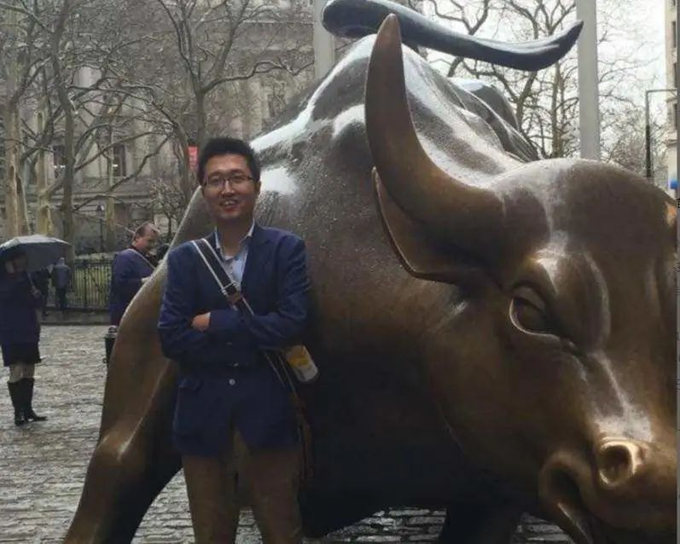
According to media reports, details provided by Shein and its draft prospectus, Xu was born to factory worker parents in Shandong in 1984 and graduated from Qingdao University of Technology with a bachelor’s degree in international trade.
 |
|
A young Xu Yangtian is pictured in a photo published by Qingdao University of Science and Technology in a profile of its alumnus. Photo from Qingdao University of Technology’s website |
He worked briefly at an online marketing company to help boost search traffic for websites and developed expertise in search engine optimization, according to The Guardian.
Xu then moved to Nanjing and launched an e-commerce venture in 2008, selling a variety of consumer goods directly to buyers. He teamed up with three partners a year later to establish another online business before they launched the SheInside website in 2012 to sell wedding dresses.
Three years later Xu and his partners, Molly Miao, Maggie Gu and Tony Ren, broadened the company’s product range, rebranded it as Shein and introduced its namesake app.
Xu is Shein’s CEO while Miao serves as chief marketing officer, Gu is general manager and Ren chief supply chain officer, according to a recent draft prospectus.
Shein’s success has made all four billionaires, according to Forbes, which estimates Xu’s fortune at US$6 billion.
Bloomberg, however,places his wealth at $10.5 billion. It had previously estimated his net worth at $23.5 billion in 2022, when Shein was valued at about $100 billion. The retailer’s valuation has since declined through subsequent fundraising rounds and is now reportedly under pressure to lower it further to around $30 billion.
Shein relocated its headquarters to Singapore in 2022, although most of its suppliers and warehouses remain in China. Xu was reported to have become a permanent resident of the city-state.
Reuters reported that he is one of China’s most prolific antique coin collectors and remains closely involved in Shein’s day-to-day operations despite its scale. He has been described as patient, modest and pragmatic.
People who worked with Xu told SCMP that his secrecy stems both from his personality and his belief that public attention on him would bring additional scrutiny to Shein.
But that may be unavoidable with the company pursuing a high-profile stock market listing.
The listing prospectus shows that Shein swung to a $99 million net loss in the first quarter of this year from a $395 million profit a year earlier, even as net revenue rose 1.1% to $9.05 billion.
For the whole of 2025, the company reported an almost 8% increase in net revenue to $41.85 billion, though net profit dropped 38.7% to $2 billion.
It is aiming to raise $2-3 billion in the IPO, which may take place as soon as August, Bloomberg reported, citing people familiar with the matter.
As growth slows and profitability declines, analysts are increasingly valuing Shein as a conventional clothing retailer rather than the technology-driven supply chain disruptor it was once seen as.
Xu, however, has projected confidence in the company’s future.
“We are sure that, on the wave of Guangdong’s high-quality development, Shein can together with this dynamic land make ‘made in Guangdong’ the global standard for the fashion industry,” he said at the February event, as quoted by the Financial Times.