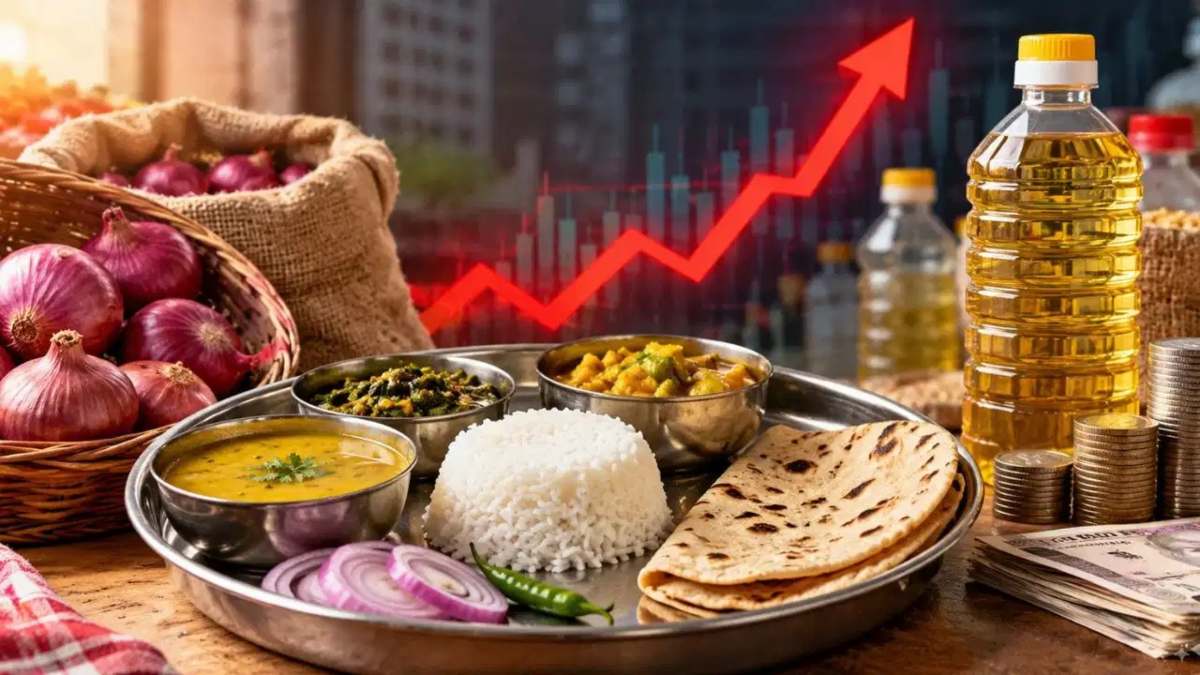
Business Desk- Wholesale Inflation: Wholesale inflation figures for September will be released today i.e. on 14th October. According to experts, wholesale inflation rate may exceed 10% in September. Inflation is expected to increase due to increase in prices of food items. Earlier in August, the wholesale inflation rate was 9.92%.
Inflation rate of 10% means that the goods which were available for Rs 100 last year in the wholesale market, now cost around Rs 110. However, the increase in prices of different commodities may vary.
What effect does wholesale inflation have on the common man?
If wholesale inflation remains at a high level for a long time, it can have an impact on many industries and businesses. The expenses of companies increase due to increase in the cost of things like raw materials, metals, chemicals, plastics and rubber.
In such a situation, companies can pass the burden of increased costs on to customers. Due to this, there is a danger of increasing the prices of everyday goods and other items. However, how much and how quickly the increase in wholesale inflation will impact retail prices depends on the product, demand and companies’ costs.
The government can affect the prices of some goods by changing taxes. For example, if crude oil prices rise, an attempt can be made to provide relief to consumers by reducing excise duty on petrol and diesel. However, there is a limit to tax deduction.
Retail Inflation: Retail inflation increased to 5.54% in September
Retail inflation increased to 5.54% in September, while it was 4.82% in August. The main reason for this was the increase in prices of vegetables and other food items like potatoes, onions, tomatoes.
Additionally, the rise in crude oil prices due to tensions in the Middle East has also put pressure on inflation. Retail inflation figures show that ordinary consumers are having to pay higher prices to buy goods than before.
There are two types of inflation in India
Inflation in India is mainly measured by two indices. The first is retail inflation i.e. Consumer Price Index (CPI) and the second is wholesale inflation i.e. Wholesale Price Index (WPI).
Retail Inflation (CPI): It measures changes in the prices paid by ordinary consumers to purchase goods and services. This includes food items, shelter, fuel and other essential items.
Wholesale Inflation (WPI): It measures the changes in the prices of goods in the wholesale market. In this, the prices of goods sold from one businessman or producer to another are taken into account.
The figures of both help in understanding the inflation situation in the economy. However, increase in wholesale inflation does not mean that the price of every item in the retail market will increase in the same proportion.