
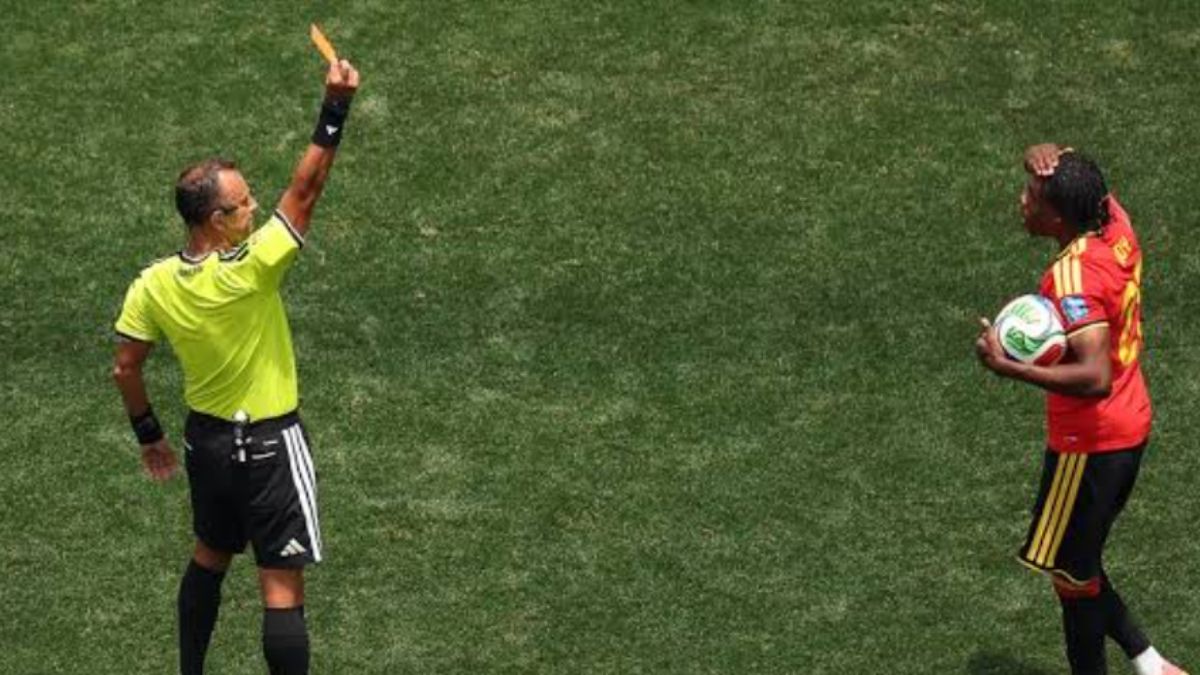

The 2026 FIFA World Cup is creating headlines for more than just goals and dramatic results. A growing red card trend is becoming one of the tournament’s biggest talking points.
Following Nathan Ngoy’s dismissal in Belgium’s clash against Iran, the total number of red cards shown at the tournament has climbed to eight. That figure is particularly striking because it equals the combined total from the previous two World Cups in Russia in 2018 and Qatar in 2022.
The latest sending-off has added to a list that already includes Sphephelo Sithole, Themba Zwane and Cesar Montes from the Mexico versus South Africa match, Tarik Muharemovic in Bosnia and Herzegovina’s meeting with Switzerland, Homam Ahmed and Assim Madibo during Canada against Qatar, and Miguel Almiron in Paraguay’s clash with Turkey.
The numbers have left fans and pundits asking the same question: why are players seeing red so often?
Several factors could be behind the trend. The increased intensity of matches, higher stakes as teams chase qualification, and stricter enforcement from referees may all be playing a role. Modern VAR reviews have also reduced the chances of serious incidents going unnoticed.
What makes the statistic even more remarkable is that recent World Cups were often praised for improved player discipline. Russia 2018 and Qatar 2022 produced just four red cards each across their entire tournaments. The 2026 edition has already matched that combined tally with plenty of football still to be played.
As the competition enters its decisive stages, attention will not only be on who lifts the trophy. Fans will also be watching to see whether the red card count continues to rise.

Comments are closed.