
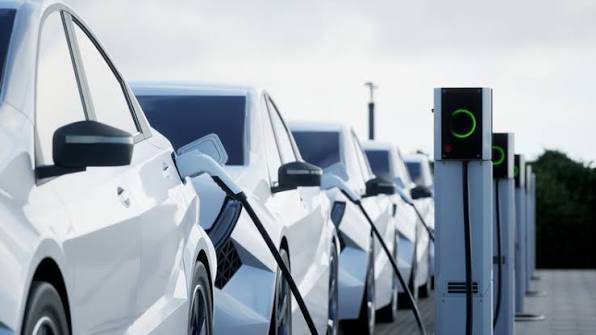

Even after many years, electric cars remain the future of the automotive industry. Many governments are pushing towards cleaner transportation; batteries continue to evolve; and there are more options for electric vehicles for consumers today than ever before. So, why automakers are slowing EV expansion despite years of promising an all-electric future?
However, at the same time, many of the world’s largest automakers decided to delay their electric car projects, prolong the manufacturing of hybrids, and keep their gasoline-fueled cars available longer than they had planned.
It turns out that EVs have not yet failed. On the contrary, the industry is changing in response to new circumstances. The growth in consumer demand is slower than the companies predicted. It is still costly to manufacture EVs. There are still problems with the charging network. Moreover, economic instability has its influence too.
This article explains why automakers are slowing EV expansion, what is driving the shift, and what it means for the future of electric mobility.
Why Automakers Are Slowing EV Expansion Instead of Abandoning EVs
First and foremost, the point should be made that automotive manufacturers are not turning their back on the concept of electric vehicles.
Automotive companies such as Honda, Ford, GM, Mercedes-Benz, Volkswagen, Aston Martin, and Rolls-Royce still pour millions of dollars into EV research and development. Many have postponed deadlines, lowered production numbers, or increased the amount of hybrids in the portfolio.
It is indicative of an approach, but not a retreat.
No longer does it focus on unrealistic deadlines such as “100% electric cars by 2030.” Rather, it focuses on balancing the portfolio by producing:
- Battery electric vehicles (BEVs)
- Plug-in hybrid electric vehicles (PHEVs)
- Regular hybrid cars
- Fuel-efficient internal combustion engine (ICE) cars
Understanding why automakers are slowing EV expansion starts with recognizing that long-term goals remain unchanged, but the journey has become more realistic.
EV Demand Is Growing, But Not Fast Enough
One of the biggest reasons why automakers are slowing EV expansion is that demand has not matched earlier forecasts.
Global sales of electric vehicles keep increasing each year. Nevertheless, the rate of this increase is not what was anticipated in the early years of the decade.
Manufacturers had high hopes that once early adopters became enthusiastic about electric cars, rapid mass adoption would follow. But that is not the case.
The first wave of buyers included mostly tech-savvy people and environmentally conscious consumers. The next wave is completely different.
Average buyers are more concerned about cost, convenience, resale value, and reliability than having the latest gadget.
They still remain hesitant due to such reasons as:
- High upfront costs
- Limited charging facilities in public areas
- Range concerns
- Longer charging time
- Battery replacement issues
Thus, the anticipated hockey-stick growth curve flattened out.
This mismatch between production plans and actual demand explains much of why automakers are slowing EV expansion today.
Dealer Inventories Show the Market Has Changed
Dealer inventory holds significant meaning.
In many markets, particularly in the US, EV inventories have increased despite continuous offers of discounts and incentives from car makers.
When inventories go up, it typically shows that the supply is growing at a higher rate than demand. It will not be possible for auto manufacturers to keep making cars that will not be bought.
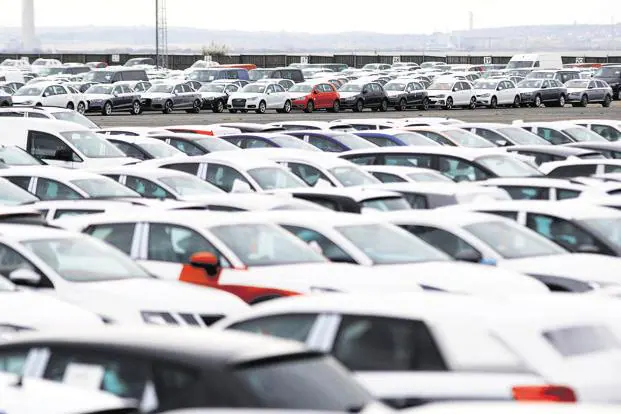
Each unsold car locks up cash flow, incurs costs for warehousing, and lowers margins.
Rather than continuing to make more EVs, manufacturers are cutting down on production delaying launches and concentrating on models which are more profitable.
EV Profitability Remains a Major Challenge
Another key reason why automakers are slowing EV expansion is profitability.
The construction of electric vehicles involves very costly investments.
The manufacturer needs to invest in:
- Designing of new vehicles
- Construction of batteries
- Development of software
- Electrification of the drivetrain
- Extending supply chains
- Collaboration on charging facilities
- Upgrading of factories
As opposed to fuel-powered cars, many projects involving electric vehicles have not yet scaled their manufacturing level to profitability.
Batteries are the costliest component of an electric vehicle.
Even though the price of batteries has decreased in the past decade, the cost is still vulnerable to fluctuations in the prices of raw materials like lithium, nickel, cobalt, and graphite.
Such fluctuations hinder the production of profitable electric vehicles by automakers.
On the other hand, hybrid and gasoline cars earn higher profits due to the ready facilities that allow efficient production of such vehicles.
This financial reality plays a major role in why automakers are slowing EV expansion across the industry.
High Interest Rates Have Changed Consumer Buying
The global economy has become another important factor.
Higher interest rates have made vehicle financing more expensive.
Since EVs often cost more than comparable gasoline vehicles, rising monthly loan payments discourage many buyers.
Consumers facing higher housing costs, food prices, and inflation often delay purchasing premium-priced vehicles.
Many instead choose:
- Used vehicles
- Smaller cars
- Hybrid models
- More affordable gasoline vehicles
Automakers recognize this shift.
Rather than flooding the market with expensive EVs during uncertain economic conditions, companies are adjusting production to reflect current buying patterns.
Charging Infrastructure Still Needs Improvement
Charging remains one of the biggest barriers to wider EV adoption.
Home charging works well for homeowners with private parking.
However, millions of drivers depend on public charging networks.
In many countries, public fast chargers remain unevenly distributed.
Drivers still worry about:
- Long charging queues
- Broken charging stations
- Limited rural coverage
- Slow charging speeds
- Long-distance travel planning
These concerns create range anxiety.
While battery technology continues to improve, customer confidence depends just as much on reliable charging infrastructure.
Automakers understand they cannot sell millions of additional EVs unless charging networks expand alongside vehicle production.
This infrastructure gap is another reason why automakers are slowing EV expansion instead of accelerating production.
Government Policies Have Become Less Predictable
Early policies concerning EVs had the assumption of the continuous existence of government incentives combined with increasingly stringent imposition of emissions standards.
This strategy has become more and more challenging to implement, however, because some countries have reduced their purchase incentives.
In other countries, the emissions standards were either postponed or eased. Disputes in trade occurred that imposed tariffs on the import of EVs and batteries.
These policy changes affect the decision-making process of investments because establishing an EV factory requires immense financing and a long preparation time. It is possible that regulation changes or other factors will affect the expected profit from the business.
It is more prudent for automobile companies to hedge on all three strategies rather than hope for one specific condition in the future.
Hybrids Have Become the Industry’s Safe Bet
Perhaps the clearest sign of why automakers are slowing EV expansion is the renewed focus on hybrid vehicles. There are a number of benefits that come from hybrids. They increase fuel economy but don’t need to be recharged.
They can be refueled anywhere. Manufacturers can make many different hybrids on the same assembly line. The consumers like the familiar driving sensation while cutting down on their fuel use.
Hybrids provide a solution to the current problem for many consumers without making them alter their driving behavior. Manufacturers refer to hybrids as a way to bridge the gap between gasoline cars and electric transport.
China Has Changed the Competitive Landscape
Chinese automakers have become major players in the global EV market.
Companies such as BYD have built highly efficient supply chains, expanded battery production, and introduced affordable electric vehicles across multiple markets.
This creates pressure for traditional manufacturers. If Western companies expand too slowly, they risk losing technological leadership.
If they expand too quickly, they risk damaging profits. Finding the right balance has become one of the industry’s biggest strategic challenges.
Many manufacturers are responding by slowing customer-facing expansion while continuing heavy investment in battery technology, software, and future platforms.
Luxury Brands Face Different Challenges.
Luxury manufacturers face another obstacle. Their customers often value engine sound, driving character, and mechanical performance as much as efficiency.
Replacing powerful combustion engines with silent electric motors changes the emotional appeal of premium vehicles. Brands such as Porsche, Lamborghini, Aston Martin, and Rolls-Royce must ensure their EVs preserve brand identity.
Many therefore see hybrids as an important step before moving entirely to battery-powered vehicles. This careful approach protects customer loyalty while allowing gradual technological change.
Supply Chains Still Need Time to Mature
Electric vehicle manufacturing relies on a global network that is still under construction.
Production of batteries needs secure access to:
- Lithium
- Nickel
- Cobalt
- Graphite
- Rare earth metals
There is also a requirement for local battery plants, semiconductor capability, recycling capabilities, and talent.
Developing all of this infrastructure will take years.
Dysfunction in the supply chains during various recent global occurrences highlighted issues in many industries.
Car companies have started focusing more on resilience rather than growth.
That shift explains another part of why automakers are slowing EV expansion while continuing long-term investment.
Is This a Temporary Slowdown or a Permanent Shift?
As per current facts, it appears to be more of a re-calibration than any form of retreat.
All major automobile manufacturers still anticipate that electric cars will continue playing a major role in the future.
They continue to invest in the following:
- Battery innovations
- Research on solid-state batteries
- Software platforms
- Connectivity of vehicles
- Autonomous driving capabilities
- Charging alliances
The only change is the pace of investment.
While earlier, all automobile manufacturers had been trying to meet deadlines aggressively despite any market dynamics, now, their investments depend upon customer demand and company performance.
The Future of EV Expansion
Understanding why automakers are slowing EV expansion requires looking beyond headlines.
But electric vehicles continue to be an integral component of the future of the automotive industry. However, industrial transformation on a large scale never takes place along a smooth trajectory.
Progress must be made simultaneously in consumer demand, governmental policy, charging stations, production, and economics. If one lags behind, changes are made in planning.
And that is precisely what is taking place right now. Not giving up on electrification, automobile manufacturers are making plans that are grounded in reality rather than promises.
In the interim, hybrids fill the void. Battery development goes on apace. The network of charging stations continues to grow.
Production costs will presumably decrease over time.
For now, why automakers are slowing EV expansion comes down to one simple idea: companies are aligning production with real-world demand instead of optimistic forecasts.
In the long run, the destination has not changed. The industry is still moving toward electrification. The road simply looks longer, more complex, and more gradual than many expected only a few years ago.

Comments are closed.