
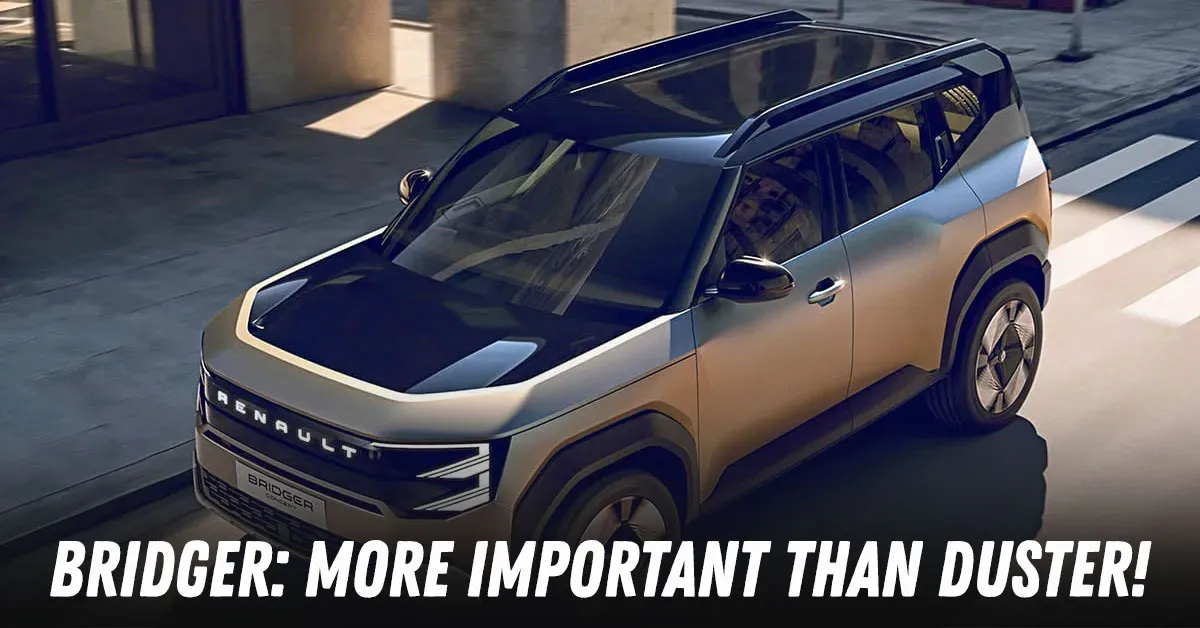

Renault has announced its second B-segment SUV for the Indian market- the Bridger. Set to arrive in 2027, this product has been creating a lot of buzz online. It has impressed many with its design and the powertrain details that surfaced recently are impressive as well. From a business perspective, however, this sub-compact SUV is more important than the Duster and Tekton for Renault and its alliance partner Nissan. With it, these companies will be able to rack up volumes, both in domestic and export markets.
With the Bridger SUV, Renault and Nissan are aiming to play the mass-market volume game. This SUV will belong to the B-segment, also referred to as sub-compact SUV segment. This is one of the fastest-growing segments in India and even has several strong contenders like the Tata Nexon, second-generation Hyundai Venue, Kia Sonet, Maruti Brezza, Skoda Kylaq, and others. The Duster/Tekton belongs to the C-segment- 4.3m segment. That too has high consumer demand, but it is the the sub-four metre SUVs that lead in overall volumes.
Affordable nature and strong value proposition are two key pegs that attract people to sub-four metre SUVs. Finding success there will need a strong product, smart strategies and effective implementation. Both Renault and Nissan are likely to take similar approaches with the Bridger. For the ease of comprehension, let’s base the article on the Renault Bridger instead of its Nissan counterpart.

If everything goes well, and the Bridger manages to get a strong foothold in the segment, Renault’s overall volumes would increase sharply. This will contribute significantly to its sales revival journey in India. The way the Kylaq managed to turn the table for Skoda in sales is a good example to showcase the actual potential of this segment.
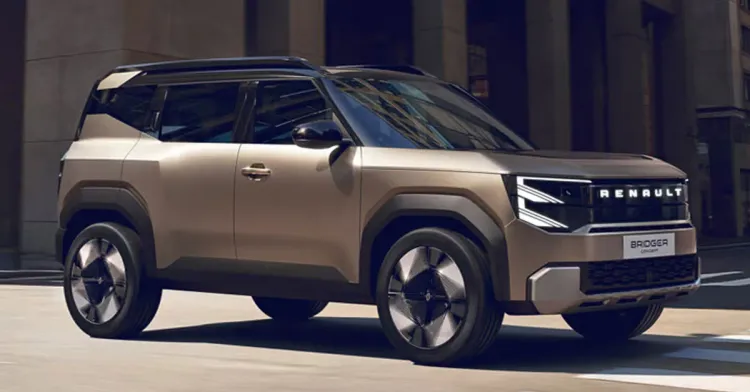
To establish itself in the market, the Renault Bridger will go by a familiar playbook- offering a range of powertrains and variants covering compelling price points. It will have petrol, strong hybrid, CNG and all-electric powertrain options.
This multi-powertrain pathway is something that we have seen Tata Motors perfect with the Nexon. The Nexon now has petrol, diesel, CNG and all-electric powertrain. The Renault SUV will not have diesel engines, but will use a petrol hybrid instead. This is part of the company’s broader vision of sticking to newer powertrain technologies and fuel options.
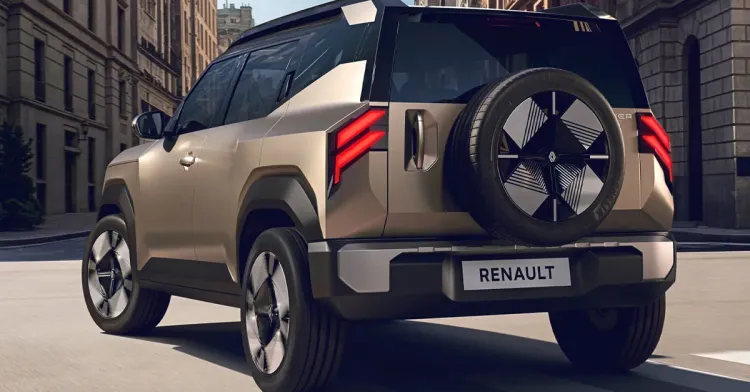
The Bridger will be underpinned by the RGMP (Renault Group Modular Platform) Small platform. This is a multi-energy architecture and can support all the aforementioned powertrains. This platform sharing between powertrains will also have cost benefits, allowing the carmaker to price the production-spec SUV competitively. Also, the B-segment currently has limited representation of hybrids. Renault could thus have an early-mover advantage if the hybrid Bridger arrives as per schedule.
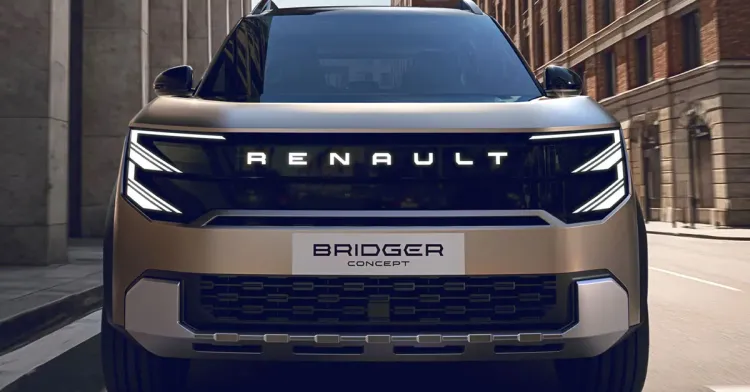
The Bridger EV is expected to arrive by early 2026. Details of its powertrain remain sparse at the time of writing. We expect it to come with a 400-volt architecture, two battery packs- 35kWh and 55kWh, and even V2L (Vehicle-to-Load) charging ability.
The larger battery could possibly offer ARAI range figures of 500 km per charge. Real-world numbers could hover around 350 km per charge. It will become Renault’s first EV in India, and will compete with models like the Nexon.EV, Mahindra XUV 3XO EV, and even the Punch.EV. The mid-size electric SUV segment, again, is a high-demand category.
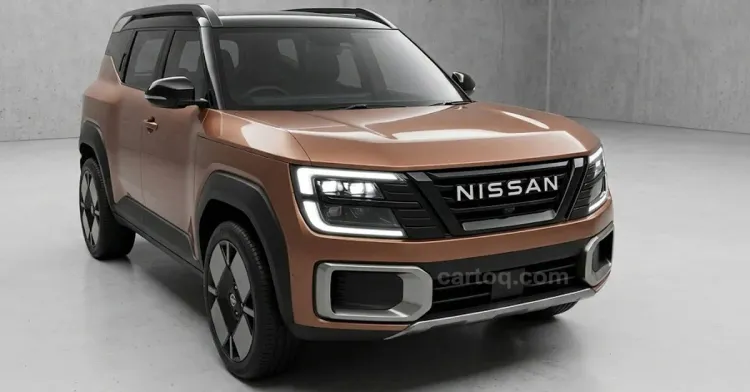
Renault will manufacture the Bridger at its Oragadam plant in Chennai. Both Renault and Nissan will likely go bullish on exports of the Bridger and its Nissan derivative. India will be transformed into the global export hub for this model (and beyond). This will allow the companies to fully utilise the 480,000 installed capacity of the plant.
That said, India will be the first market to get the Bridger. This SUV has been designed and developed in India for the Indian market. It will be launched here before being exported to other emerging markets.
Comments are closed.