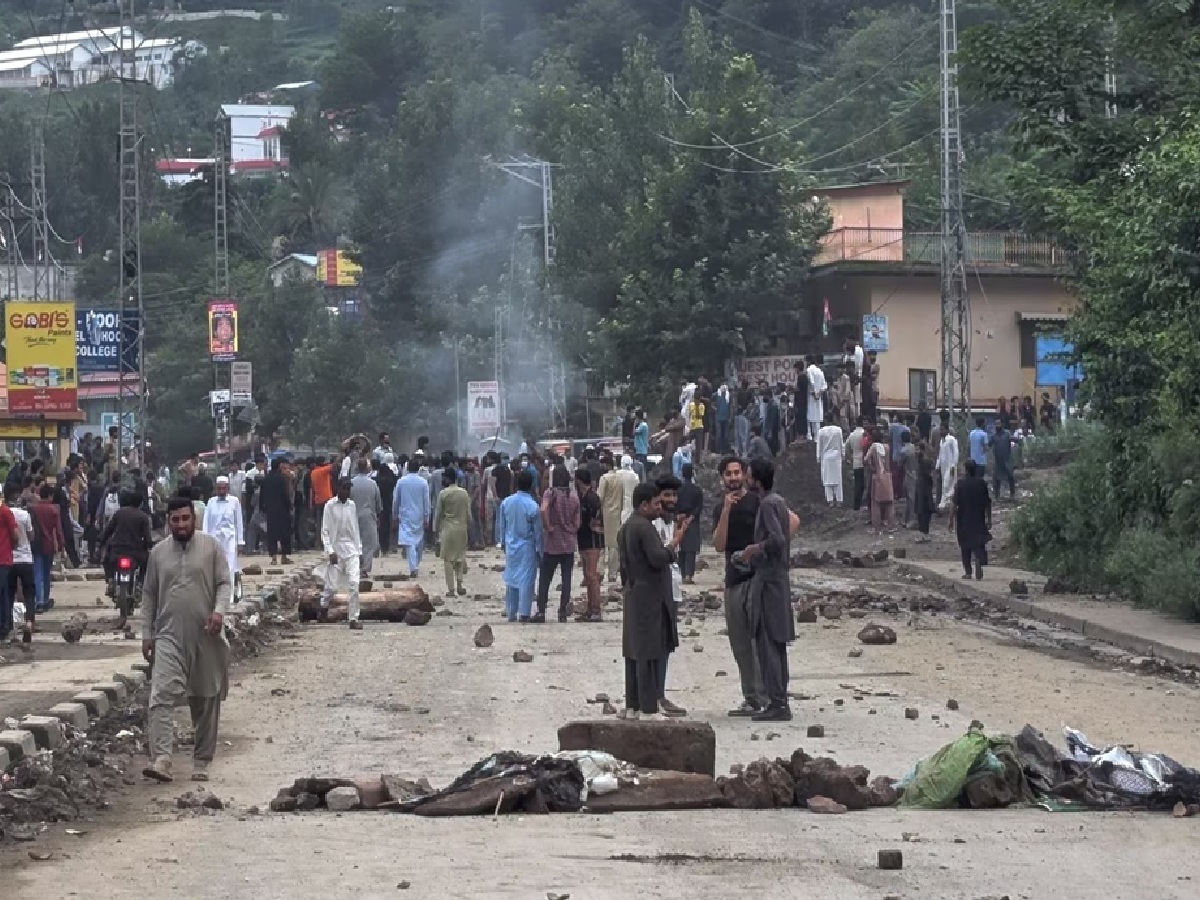
Public anger in Pakistan-occupied Kashmir (PoK) against the severe lack of basic amenities, skyrocketing inflation, and widespread rigging in local elections has now taken a violent turn. Despite the deaths of over 40 civilians during recent protests, the Pakistani Foreign and Defense Ministries remain extremely insensitive, openly labeling these protesters as “enemies like India.” India’s Ministry of External Affairs (MEA) spokesperson Randhir Jaiswal strongly condemned Pakistan’s repressive and irresponsible behavior and demanded that the international community hold Islamabad strictly accountable for these atrocities. However, amidst this simmering development, a big question is arising in the minds of geopolitical analysts that why is there no nationwide and effective youth revolution in Pakistan, which has more than 60 percent youth population and about 7 crore Gen Z youth?
‘Hybrid governance’ and the dangerous game of musical chairs
The reason behind preventing public discontent from escalating into a major national movement in Pakistan is the structure of the political system, which experts describe as a “hybrid regime.” Although the Pakistan Army officially claims to be apolitical, it controls all power and governance behind the scenes. Recent controversial constitutional amendments not only extended the tenure of the country’s Army Chief but also granted him lifelong legal immunity from police cases. Whenever public anger against the elected government reaches a peak, the military establishment, like a pawn, changes faces—sometimes propelling the Sharif family to the forefront, sometimes handing power to the PPP or Imran Khan. Consequently, instead of reaching the real rulers, the military, all public anger is directed at the then-Prime Minister or the puppet government, leaving the youth with no clear political target.
Fragmented protests and the military’s divide and rule policy
It’s true that there’s no shortage of discontent and anger within Pakistan, but this opposition is deeply fragmented by geography, ideology, and local motives. The forms of discontent differ markedly in different parts of the country; for example, in Balochistan, the BLA is waging a separatist war, in Khyber Pakhtunkhwa and the TTP-controlled regions, the demand for Sharia law is prominent, while in the urban areas of Punjab and Karachi, youth struggle with unemployment and severe inflation. An unemployed student in Lahore, a Baloch nationalist in Balochistan, and a TTP supporter—these three can never unite under one platform or one banner. This is the key weakness that the Pakistani military exploits to prevent a unified revolution. The army easily crushes each regional uprising by categorizing it into separate categories of terrorism, separatism, or treason.
The fate of Imran Khan and the terrifying atmosphere of fear that has gripped the hearts of the youth.
The youth of Pakistan have learned a harsh and terrifying lesson from the political downfall and arrest of former Prime Minister Imran Khan. When the country’s most popular and globally established leader can be imprisoned and his party destroyed simply for directly confronting the military establishment, what hope does an ordinary youth have for their safety? Statistics indicate that between 2011 and 2024, more than 10,000 cases of enforced disappearance have been recorded. The sudden disappearance of Baloch and Pashtun human rights activists, outspoken journalists, and university students, followed by the discovery of their tortured bodies, has become commonplace. False treason cases, heavy media censorship, internet blackouts, and the threat of instant labeling as “traitors” constantly hang over the heads of young people, forcing them to live in a state of psychological fear.