
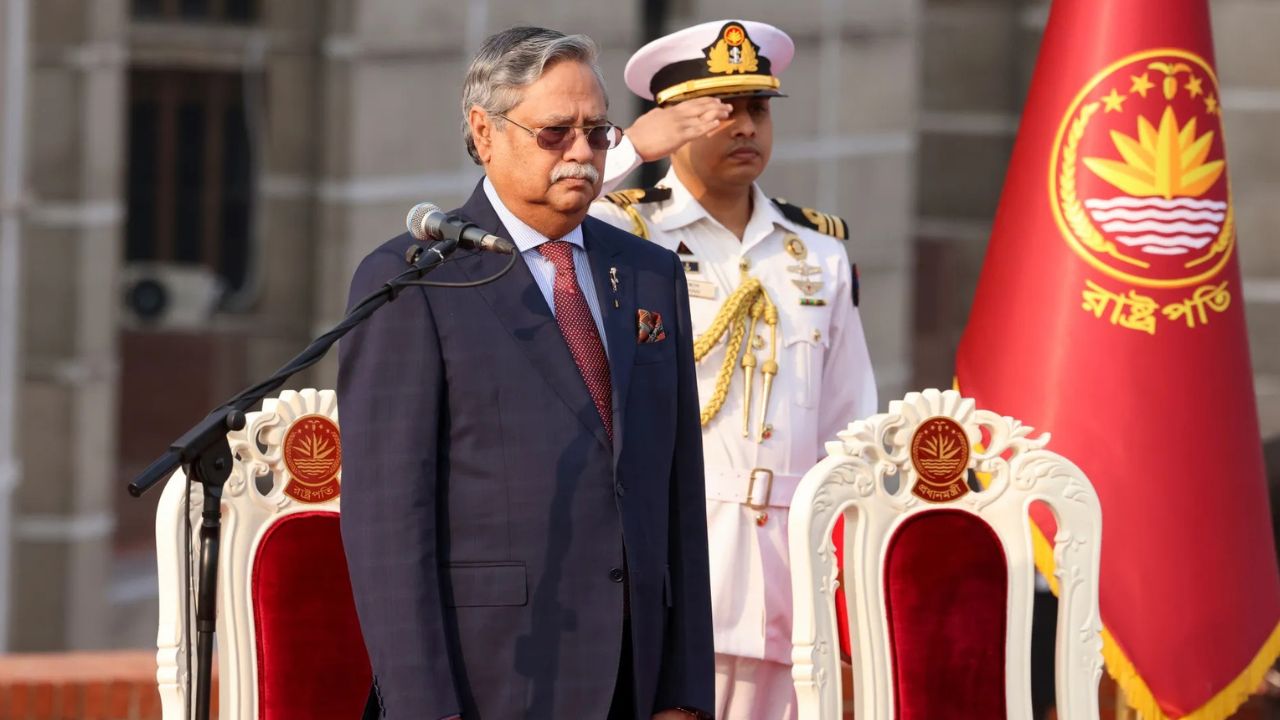
Why Did Bangladesh President Mohammed Shahabuddin Resign Two Years Before the End of His Tenure?

Dhaka: Bangladesh President Mohammed Shahabuddin resigned from office according to local media reports on Friday, ending his tenure nearly two years before the completion of his five-year term.
While the presidency has not officially disclosed the reason for his resignation, the move comes amid mounting political pressure linked to his longstanding association with former Prime Minister Sheikh Hasina.
Shahabuddin, who assumed office in April 2023, submitted his resignation in accordance with Bangladesh’s Constitution. Under constitutional provisions, the Speaker of Parliament will perform the duties of the President until a successor is elected.
Political Pressure Intensified
According to Reuters, the government had been under increasing pressure to remove the last remaining senior constitutional office-holder seen as close to Sheikh Hasina, whose Awami League government was ousted in the 2024 student-led uprising. Three sources familiar with the matter said the government had pressed Shahabuddin to step down because of his longstanding ties to Hasina, although no official reason was given publicly.
The political pressure reportedly intensified after Sheikh Hasina announced that she plans to return to Bangladesh later this year to surrender following her conviction in absentia by a war crimes tribunal. Her planned return has become a major political issue for Prime Minister Tarique Rahman’s government.
End of Hasina-Era Constitutional Presence
Shahabuddin’s resignation is being viewed as a significant political development because he was the last senior constitutional functionary appointed during the Awami League government.
Since the 2024 uprising, the Awami League has been banned, while many of its senior leaders and activists have either been arrested or gone into hiding. With Shahabuddin’s departure, former Prime Minister Hasi Sheikhna no longer has any close political ally holding a top constitutional office.
Ceremonial Office, Symbolic Impact
Although Bangladesh&8217;s President serves largely as the ceremonial head of state, the office carries constitutional significance as the commander-in-chief of the armed forces and plays an important role during political transitions. Executive authority, however, rests with the Prime Minister and the Cabinet.
What Happens Next?
Under Bangladesh’s Constitution, the Speaker of Parliament will discharge the President’s responsibilities until a new President is elected. The resignation adds another chapter to Bangladesh’s continuing political transition following the 2024 uprising and comes just months before Sheikh Hasina’s announced plan to return to the country.

Comments are closed.