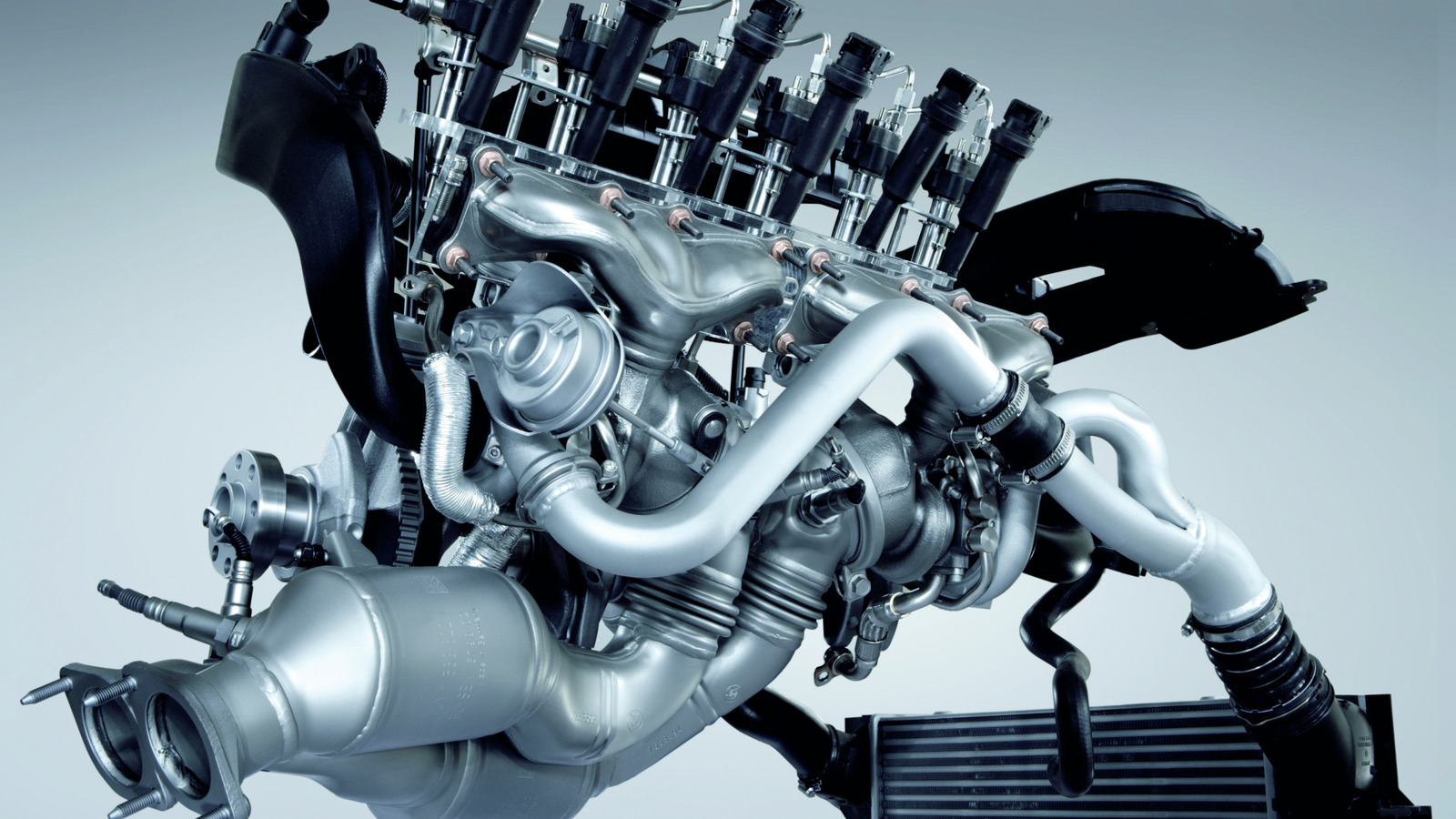
When BMW debuted its twin-turbocharged N54 inline-six engine in 2006, auto enthusiasts were excited to see forced induction return to the Beemer paddock. Over the next decade, this engine would go on to power more than a dozen distinct models across multiple lines. But why did BMW switch from twin to single turbos? The answer lies in the efficiency of single twin-scroll turbocharger setups.
While pairing two small turbos together provided snappy throttle response and, importantly, linear power delivery, the twin-turbo layout was not without engineering faults. It meant a doubling of the oil and coolant lines, raised manufacturing costs, increased front-end weight, and led to excessive heat under the hood. A single twin-scroll turbocharger, however, had superior heat management, and could mimic the low-end responsiveness of two turbos without their mechanical drawbacks.
BMW introduced the switch to a single twin-scroll housing with the N55 engine in 2009, replacing its parallel twin-turbo setups. This configuration fed separate exhaust channels into a single turbine. By isolating exhaust pulses from alternating cylinders, BMW eliminated pulse interference, which helps reduce lag by letting the turbo spool up almost instantly.
The N55 produced 300 lb-ft of torque at 1,200 RPM — 200 revs earlier than its predecessor — while reducing fuel consumption by approximately 15%. As BMW moved away from the heavy engines and high-displacement motors of historical BMW cars with V8 powerplants, this single-turbo breakthrough laid the foundation for virtually all modern inline-six Beemer engines made today.
The next generation
Beyond reducing brutal turbo lag, the switch to a single turbo let BMW overhaul its engine line manufacturing strategy. Integrating the twin-scroll style alongside Valvetronic variable valve timing gave BMW throttle-less intake control, which reduced pumping losses while smoothing transient throttle response.
Mechanically, ditching the second turbo simplified the engine’s build specs; it got rid of unnecessary vacuum lines, halved the oil feed plumbing, and removed dual wastegates that were known to rattle. And having to only contain a single turbine housing made room in the engine bay, lowered front-axle weight, and resolved an annoying cold-start issue.
What’s more, dual turbos act as large heat sinks, slowing catalytic converter warm-up, whereas a single-turbo exhaust manifold brings the catalytic converter to operating temperature much faster. This single-turbo formula proved successful, allowing BMW to downsize from six to four cylinders, as with the N20; if you look into the BMW 328i engine, you’ll see how a single turbo made 240 horsepower with 15% better fuel economy. Although BMW inadvertently confused buyers and enthusiasts by calling these single-turbos “TwinPower Turbo” — a marketing term for twin-scroll engineering — the transition ultimately ushered in cheaper, lighter, and more reliable power plants.