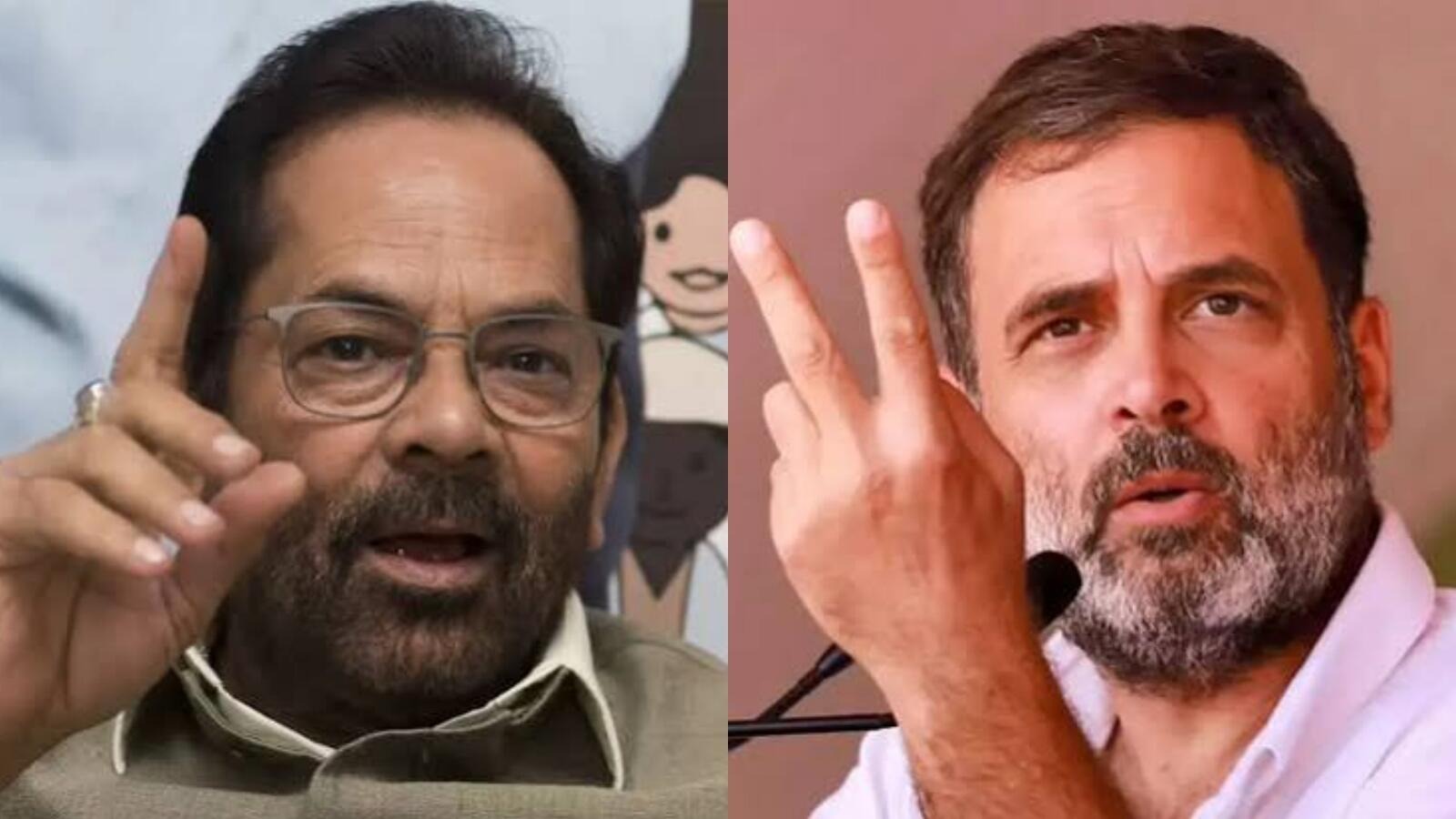
These days, arrows of statements and sharp political rhetoric are continuing in the Indian political circles, in which new and interesting twists are being seen every day. Recently, on a sensitive and heated issue related to Nishu Azad, the country's well-known and senior Bharatiya Janata Party (BJP) leader Mukhtar Abbas Naqvi has given a very cheeky and aggressive statement which has created a stir in the political circles. Taking a sharp dig at the main opposition party Congress and organizations like Citizens for Justice and Peace (CJP), Naqvi has said that these days there is a strange competition going on among these people to divert attention from real issues and become 'fictional revolutionaries'. His statement has come at a time when the parties and the opposition are standing face to face on various platforms of the country regarding freedom of expression, ideological conflict and legal maneuvers. Whenever such a sensitive issue comes to the fore in the society, political parties and human rights organizations immediately jump into the fray to make political gains, and Naqvi has taken a sharp dig by questioning this double character. What is the hidden political strategy of Congress and CJP behind this blind race to become 'imaginary revolutionaries'? The term 'imaginary revolutionary' used by Mukhtar Abbas Naqvi is actually a sharp jibe at those political parties and ideological organizations which are cut off from any real public interest struggle on the ground, but keep competing to show themselves as great revolutionaries through social media and press conferences. Targeting organizations like Congress Party and CJP, Naqvi tried to make it clear that these people only give air to those issues which keep their political or ideological shops shining, whereas they have nothing to do with the real problems of the common people. Whenever the rule of law does its job in the country or any judicial process moves forward, these organizations immediately start trying to mislead the public by raising questions on impartial investigation. The main objective of this type of pseudo-revolutionary politics is only to preserve its political relevance and to make its own fortune by provoking a particular section of the society, which today's conscious public has started understanding very well. What is the deep meaning of Mukhtar Abbas Naqvi's statements on the controversy and legal process related to Nishu Azad? This entire matter related to Nishu Azad has been in the media headlines for the last few days, in which a heated debate is going on regarding the scope of expression and social harmony. On one hand, various parties related to this case are pleading for justice in their own way, while on the other hand, political parties are trying to find their political ground in this. Commenting on this entire incident, Mukhtar Abbas Naqvi said that instead of working within the ambit of law and constitution, some people want to create unnecessary tension in the society by making sensational statements. He stressed that our judiciary and legal system is completely independent and competent, which takes appropriate decisions with impartiality in every case, hence no one should try to interfere in the justice process to serve their political interests. This statement of Naqvi is a reminder that in a democracy, everyone has the right to protest and express their views, but putting the country's peace and legal order at stake in its name should not be acceptable under any circumstances. What is the future of ideological polarization, culture of rhetoric and real expectations of the public in the country's politics? In today's time, the direction in which Indian politics is moving, instead of debating on serious issues, the culture of only allegations and counter-accusations and using words is becoming dominant. Be it the steps taken by Congress and other opposition parties to corner the government or the counterattack by BJP leaders, the real issues of the common man like inflation, unemployment, education and health are left behind. When experienced leaders like Mukhtar Abbas Naqvi make sarcasm like 'imaginary revolutionaries', they are, in a way, trying to draw the public's attention towards how political parties create new dramas to hide their failures. The citizens of the country will now have to decide whether they want to remain entangled in these superficial and dramatic debates or choose the real agenda of development, transparency and good governance. As long as political parties keep the public engaged only with emotions and slogans, the real progress of the country will continue to be hindered, and that is why such sharp statements always have a different and deeper message in politics.