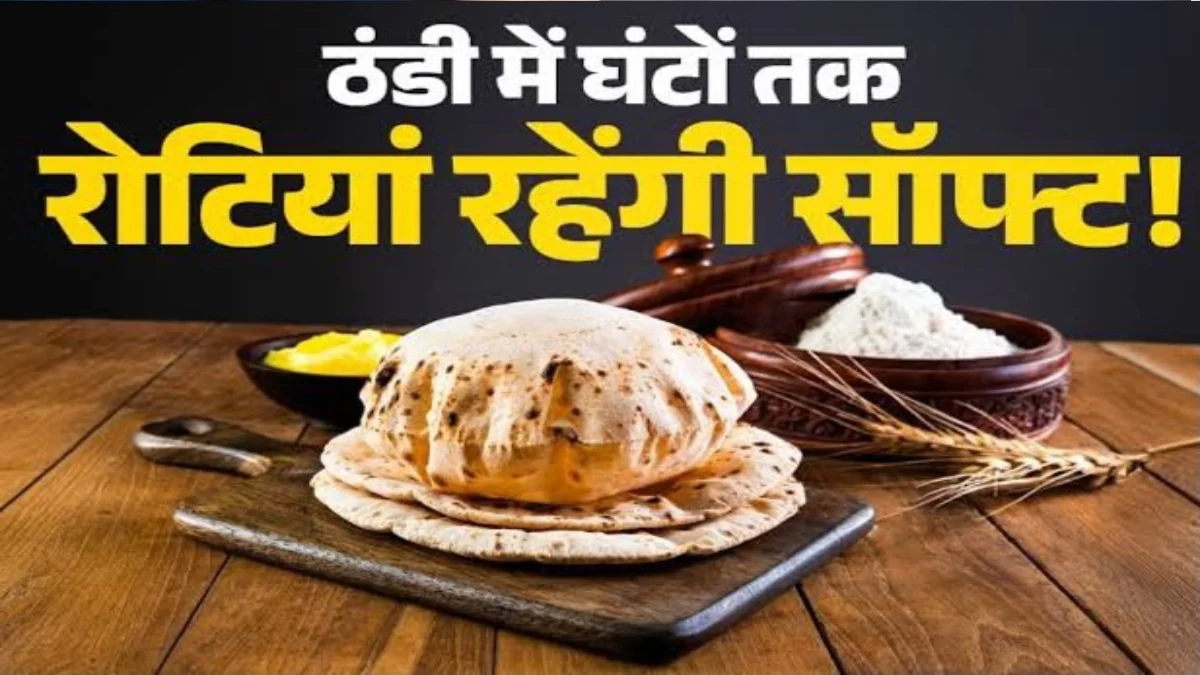
Lifestyle Desk: Do the rotis in your house cool down quickly and become hard in winter? Often in cold weather, due to low moisture content of flour and not storing the rotis properly, they start drying quickly. Many times, rotis made in the morning become hard within a short time, which makes them difficult to eat. Especially children and elderly people like soft rotis. However, by taking care of some small things, you can keep the rotis soft and fresh for hours even in winter. For this, neither any special machine nor much hard work is required. From kneading the dough to baking and storing the rotis, you just have to follow some easy tricks. Let us know about them.
Keep moisture in mind while kneading the dough
Making soft rotis starts with kneading the dough. In winter, people often knead the dough a little hard, due to which the rotis also become hard. Therefore, while kneading the dough, add water slowly and mix it well. The dough should neither be too hard nor too sticky. Soft and pliable flour helps in making soft rotis.
Keep the dough covered for some time
Instead of making rotis immediately after kneading the dough, keep it covered for at least 15 to 20 minutes. Due to this, moisture spreads well in the dough and it becomes more flexible. You can cover the dough with a plate, lid or clean wet cloth, so that its top surface does not dry out.
Add some oil or ghee while kneading the dough.
If your rotis become hard again and again, you can add a teaspoon of oil or ghee to it while kneading the dough. This keeps the dough soft and the texture of the rotis also improves. However, do not keep its quantity too much. Adding too much oil or ghee can change the taste and texture of the roti.
Do not overbake the rotis
A major reason for the rotis becoming hard can be baking them on the pan for longer than necessary. When the roti is roasted well from both the sides and starts rising, take it out from the pan. Keeping the roti on low flame for too long can reduce the moisture content of the roti. Therefore, it is important to keep an eye on the flame and baking time.
Wrap the rotis in a cloth immediately
After baking roti, avoid keeping it in the open. By doing this, the moisture of the hot roti slowly evaporates and it can cool down and become hard. Instead, wrap the rotis in a clean cotton cloth and keep them in an insulated roti box or container with a lid. With this they can remain soft for a long time.
apply light ghee on roti
If you want the rotis to remain soft for a longer time, then you can apply a little amount of ghee on them after baking. This prevents the upper surface of the roti from drying out and also increases the taste. However, it is not necessary to apply more ghee on every roti. You can use it as per your choice and need.
Be careful while reheating rotis
If the rotis have cooled down, you can use the pan to reheat them. Heat on low flame for a few seconds on both sides. If necessary, sprinkle very little water and cover, so that the steam softens the roti. Avoid reheating repeatedly, as this may dry out the roti.
One important thing is to keep the rotis soft for a long time and it is important to store them in the right way. Keep warm loaves in clean containers, but do not leave them closed at room temperature for too long. If eating after several hours, refrigerate them and reheat them thoroughly before eating.
Don't forget to follow Read.Com's WhatsApp channel.