
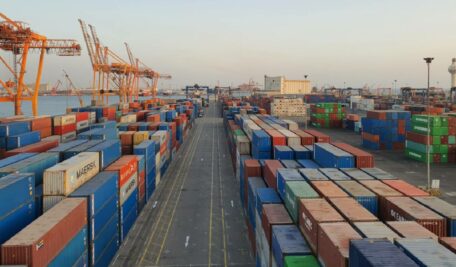

India has amended its Foreign Trade Policy to create a legal framework for prohibiting imports of goods produced using forced labour. The move aligns India’s trade regime with global labour standards and comes amid a US Section 301 probe into countries that lack explicit bans on such imports
Published Date – 16 July 2026, 01:08 AM
New Delhi: India on Tuesday amended the foreign trade policy to prohibit the import of goods produced using forced labour.
The announcement was important as the US Trade Representative (USTR) is carrying out an investigation under Section 301 of the Trade Act of 1974 against 60 countries, including India.
It has alleged that the acts, policies, and practices of 60 economies related to the failure to impose and effectively enforce a prohibition on the importation of goods produced with forced labour is unreasonable and burdens or restricts US commerce, and are thus actionable under Section 301(b) of the Trade Act.
Here are the few questions and answers to under why “Forced Labour” is now at the centre of global trade:
What is forced labour?
As per the ILO (International Labour Organisation) Forced Labour Convention, 1930 (No. 29), ‘Forced Labour’ means all work or service which is exacted from any person under the menace of any penalty and for which the said person has not offered himself voluntarily.
Why is it being discussed now?
It has become a major trade issue as countries tighten import controls on goods linked to abusive supply chains. The US has launched Section 301 investigations against 60 countries.
According to think tank Global Trade Research Initiative (GTRI), the EU has adopted rules to block or withdraw forced-labour products from its market.
Which countries use such labour?
No government formally endorses forced labour, but the ILO estimates that about 28 million people worldwide are affected.
GTRI has stated that cases are reported across agriculture, mining, manufacturing, construction and services, with China‘s Xinjiang region receiving particular international scrutiny.
Which countries explicitly ban imports made with forced labour?
The US, Canada, and Mexico prohibit such imports. The EU has adopted a Forced Labour Regulation, while India has created a legal framework to impose similar restrictions through its Foreign Trade Policy.
Why is forced labour treated as a trade issue?
It lowers production costs and allows goods to undercut responsibly produced products. It is, therefore, treated both as a human rights violation and an unfair trade practice. Goods manufactured using forced labour make responsibly produced goods uncompetitive.
What is USTR Section 301 probe on forced labour?
In March 2026, USTR opened investigations into 60 economies, including India, over alleged failure to adopt or enforce forced-labour import bans.
In June, it proposed additional tariffs of 12.5 per cent on 54 countries, including India, and 10 per cent on countries like Pakistan, Canada, and the EU bloc.
India’s stand: It has stated that the country takes the elimination of forced labour seriously as a constitutional obligation, as a matter of international law, and as a matter of principle.
“The (USTR’s) determination does not establish a sufficient causal link between the absence of forced labour import prohibitions and its impact on US commerce. In relation to India, there is inadequate and insufficient evidence that lack of forced labour import ban causes an unfair competitive advantage to the detriment of the US industry,” it has said.
Why is USTR using forced labour to impose additional tariffs?
USTR argues that weak import controls allow unfairly cheap goods to compete with US products and circumvent American bans. GTRI said the American approach of imposing country-wide tariffs, without product-specific evidence, risk turning forced labour issue into a protectionist trade barrier.
What is Directorate General of Foreign Trade’s notification?
This notification inserts a paragraph in the FTP (foreign trade policy), 2023, to empower the central government to prohibit, by notification, the import of goods produced or manufactured, wholly or in part, through the use of forced labour.
What does DGFT seek to achieve?
According to the GTRI Founder Ajay Srivastava, the notification aims to align India’s trade rules with international labour standards, prevent imports linked to forced labour, strengthen supply-chain credibility and improve India’s position in trade negotiations.
Why is the notification important?
It creates an enabling framework, not an immediate ban. DGFT may investigate complaints, seek information and recommend restrictions, after which the government can prohibit specific products through separate notifications.
Did India earlier have no law against forced-labour markets?
Srivastava said India already prohibited forced labour domestically, but lacked an explicit trade-policy provision to block imports made with forced labour abroad and this notification fills that gap.
Will it affect India-US trade negotiations?
The GTRI said it should strengthen India’s position by addressing a concern raised in the Section 301 probe. However, it is unlikely by itself to resolve the dispute or guarantee relief from proposed US tariffs.
The Section 301 investigation and the proposed India-US trade agreement are separate processes, and Washington may continue to pursue tariffs based on its own assessment of enforcement and other trade concerns.

Comments are closed.