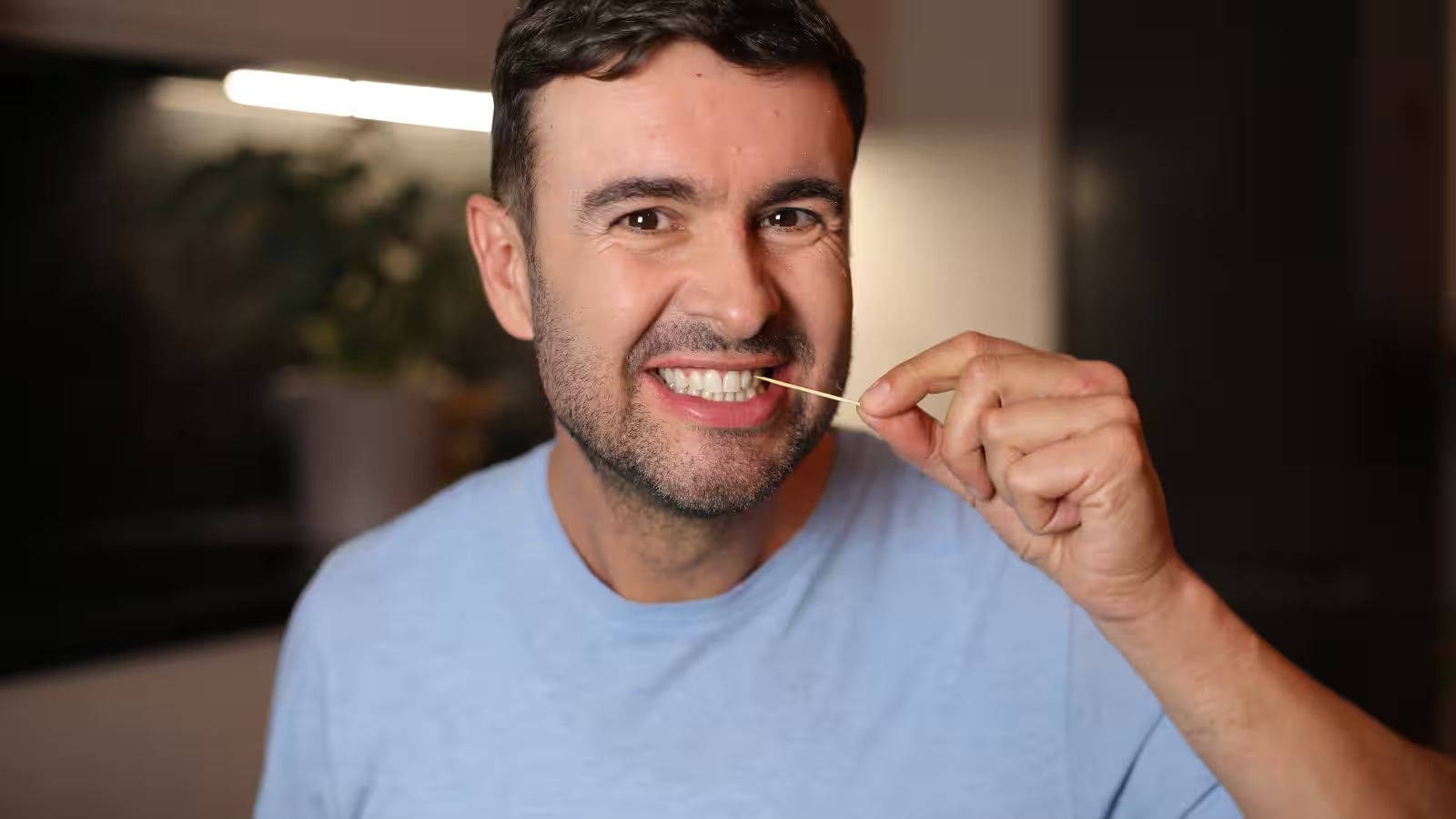
Using a toothpick to remove food particles stuck between teeth after a meal is a daily habit of many people. Be it at home, in a restaurant or while travelling, people resort to wooden or plastic pointed toothpicks to get instant relief. But dental experts believe that using a toothpick repeatedly or incorrectly can cause injury to the delicate gum tissue, cause the gums to recede and, over time, have a negative impact on the strength of teeth and oral health. How the gums are becoming weak due to the use of toothpicks. Gums are a sensitive part that supports the roots of the teeth and the jaw bone. When a person applies force or rotates a toothpick at an oblique angle to remove food stuck between the teeth, the sharp tip can scrape or prick the surface of the gums. Repeatedly such small injuries can lead to swelling, bleeding and weakening of the tissues in the gums. Sometimes the gums gradually start to slide down, which is called gum recession, due to which the sensitive part of the root of the teeth can be exposed and the problem of feeling or sensitivity to cold and hot can start. Gaps between teeth and the potential risk of infection Repeated and forceful use of a toothpick can cause the space between two teeth to become wider than normal. When the gap between teeth increases, food particles become more easily trapped there the next time, creating a kind of cycle. Additionally, if the tip of a toothpick gets stuck between the teeth or gums or bacteria reaches deep into the gums, the risk of local inflammation and infection may also increase. Many people have the misconception that teeth are cleaned by removing food with a toothpick, whereas in reality, plaque and fine particles remain there. To remove food particles and safe oral hygiene options, the practice of dental floss, interdental brush or thorough rinsing with water is considered more suitable for safely removing food stuck between the teeth. Dental floss or an appropriately sized interdental brush works the space between the teeth in a relatively controlled manner and poses less of a risk of puncturing the gums than a sharp stick. Brushing with proper technique twice a day with a soft-bristle toothbrush and rinsing with plain water after meals helps maintain the health of teeth and gums. If food gets stuck in someone's teeth repeatedly, gums bleed or pain and swelling persist, then it is advisable to consult a dentist. Changing oral care habits in Lucknow, Delhi, Mumbai and across the country From Lucknow, Kanpur, Varanasi and Prayagraj in Uttar Pradesh to Delhi-NCR, Mumbai, Jaipur and Bengaluru, there is a continuous change in urban lifestyle, eating habits and awareness regarding dental health. Earlier, slight bleeding from the gums or feeling of cold or hot in the teeth were considered normal and ignored, but now people have started paying attention to the early signs. Experts say that many major dental problems can be avoided by improving small everyday habits. With the right appliances and regular checkups, gum strength can be maintained for a long time. The way forward and the importance of regular dental checkups Taking care of teeth and gums is not a one-day affair, but a part of a regular routine. Opting for safer alternatives to sharp objects like toothpicks and not taking any unusual gum symptoms lightly is a practical step towards better oral health. Awareness regarding preventive dentistry and correct oral hygiene habits is expected to increase in the coming times. Currently, protecting the gums from injury and getting periodic dental checkups is considered important for a healthy smile and strong gums.