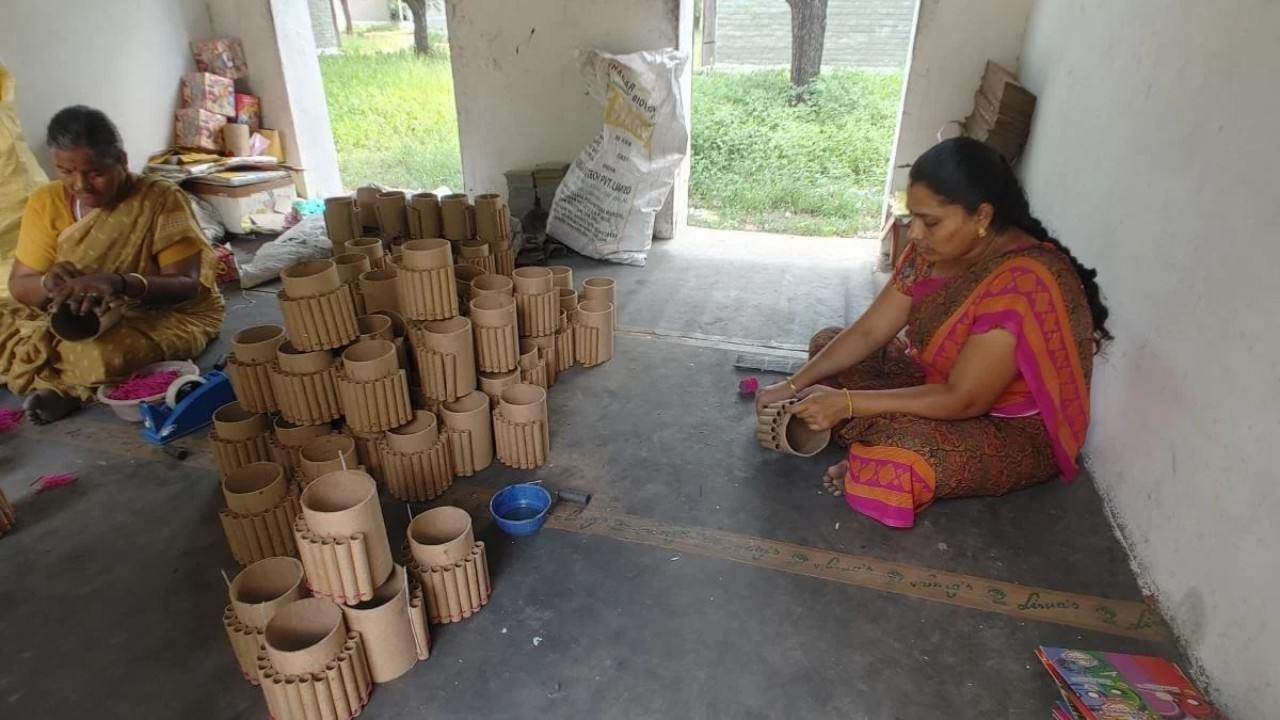
On Diwali or any big festival, when firecrackers are burst across the country, a small town in Tamil Nadu, Sivakasi, plays a big role in it. With over 1,070 licensed manufacturing units, Sivakasi handles about 85% of India's organized firecracker business. Its contribution to the total firecracker production of the country is said to be around 90%. Direct employment to about 3 lakh people and livelihood of 5 lakh families depend on this one city. But from an economics perspective, this model is like a double-edged sword.
The concentration of an entire industry in a single geographical area, called an industrial cluster, proves helpful in reducing costs and utilization of resources. Along with this, if the production in Sivakasi stops due to any accident, heavy rain or strict administrative restrictions, then it has a direct impact on the Diwali and firecracker market of the entire country.
Also read: Why was the PIL to stop 'tainted' leaders from becoming ministers rejected?
How did India become the 'cracker capital'?
This journey started in Sivakasi in the 1920s. Early entrepreneurs like P. Ayya Nadar and Shanmuga Nadar first started matchmaking here. The foundation of National Fireworks was laid in 1925 and when the import of firecrackers from abroad stopped during the Second World War (1938-1944), the local business got an opportunity to flourish rapidly.
There were some main reasons behind the emergence of Sivakasi as this centre. First, the dry and hot climate here was suitable for the process of manufacturing and drying firecrackers. Second, due to limited possibilities of farming, local people got better option of non-agricultural employment. And third, experience in the matchbox industry gave local entrepreneurs an early understanding of the use of chemicals and gunpowder.
Strengths and weaknesses of having factories at one place
When an entire industry settles in a single city, it is called agglomeration economy. The entire structure of Sivakasi works like a self-sufficient ecosystem. Gunpowder and chemical suppliers, packing box manufacturing companies, label printing presses (there are over 500 printing units in the city) and transport networks are all located within a radius of a few kilometres. Also, by getting raw material and experienced artisans at one place, the cost of production remains controlled.
There is also risk involved in this. If there is heavy rain in Sivakasi or a major accident occurs just before the festival season, then the country does not have any other big firecracker cluster as an alternative. Firecracker manufacturing is a sensitive and dangerous job. Strict rules of PESO (Petroleum and Explosives Safety Organisation) apply under the Explosives Act, 1884 and Explosives Rules, 2008. Negligence or explosion in one factory puts the entire surrounding network at risk of regulatory action.
Also read: CJP's march against SIR in Kochi, not Delhi-Mumbai, what are the preparations?
Liuyang of China vs Sivakasi of India
If compared globally, Liuyang city located in Hunan province of China is the largest firecracker production center in the world. But there is a big difference in the way the two cities work. In India, the emphasis is currently on hand-made firecrackers, whereas in China, heavy emphasis is placed on mechanization. According to UN Comtrade (WITS) data, in 2024, China exported firecrackers worth about $ 1.16 billion worldwide, while India's international firecracker exports remained very limited. Due to lack of strict international standards, quality checks and logistics, Indian firecrackers lag far behind China in the global market.
Taking a lesson from the Chinese model, the Government of Tamil Nadu (TIDCO) is now working on building a Common Facility Center on about 35 acres in Sivakasi. 3 steps are very important to make India's firecracker industry safe and strong. First and foremost, use of automatic machines in hazardous chemical mixing and packaging to reduce human risk. Second, small manufacturers should be provided facilities for testing, lab and certification of safety standards at one place. Third, instead of concentrating all the production in one place, develop small clusters in other parts of the country under strict safety rules so that the risk can be spread.