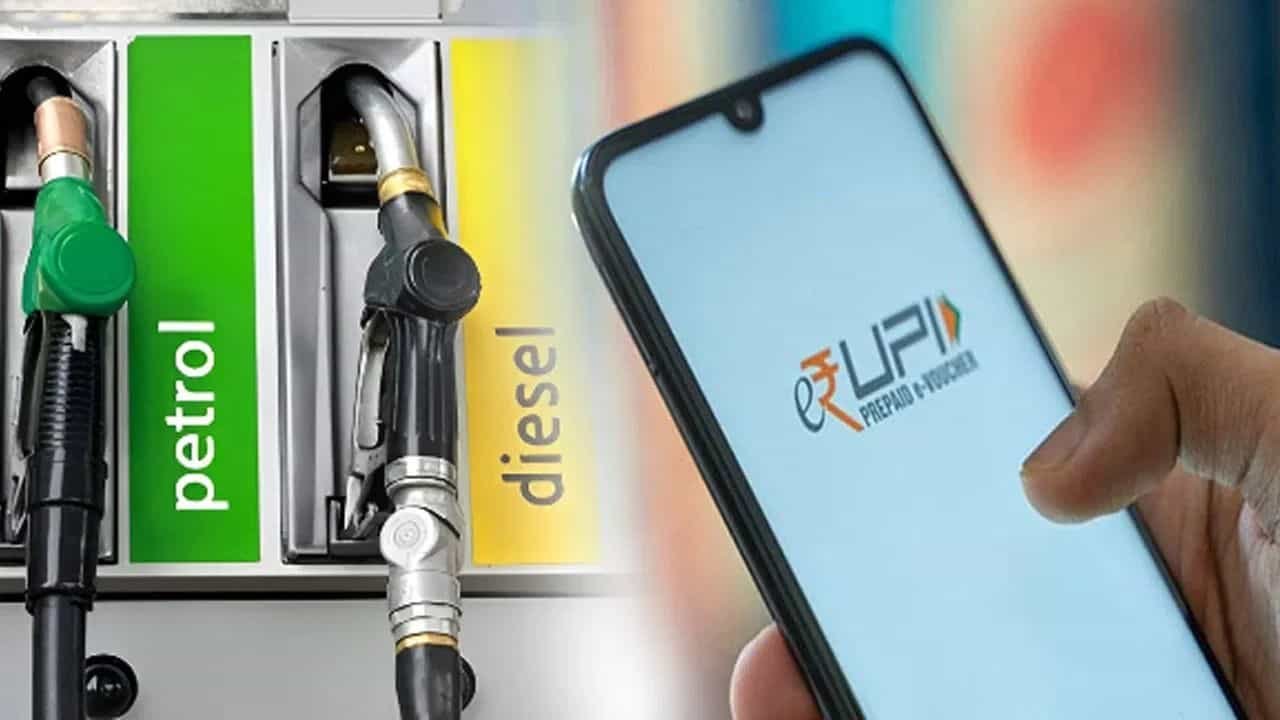
In the era of Digital India and cashless economy, filling fuel by scanning QR Code at petrol pumps across the country has become a part of the common routine. But often you must have experienced that when you fill the tank of your car and the bill goes above ₹ 2,000 (like ₹ 2,500, ₹ 3,500 or ₹ 5,000), many petrol pump employees or dealers insist on giving ‘cash’ instead of online payment or sometimes outright refuse to take UPI for more than ₹ 2,000. Customers often think that the pump owners are doing this to save tax or to launder black money, but the real reason behind this is the very low fixed dealer commission of petrol pumps, wallet interchange rules of National Payments Corporation of India (NPCI) and the complex mathematics of Merchant Discount Rate (MDR) of banks.
To understand the hesitation of petrol pumps, it is first important to know how petrol pump owners earn profits. Unlike clothing, grocery or electronics shops, the profit percentage at petrol pumps is not 10% or 20%:
-
Fixed commission rule: Fixed commission per liter is given to petrol dealers by oil marketing companies (OMCs like IOCL, BPCL, HPCL). This commission on petrol is approximately ₹3.00 to ₹3.80 per liter and on diesel approx ₹2.00 to ₹2.60 per liter Happens between.
-
Negligible Margin in Percentage: If the price of petrol is ₹100 per litre, then the gross margin of the pump dealer is only 3% to 3.5% It happens.
-
Operating Expenses: Out of this commission of ₹ 3 to ₹ 3.50, the dealer has to bear the salary of the employees, 24 hours electricity of the pump, fuel of the generator, maintenance of the machine, evaporation loss and bank charges. After taking out all the expenses, the dealer’s net profit remains only 50 to 70 paise per liter (ie 0.5% to 0.7%).
As per National Payments Corporation of India (NPCI) regulations, Zero MDR is applicable for both customers and merchants on normal bank-to-bank UPI (Bank Account to Bank Account P2M Transfer). But the problem arises when the customer Prepaid Payment Instruments (PPI Wallets) Let’s scan QR code using:
-
Interchange fee up to 1.1%: If a customer makes a payment of more than ₹2,000 through Paytm Wallet, PhonePe Wallet, Amazon Pay Wallet or credit card linked UPI, an interchange charge of 0.5% to 1.1% is applicable at the merchant acquirer bank.
-
Special slab on petrol pumps: This interchange rate for fuel category is approximately 0.50% It has been determined.
-
Direct robbery on dealer’s pocket: Suppose a customer filled petrol worth ₹ 4,000 in his car and paid through wallet or linked card. If a charge of 0.5% is deducted on this, then the bank directly deducts ₹ 20. The dealer’s total gross commission on petrol worth ₹4,000 (about 40 litres) works out to be about ₹130, of which ₹20 (about 15-18% profit) goes to the digital payment gateway alone.
The problem becomes more serious when customers pay more than ₹2,000 through cards:
| means of payment | Position under ₹2,000 | Dealer loss/charge on excess of ₹2,000 |
| Direct Bank UPI (P2M) | 0% MDR (Completely Free) | 0% (but the hassle of server failure and audit) |
| Wallet/PPI Linked UPI | no extra charge | Interchange charge up to 0.50% |
| Debit Card (RuPay) | 0% MDR | 0% MDR |
| Debit Card (Visa/Mastercard) | Government Subsidy (0.40%) | MDR charge up to 0.90% |
| Credit Card (Fuel Swipe) | 1% Surcharge Waiver (with conditions) | Merchant charge from 1.00% to 1.50% |
Many private banks also charge monthly rental, SIM data charges and settlement fees on POS machines at petrol pumps. In such a situation, when there is a cut of up to 1% on large payments, 30% to 50% of the dealer’s net profit goes to banking transaction charges alone.
Apart from charges, operational and financial risks are also a big factor:
-
High-Value Transaction Failure: If UPI of ₹200 gets stuck, both customers and employees can easily wait. But in a transaction of ₹ 3,000 to ₹ 5,000, if ‘Payment Pending’ appears due to the bank server, then the customer is in a hurry to leave the vehicle. If the money is reversed back into the customer’s account after 24 hours, the entire loss goes directly from the pump employee or owner’s pocket.
-
Next Day Settlement (T+1 Cycle): Petrol pumps have to transfer lakhs of rupees in advance online every evening to order a new tanker from oil companies (IOCL, HPCL etc.). Money from digital payments is often credited to the bank account not on the same day but on the next day (T+1), which affects the daily liquidity (working capital) of the pumps.
-
Cash Handling vs Digital Balance: Petrol pumps require adequate cash to meet their local expenses, cash payments to drivers and daily operations.
This is why petrol pump operators happily accept UPI on small payments (₹100 to ₹500), but on amounts above ₹2,000 they often demand cash or simple UPI linked directly to the bank account so that there is no additional hit to their limited profits.