

Jasmine Lim, 29, and Leslie Lee, 31, married in 2023 but remained in their respective family homes until their Build-to-Order (BTO) apartment was completed in May 2025.
“We wanted to stagger our wedding and renovation expenses. Renting a flat together wasn’t an option due to the significant cost,” Lim told Channel News Asia.
For many Singaporean couples, the usual path is to apply for a BTO flat from the Housing and Development Board, wait an average of three to four years for construction and schedule their wedding close to the completion date.
However, Lim and her husband, who works in finance, are among a growing number of couples choosing to marry before they can move into a shared home.
Holding the wedding earlier allows couples to lock in current prices while delaying the much larger costs of renovation and independent living.
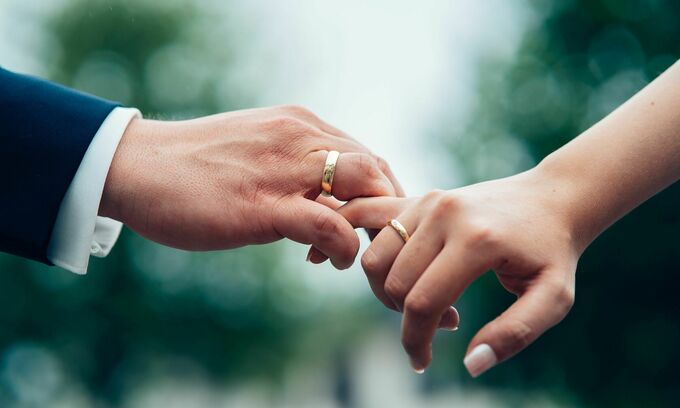
Singapore newlyweds live apart as years-long public housing waits persist. Illustration photo from Pexels |
Kelvin Siew, 32, and his fiancée Denise Yeo, 30, are due to marry in October. Afterward, they plan to alternate between their parents’ homes until their BTO flat in Bedok is completed at the end of 2027.
Siew lives in eastern Singapore, while Yeo’s family is based in the central area, making travel between the two homes inconvenient and time-consuming.
“A wedding is already a big financial and emotional event. Renovation will be another big thing. So having some breathing space between the two actually feels helpful,” Siew said.
The couple plans to split their time equally between both families so neither set of parents feels overlooked.
“Different families have different expectations, especially when it comes to marriage. So we’re trying to find a way that feels fair and respectful to everyone,” he said.
Still, couples without a shared home say the constant travel and complicated living arrangements can strain their daily lives and relationships.
Food and beverage entrepreneur Jason Chua, 34, spent three years commuting with his wife between opposite sides of Singapore before they moved into their own home in mid-2022.
His family lived in Loyang in the east, while hers was in Bukit Batok in the west.
“That period, we were carrying our weekend bags on the MRT, going back and forth,” he said. “It was very tiring because I had to change train lines and take a bus. Carrying a backpack filled with clothes didn’t help.”
The couple secured a BTO flat in 2017 and married in 2019. They had expected the property to be completed in 2021, but construction was delayed until mid-2022 by the Covid 19 pandemic.
To reduce expenses, they chose not to rent and held a small wedding at home instead.
Professor Sumit Agarwal, chairman of the Asian Bureau of Finance and Economic Research at the National University of Singapore, described living apart after marriage as a practical response to financial pressure.
“For many young couples, registry of marriages is no longer the point at which they immediately form a new household,” he said. “It is often the beginning of a waiting period, for the BTO flat, for financial stability and for the couple to feel ready to take on the full cost of independent living.”
He said living separately does not necessarily signal weaker commitment. However, prolonged housing delays may cause couples to postpone having children and starting a family.
 |
Many couples in Singapore, Southeast Asia’s wealthiest country, live apart after getting married. Illustration photo from Pexels |
Singapore’s total fertility rate fell from 0.97 children per woman in 2024 to a record low of 0.87 in 2025, according to The Straits Times.
Private homes commonly cost more than US$1 million, while BTO flats are generally priced between $300,000 and $500,000. The large price difference leaves many young Singaporeans dependent on public housing despite the lengthy wait.
Marriage counsellor Theresa Pong said housing, finances and future family plans often become major sources of stress as young couples begin making important decisions together.
Siew, however, does not believe living apart for around a year after his wedding will damage his relationship.
“It’s not just about the physical house. It’s also about making commitments in every aspect of life, learning to become a family and starting to make decisions together,” he said. “The house is part of the journey. But marriage itself still represents a huge change in our lives. So even if the arrangement is not the most traditional at the start, it still feels very meaningful to us.”
Chua also said he had no regrets about living separately while waiting for his flat. “Distance makes the heart grow fonder.”
Comments are closed.