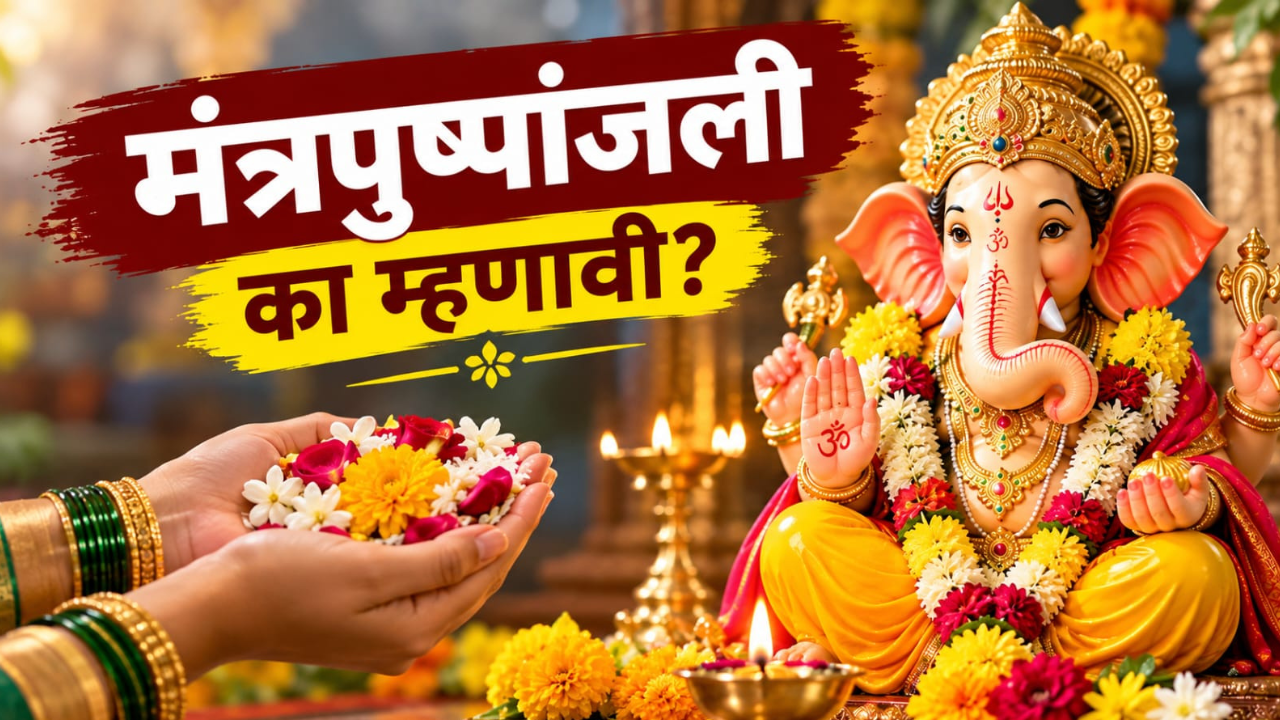
- After 'Ghaleen Lotangan', there is a popular tradition in Maharashtra to offer flowers to the deity by saying Mantra Pushpanjali.
- Mantras in mantrapushpanjali are associated with various Vedic texts and pray for well-being and prosperity.
- Special importance is given to express the feeling of devotion, gratitude and dedication while offering flowers in hand to God.
Now the season of Ganesha is going on. After the morning and evening aarti every day, many houses in Maharashtra call it 'Ghaleen Lotangan'. After that 'Mantrapushpanjali' is said with flowers-akshata in hand. This tradition is not only limited to Pathantra but it has a special meaning in completing the Puja. Devotees express gratitude and prayer by offering flowers to the deity through mantrapushpanjali.
What is mantrapushpanjali??
The word 'Mantra Pushpanjali' is derived from three words 'Mantra', 'Pushpa' and 'Anjali'. Mantra means sacred Vedic chant, pushpa means flower and anjali means offering with both hands joined or in anjali. So it can be said that offering flowers to the deity by chanting the mantra is a simple meaning.
What is the meaning of 'Ghaleen Lotangan' which is said after Aarti? What is the significance? And why is it said at the end of the aarti?
What exactly does it say??
The famous opening mantra of Mantrapushpanjali 'Yagyen yajmayjant devah' is related to the Purushukta of the Rigveda. It expresses the sense that the gods worshiped the Lord in the form of sacrifices through sacrifices. Next, the mantra 'Rajadhirajaya Prasahyasahine' is followed by Vaishravana meaning salutation to Kubera and prayer for welfare. Therefore, in mantrapushpanjali one can see not only the praise of one deity but the wider sense of Vedic prayers.
Then why only after 'Ghaleen Lotangan'?
In 'Ghaleen Lotangan', the devotee expresses the feeling of humbly surrendering at the feet of God. After that, prayers are offered to God by offering the flower-akshata in the hand in mantrapushpanjali. In some pujas, mantrapushpanjali is considered as one of the final treatments in the puja. Hence this sequential method of first expressing devotion and dedication, followed by the actual offering of flowers has evolved.
Sukhkarta Dukhaharta Aarti Meaning; Know the special message hidden in each line of Ganapati Bappa
What is the significance of mantrapushpanjali??
The focus of mantrapushpanjali is offering and prayer. A flower in the hand is considered as a symbol of faith and is offered at the feet of God. Vedic mantras contain references to prayers related to religion, welfare, prosperity and good governance. So this prayer brings forth a sense of general well-being as well as expressing personal wishes.
Is this a single Vedic composition??
An important thing is that the mantrapushpanjali in vogue today is not a continuous sukta but a collection of mantras from various texts. According to the references its mantras are related to Vedic texts like Rigveda, Taittiriya Aranyaka and Aitareya Brahmana. Hence, this prayer said after Aarti can be considered as a beautiful confluence of devotion, Vedic tradition and offering.